What does homeschooling look like when you grew up homeschooled yourself? In this encouraging and practical conversation, I chat with Elizabeth Santelmann (second-generation homeschool mom, writer, curriculum creator, and host of the Sunshine in My Nest podcast) to talk about homeschooling with confidence, flexibility, and joy.
Elizabeth shares her family’s journey homeschooling three boys using a blended model approach, combining the best of co-op community with the freedom of home education. We explore how homeschool philosophy evolves over time, why you don’t need to recreate school at home, and how small daily rhythms can make a big difference in your homeschool.
This episode is packed with encouragement for new homeschool moms, especially those feeling overwhelmed or unsure. Elizabeth offers wisdom from her second-generation perspective, reminding listeners that you don’t need to justify your homeschool choices…and that caring deeply already puts you on the right path.
- Homeschooling as a Second-Generation Parent
- How Educational Philosophy Evolves Over Time
- Favorite Parts of Homeschooling
- Challenges of Homeschooling—and How to Address Them
- Wisdom for First-Time Homeschoolers
- Small Rhythms That Make a Big Difference
- Why She Created Her Own Curriculum
- What She’s Reading—and How to Reset a Hard Day
- 10 Key Takeaways
- Find Elizabeth Online
- You may also enjoy:
- Check out all the other interviews in my Homeschool Conversations series!
{This post contains paid links. Please see disclaimer.}
Homeschooling as a Second-Generation Parent
Elizabeth Santelmann brings a unique perspective to homeschooling as a second-generation homeschool mom raising three boys in Oklahoma. She shares that for her family, homeschooling was the natural default rather than an alternative to public school. “When we imagined education, it was already homeschool,” she explains, noting that ordering books and building a home education rhythm felt familiar from the start. Their family now participates in a blended model co-op, allowing them to enjoy both community learning and the flexibility of homeschooling at home—what Elizabeth describes as “the best of both worlds.”
How Educational Philosophy Evolves Over Time
Elizabeth’s homeschool philosophy has shifted significantly over the years, influenced by both her upbringing and her husband’s background. Raised with traditional textbook-style homeschooling, she later encountered a more relational, atmosphere-centered approach through For the Children’s Sake. “It completely changed not only the way I thought about educating my kids, but the way I teach and write,” she shares. Over time, her family moved away from rigid models and toward a Charlotte Mason–influenced approach that emphasizes living books, beauty, and relationship.
Favorite Parts of Homeschooling
One of Elizabeth’s favorite aspects of homeschooling is efficiency. Drawing on her experience working in after-school programs, she contrasts classroom logistics with one-on-one instruction at home. “We’re all one-on-one tutoring our kids,” she says, which allows academic work to be completed in far less time. She also delights in the cozy atmosphere of home education: “No fluorescent lights… there’s something about being educated where it’s cozy.” Beyond academics, Elizabeth treasures the relationships formed—both within her family and among fellow homeschool moms, whom she calls “the creme de la creme of mothers.”
Challenges of Homeschooling—and How to Address Them
Elizabeth is candid about the challenges of homeschooling, especially the intensity of parental influence. “You take that role and you times it by 500,” she says. While this closeness is a gift, it can also magnify a parent’s blind spots. Her solution is intentional community: inviting other trusted adults into her children’s lives so they can see different personalities, gifts, and godly examples. “I want my kids to have an imagination bigger than whatever my misbehavior is,” she explains.
Wisdom for First-Time Homeschoolers
As a second-generation homeschooler, Elizabeth offers gentle but firm encouragement to newcomers. “You do not have to justify your decision to anybody,” she says, emphasizing that homeschooling doesn’t make someone a better—or worse—parent. She also cautions against replicating school at home, reminding listeners that education doesn’t require desks or chalkboards. “If you know how to read… you can home educate your kids,” she adds, pointing out that curiosity and good books matter far more than expertise.
Small Rhythms That Make a Big Difference
Rather than chasing perfection, Elizabeth encourages homeschool moms to focus on one achievable goal each day. “If you’ve done that one thing, you are a successful homeschool mom,” she says. This mindset helps combat overwhelm and builds momentum through daily wins. Visual checklists, realistic expectations, and starting slow—especially at the beginning of a school year—are all part of setting yourself up for joy rather than burnout.
Why She Created Her Own Curriculum
Elizabeth was motivated to write her own curriculum out of both necessity and conviction. With children spanning a wide age range, she found traditional grade-based curricula overwhelming. Family-style learning offered a solution, allowing everyone to share core subjects while completing age-appropriate work. She was also intentional about representation and respect. “I wanted my kids to learn that the image of God is stamped on all of God’s children,” she explains, choosing books written from within the cultures being studied.
What She’s Reading—and How to Reset a Hard Day
Elizabeth shares recent reading highlights, including The Button War and The River Between Us, and her love of historical fiction. When homeschool days go off the rails, her advice is practical and comforting. For young children: “Just add water.” For older kids, she suggests candles, snacks, and cozy rituals. Small comforts, she believes, can shift the emotional tone of the entire day.
10 Key Takeaways
- Homeschooling doesn’t need justification to others
- One-on-one instruction is highly efficient
- Cozy environments support learning
- Parents must intentionally invite outside influences
- You don’t need to replicate school at home
- One daily focus can define success
- Starting slow prevents burnout
- Family-style learning reduces overwhelm
- Curiosity and reading unlock lifelong learning
- Small comforts can reset hard days
Find Elizabeth Online
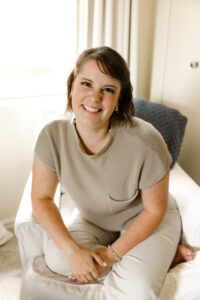
Elizabeth Santelmann is a writer and host of the highly rated sunshine in my nest podcast. She and her husband are second generation homeschool parents to their 3 sons. She is a trained Bible teacher, and worked for three years and children’s ministry before getting married. She has since been writing homeschool curriculum and accessible Bible studies for women in seasons of low capacity.
You may also enjoy:
- Scholé Every Day: Restful Learning for Homeschool Moms
- Homeschooling Teens with Grace and Wisdom with Elsie Iudicello
- Finding Peace in the Chaos of Homeschooling
- From Homeschool Mom to Mentor: Encouragement from a Veteran Homeschooler
- Charlotte Mason Living Education for Little Learners
- 5 Simple Ways to Make Your Homeschool Year Run Smoothly
- Finding Freedom and Flexibility in Your Homeschool Plan
- FREE Big Picture Homeschool Planning Guide Ebook
- Gospel Hope for Overwhelmed Moms with Jamie Erickson
Check out all the other interviews in my Homeschool Conversations series!
[00:00:00] Amy Sloan: Hello, friends. Today I am joined by Elizabeth Santelmann, who is a writer and host of this highly rated Sunshine in My Nest podcast. She and her husband are second generation homeschool parents to their three sons. Elizabeth is a trained Bible teacher and worked for three years in children’s ministry before getting married. She has since been writing homeschool curriculum and accessible Bible studies for women in seasons of low capacity. Elizabeth, I’m really delighted to get to chat with you today, to get to know you a little bit before we officially began our podcast. So here, just tell me a little bit about yourself, your family, and how you got started homeschooling.
[00:01:07] Elizabeth Santelmann: Hey, Amy. It’s so fun to get to meet you. My husband and I are second generation homeschool parents. We live in Oklahoma where we’re raising our three little boys. Our homeschool experience, we are part of a blended model co-op. So the boys get to go to classes two days a week where I drop them off and they’re there from 10 till 3.30. And then the rest of the days and before and after, because they don’t cover all the subjects, we get to homeschool. So it is a lot of fun and it feels like we get the best of both worlds.
[00:01:40] Amy Sloan: Yeah. And what is the age range you have for your kids right now?
[00:01:44] Elizabeth Santelmann: Yeah. So my kids are five, eight, and almost 12.
[00:01:48] Amy Sloan: Okay. That’s such a fun age. I actually, so 12 years old has always been the age I’ve said has been my most challenging. But you start seeing this on the cusp of really coming into their own and the maturity and becoming their own unique people. And you have so much to look forward to in the teen years. It just gets better. It’s so exciting.
[00:02:10] Elizabeth Santelmann: Oh gosh, that’s hard to imagine because I feel like I’ve been telling people, I feel like I’m in the golden age of homeschool. I thought when they were littler that I needed to make our homeschool look like the Instagram photos. But I feel like the Instagram photos are more inspired by the eight to 12 range, not the little years. And so I spent a lot of years kind of frustrated when it was like, oh, that’s because it wasn’t till this stage that those things happen.
[00:02:41] Amy Sloan: Yeah. I think that in the older years, it’s harder to get those beautiful pictures because how do you really capture a photo of a heart to heart conversation or a deep philosophical discussion or a really painful experience and talking to someone through relational trials or real big questions or sorrows? You can’t capture that in a photo. There’s no filter that makes that look pretty. But those are the things like you treasure in your heart as a mom. So you have that to look forward to for sure.
[00:03:12] Elizabeth Santelmann: Well, I feel like it’s even starting to get more complicated because with three boys, most of our life is not particularly beautiful. There’s a lot of chaos, a lot of great things happening. Before, I felt like I kind of used social media. It was social. I wanted friends. There was so much of your day, you’re at home or people are taking naps or you can’t get out. And so that chance to get to meet people and have heart to hearts. And now the kids are old enough, they’re talking to me the same way my friends are talking to me. And there’s so much to talk about. I feel like I don’t have any chittery chattery energy left to go like have as much with other people because I’m using it all up on my own children. Yes.
[00:03:56] Amy Sloan: Oh, I love that. Actually. Okay. I do need to ask you your next question. But just this afternoon, there was something that sparked on social media. Neither of my two adult children are on social media, but it was a discussion. And I was just I had all these thoughts. And so I pulled up my group text with my two adult kids. And we began discussing and it was just this beautiful mixture of both like really profound. And then we would send each other, you know, gifs or memes. And I was like, these are my favorite people. I just love having them in my corner. So yeah, group texts with your kids or you have to look forward to. Okay, I can’t wait. Well, over the years, I’m sure your approaches or philosophy thoughts about education and homeschooling in particular have grown or changed. So how have you kind of seen those ideas morph over the years?
[00:04:51] Elizabeth Santelmann: Yeah, so it was particularly interesting since my husband and I were both bringing what we thought homeschool was to the table. Like the great thing was is like when we imagined education, it was already homeschool. So there was pieces of it, it was easier for us to choose to homeschool than it was to think about doing all the paperwork and like figure out what it looked like to navigate the public school system because we neither of us had ever done that before. But we knew how to order books and we knew where to find them and we knew what to look for. But I grew up very traditionally homeschool educated. So I was telling Amy before we started recording, my parents started homeschooling in my older brothers and sisters or my older sisters and brother in the 70s. And so they’re all in their 50s. And then my parents had me and my younger sister and brother when they were in their 40s. And so we grew up like super old school homeschooled like with the Christian school books and like textbooks and all that stuff. So and then my husband’s mom was more attracted. Like they were at the beginning of that rise of the Francis Schaefer homeschool group. And so For the Children’s Sake was one of the books that she read every year before homeschooling. And so when my littlest was a toddler, she gave me this book and she’s like, I think you will really love this. I read it every summer like while I was homeschooling. And so I read that and like it completely changed not only the way I thought about like talking to my kids and educating my kids, but also like the way that I teach and write because so much of it like it’s such a mentality shift in the way that you approach education. So I kind of thought that we would do classical style education. But then when our son was in third grade, this blended model school opened up close to us and I had a newborn. And so like the traditional co-op situation, we’d been like touring around looking for that type of stuff. And I was like, I just don’t know what I’m going to do with naps if we do this. I was like, okay, for one year, we’ll like do this and we’ll homeschool and like bring them alongside. And it’s it’s been it’s such a beautiful, vibrant community. We’ve just stayed forever. So then now I’ve been like very heavily influenced by like the Charlotte Mason philosophy and some of that stuff.
[00:07:13] Amy Sloan: So I love that. My mom also or my parents came into homeschooling in the 80s. And so one of that first the first book that probably one of the first books that inspired my mom definitely was For the Children’s Sake. I remember her recommending that to other people. I love it. I’ve had some of my children read it and have recommended it to others. In the early seasons of this podcast, actually, there was kind of a running joke that we needed a drinking game for For the Children’s Sake. It seems like every time I talked to anyone, that book came up. It hasn’t come up in a while. So thank you for bringing the game back.
[00:07:48] Elizabeth Santelmann: Okay, yeah, well, that’s what happens when you have a second generation girl on like, we’re gonna bring back the old timey stuff.
[00:07:55] Amy Sloan: That’s right. That’s right. Well, what have been some of your favorite parts of homeschooling over the years?
[00:08:01] Elizabeth Santelmann: Yeah, so between being homeschooled and getting married, I was after school program director, and we did like a lot of homework help and like, ran programming in section eight housing from three to like 630 just to give like kids a safe place to be. And so kind of like stepped into a teacher role while I was there. And I the thing that struck me while I was there is like, how much time is used up moving a large group of kids from one place to another, like getting everybody to the bathroom, you know, you have to, like, allow 20 minutes for that. And like, everybody eating snack, you have to allot a significant chunk of time for that, because there’s always one slow eater or like, they all distract each other. And then, like, even when you’re creating lesson plans, like it takes a while because you have to like go around and individually help each kid. So that way you can wrap up as a group. And so my favorite part of homeschooling has been to see like, with one on one instruction, how quickly you can get done with everything. So I think a lot of people think that because homeschoolers are done with their stuff by noon, some of us sleep late, and then like are done at three, but like, because it only takes like two to five hours, that somehow the kids are getting a less robust education, where really, it’s just like, we’re all one on one tutoring our kids. And you can like, knock that out so fast. And then the second thing that is a favorite part, it’s just no fluorescent lights. Like, if I had to go to work, there’d be fluorescent lights. If they had to go to school, there’d be Thailand fluorescent lights. It’s just, there’s something about being educated where it’s cozy. Like so much of my education growing up was around our wood stove and my parents reading aloud to us and we were practicing our handwriting, and just like, very cozy. And so like, the relationship aspect, like getting to watch the boys interact. And honestly, like, I feel like the parents who are attracted to homeschooling are such cool humans. Like, and again, maybe that’s our state, because I was telling Amy before we started recording, like, our state of Oklahoma is sadly, sadly 50th in education. And so there are a lot of like, invested parents who choose to homeschool. And so just like getting that camaraderie with other homeschool moms, like, I feel like I get like, the creme de la creme of mothers to be friends with also.
[00:10:31] Amy Sloan: Yeah, we talked a lot about, you know, the value of relationships and homeschooling. And we were relating that to our children, of course, and then the relationships are the children have as siblings. But there’s something really special about the relationships that develop with homeschool moms, too. So yeah, I love that. And the not fluorescent lights.
[00:10:51] Elizabeth Santelmann: Yeah, not fluorescent lights.
[00:10:52] Amy Sloan: No, I feel like Mason would never. She would never. It’s an atmospheric discipline.
[00:10:56] Elizabeth Santelmann: And it’s so cute. Like, even at our school, like, the moms string up all these like cozy lights. And like, you could tell it’s a bunch of homeschool moms running this thing because they’re, they’re not gonna have the no fluorescent lights allowed.
[00:11:11] Amy Sloan: Yeah, bring all the twinkly lights.
[00:11:12] Elizabeth Santelmann: Uh huh.
[00:11:13] Amy Sloan: Twinkly lights. Okay, wow. So we have our twinkly lights, we have these beautiful relationships, all these wonderful, the flexibility, all this great stuff that we love about homeschooling. But there’s also challenges. So what are some of the challenges you have faced in homeschooling? And how have you sought to overcome those challenges?
[00:11:32] Elizabeth Santelmann: Okay, so this is going to be really weird. And I think it’s probably because it’s the second generation aspect of things, because like, we’ve got the books figured out, we’ve got all that. But one of the things that I’ve noticed is like, as a homeschool parent, you are taking on the role already as a parent, you’re the biggest influence in your kids life. Because you’re even if you send them to school, you’re still spending the most hours with them and you are still their safe space, which is why, like a lot of kids tend to act out when they get home from school and the parents get the hardest side of them because like they’re putting their best foot forward all day long and they’re exhausted and they come home and you’re their safe spot. But as when you choose to homeschool, you take that role and you times it times 500. Because now you’re spending even more hours with your children, which can be a really good thing and is a really good thing because you get to pass on the really beautiful values that you and your husband have put together for your family. But it is I think a lot of people forget it’s a double edged sword. And so also like the character flaws that you have when they’re around you that much more time, that major influence can end up being part of the problem also. So like, one of the challenges for homeschooling for us has been like, you have to be so much more intentional about bringing other outside influences in to help balance your own sin tendencies. Because I want my kids to have an imagination that’s bigger than like, however I misbehave is what’s normal. Like I want them to be around other adults that they’re like, Oh, well, she doesn’t actually do that. So that’s a my mom thing. And like to for them to have imagination for what what they can be and who God can call them to be. Because like not all my kids are going to have my personality even. And I think that comes to with gifts to like, sometimes I think as parents, when we have one personality type, we can think that like, or we can like lean into what we’re good at or lean into what our gifts are and forget like, that’s not our kids gifts. And so when they are around the body of Christ, or they’re around other, like, kind influences in their life, it gives them the opportunity, like to have vision for how God could use the particular gifts that they have. And so I think as homeschoolers, we have to, we have to be so much more intentional about looking around and inviting people in. And so I feel like I put a lot of time and thought space into overcoming that as a challenge as a homeschool parent.

[00:14:12] Amy Sloan: So I think that’s really beautiful and such an important reminder, both because there are different personalities. We know that it’s easy even within a family, a family can have like family blind spots because of our personality as a family. And just the gift, you know, God made us a body of Christ, right? So we have our family, but we also have the body of Christ. And so being able to learn from the strengths and weaknesses and other perspectives of other families is so valuable. And I think especially as our children get older, making sure they have other safe people they can talk to, you know, I’ve told my children many times, like, I am always here. You can ask me any question. And also I want you to know that if there’s ever a question, you know, you aren’t really wanting to talk to me about, like, do you have someone else at church? You know, do you have another godly man or woman that you could talk to? Like, I want you to know that’s okay with mom. That’s okay with dad too. Like, there’s something valuable about them knowing it’s okay to talk to other adults as well. Yeah, for sure. And to learn from them. That’s really important, actually.
[00:15:17] Elizabeth Santelmann: And the great thing is research backs up that inclination for you. So their start, like, I think it’s, no, it was, I think it was Pew Research did a thing and, like, seeing, like, why kids stay in the faith. And it’s when they have five or six other strong Christian adults who’ve been able to speak into their life. And, like, the more whole of a picture we present to our kids about, like, what the body of Christ looks like and the more, like, braces and what are the scaffolding that we put, like, up for our kids to allow them to come into relationship with Christ and faith themselves. I think it looks, it seems like at least the research I’ve looked at backs up what you’re saying, which is why I do student ministry because it’s, like, I want people to be that for my kid. But I know in a part of being the body of Christ, then you have to show up for other people’s kids too. And so, like, as the church, like, carrying each other and each other’s families toward the throne of God.
[00:16:15] Amy Sloan: Oh, I love that. That’s beautiful. Well, you’ve mentioned a few times about being a second generation homeschooler and the perspective that that has brought and things over the years for you. So I’m wondering about that unique perspective and experience in the homeschool community. If there’s anything that you kind of think maybe first-time homeschoolers might miss or maybe make some assumptions or it might tend to get wrong.
[00:16:41] Elizabeth Santelmann: Oh, okay. Okay. So one, you, like, the thing I wish that I could sit down and put a warm bevy in somebody’s hands and, like, chat with them about is, like, as a first-time homeschool mom, you do not have to justify your decision to anybody. I think so many times people who are new to homeschooling, it ends up coming off like they take to the online world and it comes off hostile or sassy and I think it’s really covering up some deep insecurity, like, am I making the right choice for my family? And you don’t have to do that. You don’t have to justify it to anybody. You don’t have to, you, like, I’m saying this with all the love in the world, you are not a better parent because you chose to homeschool. You are not a worse parent because you chose to homeschool. God gave you a unique set of small people and at looking at their strengths and their weaknesses, he has laid on your heart that this is what you’re supposed to doing, supposed to be doing for them. So you don’t have to justify that decision. You are going to do a great job if you care, like, if you care that much about it, you’re going to do a good job. Like, if you’ve just pulled your kids out and you’re letting them sleep till 2 p.m. and you don’t care, but, like, those type of parents are not the ones listening to a podcast on homeschooling and they’re not the ones agonizing over whether or not you’re doing it right or not. Like, the ones, if you’re agonizing about it, you’re probably already, like, on your way and on the right path. So, yeah. And then the second thing is, is I think you don’t have to replicate school at home. So I remember watching my parents even battle with this as they were, like, figuring out homeschool and, like, when my little sister, brother, and I, even though they had already done it once, when we came to school age, like, they got the American flag out and a chalkboard and they set up a homeschool room and we had our little desks and our, like, it was really adorable. But did we study in there more than the first two weeks of homeschool? No. No, we did not. So, like, just letting homeschool be, like, education at home, like, have your home environment, have it be cozy. And I think that’s one of the really beautiful things about being a second-generation homeschool momma is we never even did that. Like, I knew school’s probably going to happen at the dining room table. We actually even do it in our living room. We have a little coffee table low enough that everybody can sit on the floor, which is way more comfortable than a dining room chair. And we can crisscross applesauce, lay our books all out on the table, and we sit and study together. And it looks so different from public education. But it’s, again, because you’re meeting your child’s individual needs. Can I do one more? I have one more. Oh, please. Please do. Okay. All right. Great. Okay. So, the other thing is, is, like, with that feeling confident in justifying your decision, you don’t have to justify, it’s because you don’t have to know everything. You just have to know where to find the right books. And Google is really great for that. Like, so much of Charlotte Mason education, at least anyway, is just, like, reading to your kids books from really smart people that really smart people have written. And so you get to learn from the smart people, and they get to learn from the smart people. So if you know how to read a book, like, you can home educate your kids, just you have to learn how to find the right books.
[00:20:00] Amy Sloan: I love that. Yes, actually, that reminds me yesterday, I was asking my son, my 10 year old, Hey, can you make brownies for the church cookout? Yeah, he was, I was like, this time, I don’t want you like, I’m not gonna help you. I think you can do it just totally by yourself. And he was like, feeling a little nervous. And he was looking at the directions. And he was, I was like, you can read the directions and figure it out on your own. And his older sister was like, Yeah, if you can read, you can cook. And I think, really, it’s true. If you can read, if you can just explore, if you can have that desire to learn, the humility to say, I don’t know, let’s figure it out together. That’s really all you need to be able to homeschool your kids. Right. And that’s, that’s part of the fun, really.
[00:20:42] Elizabeth Santelmann: Well, and honestly, like what you’re touching on there is like just fostering that curiosity. If you know how to read and you’re curious, like you can teach yourself anything, like, as long as you can keep the books coming. And like, if you’re not like formally, like forced to sit down from eight to three to do something like the whole world is your oyster, you like you can learn anything like chase that curiosity.
[00:21:06] Amy Sloan: So for sure. Well, as we go through our homeschool day, and we want to do this so well, right? Like we’re all just like, okay, we’re gonna figure this out. We want to be excellent, the best homeschool moms ever. And we think we’re going to, you know, today was really hard. Tomorrow, I’m going to change everything, everything. We’re going to make it all better. But sometimes, sometimes, maybe it’s not some big change we need to make. Sometimes, it’s a small rhythm, a small habit, those tiny, those little drops, those little grains of sand that make the biggest difference. So what are some of the small rhythms and habits that you have found that make a big impact in your homeschool? And you think maybe some rhythms or habits that might encourage other homeschool moms, maybe even today, they can implement today or this week as they listen.
[00:21:54] Elizabeth Santelmann: Yeah, sure. I love that you brought that poem up, because every time I am invited to speak at a homeschool conference, I read that poem, because I think that is the poem of the homeschool mom. And if we can really take that message to heart, my guess is since you referred to it, you have mentioned it multiple times already. But to me, the big thing is, is just doing something every day. Like it seems like the homeschool moms that end up struggling, like they have a perfect day once a month, or once a week, and then the rest of the days, things just kind of are like all over the place. So the easiest way that I found to do this is by setting your goal, you can divide that up by month, or term, or semester, however you want to do it, and you pick one thing. So like, I’m going to, I’m going to use like reading practice, or phonics instruction, or like teaching your kid to read as an example, since we’ve already talked about like, if you know how to read, you can teach your, like you can learn anything. Okay, so if you have young kids, and you’re trying to teach them how to read, sure, we can purchase the curriculum, we can have all like this list of nine things that we would like to do. But if you have finished reading instruction for that day, I want you to go ahead and check off, I have homeschooled my kid today. Now often what I find is once I sit down and I do that reading instruction, a lot of other stuff ends up happening. But if I sit down, and I think I have to do all nine things, the overwhelm is so overwhelming, it’s impossible to even sit down and do the first thing. And so instead of, and don’t even like, be like, oh, if I sit and do this, then I’ll do the nine things. Like don’t add that baggage to it. Like the only thing for you to have had a successful homeschool day is if you do the one thing that’s your focus. So if your kid is struggling with handwriting, it’s handwriting for the day. If your kid is struggling with reading, it’s reading for the day. Whatever, whatever problem area you feel like you really need to focus in on, maybe that’s math. Like that is the thing that if you do that one thing every day, you are a successful homeschool mom. And then, then have like some sort of little visual for that. Because sometimes I think we get into this cycle of where we feel like we’re failing because we’re not recording that we’ve succeeded. And so once you’ve done that one thing for your homeschool day, check it off, and you have been a fantastic homeschool mom. And like I said, psychologically, usually we end up like falling down the tunnel. But in then you finish the day feeling like, oh my gosh, I did extra like I’m so proud of myself, you know, and instead of like, falling into this tunnel of defeat, where like, I haven’t done all nine things. So I failed my homeschool day today. And so then you end up like in this cycle that pivots you upwards, because you’re coming to it, feeling joy, and we all want to do things that bring us joy. And so like, step into it and enjoy and like set yourself up to be able to feel joy in your homeschool day. Because you’ve succeeded, especially if you have a newborn and a toddler, like toddlers. Once toddlers enter the chat, like that’s a whole new game. So like, set yourself up by success by making it manageable and something that you know, you can get done every day. And then if you find you’re not even doing that one thing, like ask for help. It’s like there’s no shame in like, you know, like I said, when, when we had a newborn, our third was a newborn, we ended up putting our kids they there’s a blended model option. And so two days a week, they go and other people get to be their teachers. And I get a minute to like think grown up thoughts and have like some moments of silence. And so like, those types of programs are becoming so much more common. And so don’t be afraid to invite other people onto your team.
[00:25:46] Amy Sloan: Yeah. Asking for help, being willing to accept help is so important. And then I love just like what you said about just having an achievable goal. Sometimes we create these lists and goals for ourselves, especially in the summer, right? You’re like planning your upcoming year. And you’re like, this next year is going to be amazing. The plan that you then create on your little piece of paper. Well, I do mine old school. It’s like lined paper because I’m not fancy. And at this point, I have the wisdom to know it doesn’t need to be pretty. I just need to write a few things down. But you know, I guess imagine you have this beautiful planner, you’ve made this amazing plan, it’s going to be the most epic homeschool year of all time. But you haven’t actually taken into account how much time it’s going to take to actually do all those things on your beautiful list. You haven’t taken into account your children and their nap schedule. The fact that you might occasionally need to rest yourself, you know, all those things, oh, the toddler might need some help, the baby might have a blowout diaper, all those things. People are going to be cranky. And so if you set yourself up for a failure, and the first day you sit down with that list, and you’re like, I didn’t do my beautiful list. I’m a failure as a homeschool mom. Instead, just start with maybe make a list of something that’s achievable, and then build from there. I think that is something that we would all do well.
[00:27:08] Elizabeth Santelmann: Well, and I think you hit on something else that’s really good there. Ramp up slowly. Don’t start, don’t hit the ground running with homeschool. Like start with those like fundamental pieces, math and language arts, like your first month of homeschool. And as everybody gets like settles into the routine of it, like, it’s really rude to have to start homeschool again. There’s like you’ve had all summer like and it’s fun. And you’ve like done the grasshopper situation from grasshopper, the story of grasshopper and ants and like, going straight into like hit the books like as hard as you can, like, that’s just exhausting for everybody. And so like, if you can, like, start slow and ramp up instead of like few or past you, like laying all kinds of like insane expectations for future you to have to accomplish like, I don’t that works really well for us like just starting slow.
[00:28:01] Amy Sloan: Yes. Be kind to your future self and maybe even put a few meals in the freezer for a future. Oh, yeah. She will love that. Thank you so much. Well, Elizabeth, I know that one of the things you have done is to create and write some of your own curriculum. I would love to hear like what inspired you to do that and what are some of the goals of your curriculum? Yeah.
[00:28:23] Elizabeth Santelmann: So one of the things that inspired me to do it is the whole like school doesn’t have to look like a classroom. And like even looking at a lot of curriculums, it’s still leaned into that model. And so at the beginning, I told you the ages of my kids, they’re 12, eight and five, like, that’s a really wide age range. We had some secondary infertility. And so everybody spaced out a little bit further. And so like, as I started looking through like how I was going to have to plan our homeschool, Amy, like I would have had, let’s see, 21 different books if I’m doing each subject with each of my kids. And like even the online curriculums that like our family style, like it’s just all of them still require each grade to have its own set of everything. And especially because mine like with classical and Charlotte Mason, like they’re not in the same like they call it form. And so since they’re not in the same form, everybody was going to have their own book stack. And I was like, I just I functionally can’t get through 21 books every day for like forever, like I will go insane. So I started learning about family style learning. And what that looks like is your you read aloud from the same like histories and sciences and you read the same literature to all of your kids and you read like everybody has similar copywork. But then for each of those things, everybody has their own assignments connected to it that are grade appropriate. And so one, it bonds us all together because we’re reading the same stories. And so we’re like, oh, my gosh, do you remember what Salt did in XYZ? And like, everybody can laugh because everybody’s read the same book. Or you can talk about like what you watched and what you did. And so it’s really bonding as a family for one. But then I have seven to nine subjects that I’m teaching to three kids instead of doing like twenty one to twenty five subjects to three kids. And so it was that combined with we live in Oklahoma and we have a lot of indigenous neighbors, like our friends, the friends at co-op, like all of these things. And so as I started using other curriculums, I noticed like the like in a lot of old books, they’re bringing to it historic perspectives, which is something like it. We’ll just leave it at that. We’re bringing historic perspectives. But what I wanted to do, especially as a believer, is to when my kids are really little, to teach them that the image of God is stamped on all of God’s children. And I wanted them to like look at different cultures, celebrate different cultures, respect the image of God on all people who he created on the world. And then from there, once we’ve learned how to celebrate and enjoy one another, then we learn and teach the hard history and like the complicated pieces as those after those fundamentals have been built. And that happened because we read a book and it used some words that I didn’t appreciate. And then my kids, even though we had a conversation about it because they had learned that and it was part of their vocabulary and kids are curious and they have no filter, things were said. And so I was like, I don’t think we’re ready for that. We’re not ready for this responsibility. And so the curriculum that I’ve created, like we go around the entire world and we spend two months on each continent. And the books that I choose are written by somebody from that culture and perspective. So they’re bringing to the table for you to celebrate with them, like the coolest parts of what they have to offer. And it has been so fun. Like there’s been so many connections. It’s insane like how much some of early like the pre-Columbian myths are so similar to Greek mythology. And I don’t know, it’s just it’s been so much fun to get to to get to explore and enjoy. And now that we have a middle schooler and we’re reading, I’m trying to pre-read for Around an American World, like trying to learn like, OK, how much do we start to step into some of those harder conversations? But that’s what inspired me to do that.
[00:32:57] Amy Sloan: Yeah, I love that. It’s something that I love to do with my own children is to read the same books together. And then everyone kind of goes deeper at their appropriate age level. But it makes it wonderful because you have the shared common stories, the shared common memories together, the family culture, along with being able to pursue their own studies. But yeah, being able to read and explore and see the image of God all around the world in these different cultures is fantastic. I’ve interviewed different people, too, in past seasons. I’ll try to put some of those links here on Asian-American history and Black American culture and so many amazing resources that I actually really love. There are so many more books being written all the time, really excellent books in the past couple decades that just weren’t around when I was a kid. I’m really excited. Good.
[00:33:51] Elizabeth Santelmann: Yeah. Yeah. But if your listeners have like good American books that celebrate like pioneer culture and like some of those types of things that they know would fit that criteria, I would love to hear from them because I am I have a book stack so thick and I keep hitting walls, Amy. And I’m so sad because it’s like, oh, my gosh, this is such a good book. Like, why did you have to throw that in the middle of all of this?
[00:34:14] Amy Sloan: So, yeah. Yeah. Well, there’s no such thing as too many books. So just keep bringing them in. Make sure you just have stacks. It’s OK if you run out of shelves. It’s fine. I do have a timeline, though. I have to have this ready by next August. Well, Elizabeth, here at the end, I want to ask you the questions that I ask all of my guests. And so the first is just what are you personally reading lately?
[00:34:39] Elizabeth Santelmann: OK, well, so I already touched on I’m pre-reading for all around or around an American world. Um, so even though it’s mostly been a bust for books that are gentle enough to share with my kids, it has been some incredible literature that has been like very good page turners for myself. And maybe by the time my son is like 13, 14, initially, it’s just like a little bit past him. Have you read The Button War? I have not. I could not put it down. It’s a story during I think it’s World War One. Now, there are no positive characters in this book. You kind of dislike everybody. Like the Great Gatsby. Yes, very much that. And very somebody compared it like kind of Lord of the Flies ish because it’s about these five boys who live in Poland. And as like the front lines keep moving back and forth through their village, they’re trying to collect buttons. And whoever gets the best button is the winner. And so you can imagine where they’re finding these buttons, how these buttons are being collected and with the violence of the situation like.
[00:35:52] Amy Sloan: Yeah.
[00:35:52] Elizabeth Santelmann: Anyway, I don’t want to give any spoilers, but I made my friend. We were out on retreat and we were going to watch a movie together. And it was a good movie. But I made her pause halfway through because I was like, I have to finish the last two chapters of this book because I cannot focus on this movie because I need to know what happens. And then the other one. Have you read The River Between Us? No, but I think I actually have that one and hold at the library right now. Great. Because so again, it’s I don’t. Well, you could read it to younger readers. The youngest sister, like the way that and they do this. So that way the main characters don’t have to die. But you still get the gravity of the Civil War. The younger sister like sees ghosts and knows like what is going to happen both past and future. But it’s like a super tiny thread of the story. It’s not the main focus. And so if you wanted to read it to younger kids, I think it would work. But it had. So the cool pieces of it is it’s set in a town in southern Illinois. So you have sympathizers from both sides of the war. And then this girl from New Orleans comes up and ends up living with one of the families like for refuge. And then the brother gets sent. So you have like Civil War camp life. He gets sick. So there’s like brings in that Civil War nursing piece. And then again, also not going to give spoilers, but the girl from New Orleans ends up introducing like a whole piece of Civil War history that I I read so much. I read about like 50 to 100 books every year and love history. Like most of those are like set historically. And it was a piece of Civil War history I had never heard before or pre-Civil War history I’d never heard before. So excellent, excellent book. So and clean. So if you like clean books, like nothing raunchy, no bad words, like it’s safe in that department.
[00:37:43] Amy Sloan: Oh, well, I’m now even more excited that I have it on. I can’t even remember why I put it on hold. You know, I’m sure you probably can relate to this like things pop up or you hear things on a podcast or this that and the other. And I’m just always like, oh, put it on the library hold. And then I’ll go to get my books at the at the library and have like this shelf of like 12 books. I’m like, I don’t even remember why I put these on hold, but they all look pretty great.
[00:38:05] Elizabeth Santelmann: To me, that is the downside of good reads like they instead of a review, they do need to add a space where you can write down why you put this on my want to read list. Like I need to know who told me it was good because depending on who told me it was good. I know what mood I need to be in to read it. Like there’s I wish there was a notes feature with that.
[00:38:26] Amy Sloan: Yeah, I have avoided good reads, actually, which is funny because I adore reading and I love sharing other books and helping people find new books to read connected to what they’ve loved before. But, you know, there are just too many social media. There are too many things on the Internet. And I’ve I’ve said no to a good thing for now, at least. But the Southern Illinois makes me think of one of the books I always read to my kids across five April’s, which does a similar kind of thing where you have a family there in Southern Illinois. And so you’re able to explore different aspects and challenges. It’s a beautiful coming of age story. I cry every time I love getting to that time period of history so I can read it to my children.
[00:39:06] Elizabeth Santelmann: That’s great. So it’s on my book stack. Now I’m even more excited. So I made you excited about one. And now I’m excited about one.
[00:39:12] Amy Sloan: Oh, if you have not read it yet, I’m so excited. You’re going to after you read it, you’re going to have to send me a DM and let me know. Okay. Okay.
[00:39:18] Elizabeth Santelmann: Well, if Goodread let me add a note to remind me why I wanted to read it, I’d have like Amy Sloan right next to it. Goodreads for is like I like being able to track what I’ve read. So I’ll tend to write a review that reminds me like why I appreciated this book. And like it also like counts up how many you’ve read in a year because otherwise I would get to the end of the year and have no idea what I had read. And so I’ve I’ve appreciated just the counting aspect of it. I love that.
[00:39:45] Amy Sloan: All right. Final question. All right. What would be your best advice for a homeschool day that is going all wrong?
[00:39:54] Elizabeth Santelmann: Okay, if you have little ones, just add water. So that can be throwing them in the bath. I have a gift that I’ve given to myself in writing my curriculum is at on each page or for each lesson. I have a toddler time activity on a lot of them include water of some sort. So like that sometimes that’s meant when for my little one, like I fill a big bowl of water and put some soap bubbles in it and like give him a scrub brush and he gets to wash his hot wheels on a towel while we try to read. But like anything that includes water helps it to be a better day. And then you can’t really do that with older kids. But what I found the equivalent is, is lighting a candle and getting snacks like I have a baked good stash in my freezer. And so on the days that I wake up and I’m like, whoo, this is gonna be a doozy. Like we throw some, some hot, fresh food into the oven. And then everybody can munch and sip tea and there’s a candle and it just seems to improve everybody’s mood pretty drastically. What about you? What’s where you’re further ahead on this than I am? What makes turns your day around?
[00:40:59] Amy Sloan: Yeah, a little coziness goes a long way. I think it does depend on the kid and the reason why it’s going wrong. Because sometimes if it’s going wrong because someone just is having a bad attitude, I’ve been known to say, look, I know you don’t want to do this and this really stinks, but we’re going to do it anyway. And so sometimes it’s the being kind of the impervious mom, being the mom who even though I want to be like, oh, poor baby, I’m so sorry. I have to be, no, actually, this is hard and I know you don’t want to do it, but you’re going to do it anyway. Sometimes that’s what’s required. Other days it’s like, yeah, you know what? Things are really rough. Let’s set this aside. Let’s go for a walk and talk together. Let’s watch a show together. Let’s have a snack. So it kind of depends. And I think there’s that wisdom as a mom, knowing your children, knowing the day, and then we all make mistakes. Sometimes I’m gritty mom when I should have been compassionate mom. Sometimes I’m probably compassionate mom when I should have been gritty mom. So I think it kind of depends.
[00:42:01] Elizabeth Santelmann: Well, I think so in line with that, like outsourcing what we do for the day to the lesson plans has been really helpful because mine, it’s always like whenever it’s handwriting practice time. So some of the days I let them do, have you seen those like super detailed coloring pages that are all history connected?
[00:42:21] Amy Sloan: I avoid all the ones that are super detailed.
[00:42:25] Elizabeth Santelmann: Oh, it’s like the Dover coloring collection or something. So instead of handwriting, as I’m reading aloud, sometimes I’ll let them do that. And so they want that every day and like just being able to be like, oh my gosh, I’m so sorry. Like the lesson says today. Like, so that way it’s like you get to like blame something else, but the snacks are always happening while we’re also still doing school. So we aren’t calling off school to have snacks. Like the snacks are part of the lessons.
[00:42:53] Amy Sloan: Last season, I interviewed Christine Keyes from This Home Schoolhouse, I think is her YouTube channel. And she’s from New Zealand. And she said in New Zealand, they like in schools, like everybody has morning tea. And I was like, oh, you mean like a morning time, like a morning basket? Like some people call that like poetry tea time. She’s like, no, no, no, no. Like everybody in the schools, everyone stops in the middle of the morning and they have morning tea. There’s like tea and snacks. And you just have this planned break in the middle of your morning. Great. Why don’t we do that here? That sounds amazing. And so I had posted this as someone else, I believe from either New Zealand or Australia. She was like, wait, you guys don’t do morning tea? I was like, no, I’d never heard of it before. Is it sweet tea with ice? I mean, I do that sometimes. But I thought that was such a great idea, too, to have that purposeful time, like a purposeful break to look forward to. I liked that idea. In my family, it tends to be everyone getting snacks on their own schedule, which there’s benefits to that as well. But I liked the idea.
[00:43:57] Elizabeth Santelmann: No wonder the Hobbit and Lord of the Rings was set in New Zealand. Like that’s Hobbit culture right there. First breakfast, second breakfast, tea time.
[00:44:05] Amy Sloan: Right. All the teas. Elizabeth, where can people find you all around the internet?
[00:44:10] Elizabeth Santelmann: Yeah. So I am SunshineInMyNest everywhere. I mostly hang out on Instagram, but I have a massive website with an archive of resources for homeschool families and then the podcast SunshineInMyNest.
[00:44:25] Amy Sloan: Fabulous. And I will have links to all of those things in the show notes for this episode over at humilityanddoxology.com. Thank you so much for listening today, you guys, or watching. If you’re on YouTube, make sure to send this episode to a homeschool mom you think would benefit from the encouragement. And until next time, happy homeschooling.