Studying history in an engaging, delightful, and textbook-free way is a topic close to my heart. Today I’m delighted to bring you this guest post by Amy Pak from Home School in the Woods, a family-run history company known for its historical timeline figures and hands-on history studies. I hope this post inspires you to add some dramatic flair to your studies! How can you bring fun to your next homeschool history lesson?
{This post contains paid links. Please see disclaimer.}
Fun Homeschool History Comes Alive
Adding Drama (Like We Need More Drama!)… “Live” the Lessons!
by Amy Pak
I’ve often shared about “living the lessons” the hands-on way, but this topic is a little more dramatic… literally! A child will retain what they hear, retain even more what they see, but ask them to act it out, and you’ve struck gold.
When a child takes on the personality of another in history, they are learning at a deeper level and thinking more critically. They will not only want to know more about the person, but will feel the role, as if they were living at the time. Moments like these will stick with a child even longer and make more of an impact than a general lesson would.
Record it!
The acting can be done in a variety of ways, too! We’ve often conducted one-on-one interviews on camera. Betsy Ross shared about how George Washington asked her to make a flag and what the colors and shapes represented, and Daniel Boone showed on a map how he made his way through the wilderness trail.
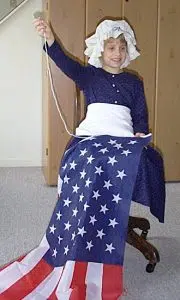
By giving them on-the-spot questions, the children will naturally need to gather the information so it’s ready at hand to share. Knowing they will be performing or recording it will cause them to remember the facts or stories, further cementing what they learn.
The child may want to use actual quotes from the person or, if inspired, might like to develop a short skit. By filming what they do, it not only preserves a memory, but provides a fun way to share their artistry with friends and family. Or, your child might just want to play in costume—that’s fine, too!
There are no hard-and-fast rules, just experiences.
The Costumes…
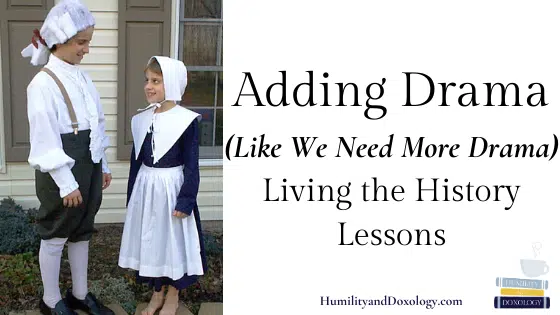
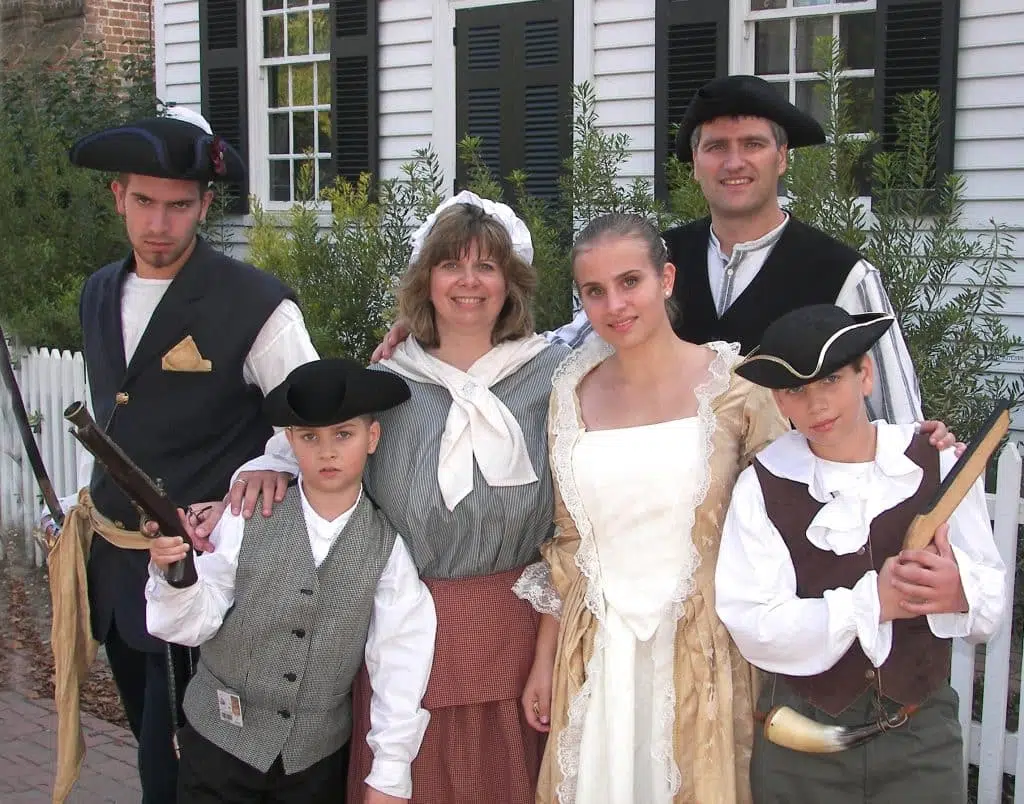
We’ve had fun over the years building up a costume box of goodies from so many eras of time. They didn’t have to be ornate—sometimes one of my skirts would work for a colonial dress for my daughter paired with one of her blouses and an apron, or just tucking in pants to knee socks provided “knickers” for our sons.
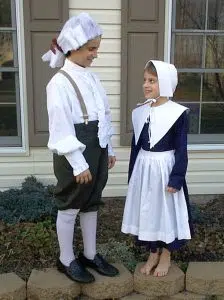
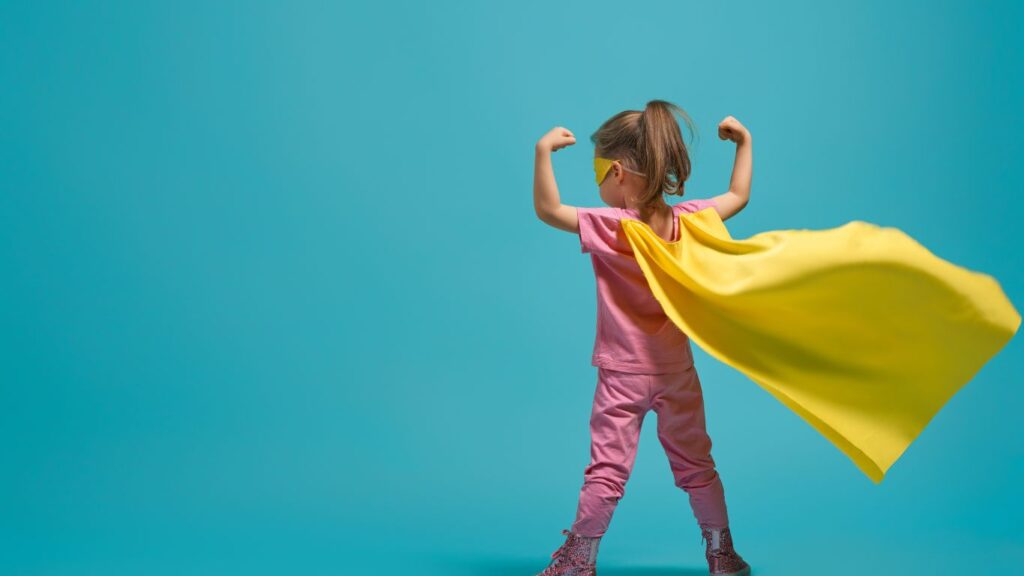
We found that hitting the stores after Halloween was a great time to get costumes at a reduced price. Pirates, Natives, princesses, Roman soldiers… there can be quite a variety! Even adapting a cape from a superhero costume can transform a child into Robin Hood or a Civil War nurse.


We’ve visited Army-Navy surplus stores for camo clothes, decking out our guys for military duty as a 20th-century war soldier. And of course, Goodwill or Salvation Army has been a great place to find treasures at affordable prices.
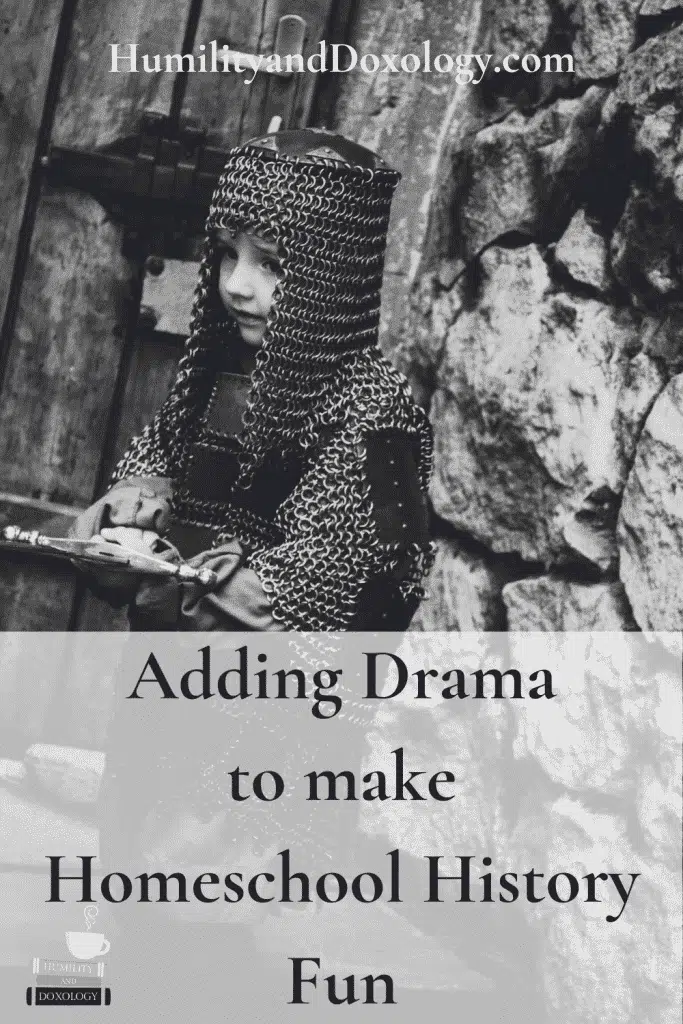
A peasant-style shirt with flowing sleeves creates a poet laureate, Shakespearean actor, or colonial founder or tradesman, to name a few. A gray sweatsuit is a great base for a knight—all you need is a cardboard breastplate, shield, and sword.
Clothes can be manipulated with a glue gun and some notions! A prom dress can become a Victorian or Medieval gown. A simple, white bed sheet or piece of muslin fabric can become a toga. During our Civil War studies, we turned up the collar of a wool coat we found second-hand and hot-glued fabric and ribbon to create a general’s uniform. The kids even sewed on their own brass buttons, and we made epaulettes for the shoulders out of yarn.
Check out images on the internet for actual era clothing so you can get a feel of what you will try to emulate. It doesn’t have to be perfect! Just try to capture the general look or features that make it unique.
Don’t Forget the Accessories!

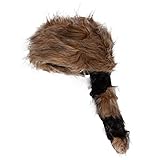
Look for accessories, too, such as suspenders, long gloves, or unique hats! Even just a cowboy hat, mob cap, or raccoon-tail cap can set the stage for a different era of time.

You can transform a character with a wig, too. Costume shops have wigs of all kinds to represent different fashions. Don’t be afraid to alter what you find! A straight, black-haired wig can be cut to represent the Egyptian era. You can also make a colonial wig by hot-gluing strips of cotton batting to an old hat.
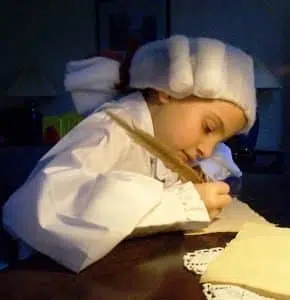
Find Inspiration…
You might want to search YouTube or Pinterest for easy-to-make kids’ costumes, accessories, crowns, capes, and more—the list goes on! Once your ensemble is complete, put it to use in a recording to show friends and family, and then add it to your costume box.
Over the course of years, we’ve had our kids and their friends rummage through the dress-up box, incorporating many eras of clothes at the same time. Roman soldier was chasing French Foreign Legionnaire, followed by a World War II private. In the meantime, Civil War nurses were at the “camp” preparing for the battle-weary to arrive. It looked like we got stuck in a time warp!
Now THIS kind of drama, I can handle!
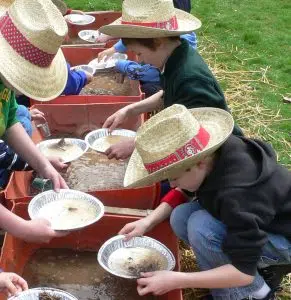
For world and American history studies that provide ideas for your children to “dress the part,” check out our Time Travelers U.S. history studies and Project Passport world history studies.

Amy Pak is an 18-year homeschool veteran to four and a “Maimy” to seven grandkids. She is also the co-owner, illustrator, and co-author at Home School in the Woods, a family-run history company known for its historical timeline figures and hands-on history studies. You can read more of Amy’s writing on her company’s blog.
How will you bring fun to your homeschool history lessons this week?