In this conversation, I sit down with Brandy Vencel, Mystie Winckler, and Abby Wahl (you know them collectively as the Scholé Sisters) to talk about homeschooling, self-education, reading deeply, and raising children who can engage ideas with wisdom and charity. All three women bring decades of experience as homeschooling mothers and now find themselves in a new season, watching the fruit of that labor as their children grow into adulthood.
As Abby reflects on their long view of education, she notes,“We are going to save civilization and build Christendom… because, you know, if we can’t go big, we might as well just stay home and read a book rather than write one.”
- What Is Scholé? Restful Learning Explained
- Why Write Scholé Every Day?
- Why Moms Need to Read for Themselves
- Engaging Kids With Current Issues Thoughtfully
- How to Have Meaningful Conversations About Ideas
- From Reading to Living: Embodying Truth
- What They’re Reading and Resetting Bad Homeschool Days
- Key Takeaways
- Find the Scholé Sisters Online
- You may also enjoy:
- Check out all the other interviews in my Homeschool Conversations series!
{This post contains paid links. Please see disclaimer.}
What Is Scholé? Restful Learning Explained
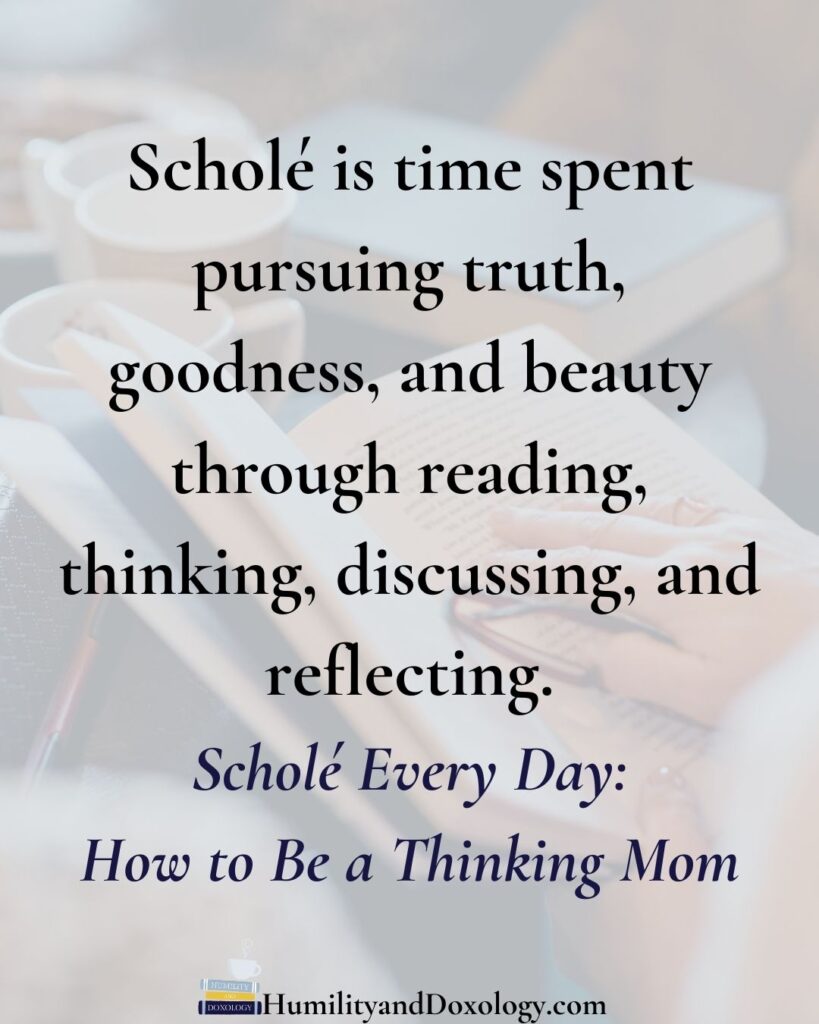
One of the first questions I asked is the meaning of scholé, a term unfamiliar to many modern homeschoolers. Mystie explains that scholé is often translated as leisure, but not leisure as mere relaxation. Instead, it describes a posture toward learning that is attentive, thoughtful, and human.
She explains that scholé is not passive: “Scholé is a Greek word that is translated leisure, but it’s also the word that English gets its word school from.” Rather than checking out mentally, restful learning invites students—and parents—into meaningful engagement with ideas.
Why Write Scholé Every Day?
The Scholé Sisters wrote Scholé Every Day as a way to gather years of conversations, podcast discussions, and lived experience into a single, coherent vision. Mystie describes the book as an invitation for moms to read, think, and talk together.
She shares, “A book is a great starting off point. You can collect your best ideas and say them in a very clear way.”
Abby adds that writing the book together made the project possible at all: “I would not have done it without two other people… it was an incredible amount of work, but it was very good.”
Why Moms Need to Read for Themselves
A recurring theme in the conversation is the importance of mothers continuing their own education. Reading is not framed as a luxury, but as essential formation. The guests encourage moms who feel overwhelmed to begin small and read imperfectly, trusting that growth comes through consistency rather than intensity.
As Mystie notes, reading is not about keeping up—it’s about cultivating habits that shape how we think, listen, and respond.
Brandy reminds us reading actually makes us better moms: “It’s not about me. Because if I want to be a fit counselor for these people that I love so much, then I need to invest in becoming the fit counselor that they need.”
Engaging Kids With Current Issues Thoughtfully
Rather than sheltering children indefinitely, the Scholé Sisters advocate for age-appropriate exposure to real ideas and disagreements. Mystie emphasizes the importance of helping children understand opposing viewpoints without fear: “We want to send our children out… ready to engage, not just to be safe and protected.”
Abby adds that asking good questions helps teens clarify what they actually believe: “Drilling down on what they actually believe by asking questions… has been really helpful.”
How to Have Meaningful Conversations About Ideas
Listening well is central to pursuing truth. Brandy describes the need for both availability and curation—being present when kids are ready to talk, even if it’s late at night, and helping guide them toward good sources.
Mystie frames this as a classical approach: “If both people truly do want truth, they will be looking for the truth in what the other is saying.” Conversation, they all agree, is fundamentally humanizing.
From Reading to Living: Embodying Truth
The conversation also addresses the danger of stopping at ideas alone. Truth must be embodied, practiced, and lived. Abby cautions against intellectual pride and encourages practical obedience: learning should change how we live, not just what we know.
What They’re Reading and Resetting Bad Homeschool Days
The episode closes with lighter but deeply practical wisdom. When homeschool days go wrong, Brandy admits, “99% of the time I turn it around by apologizing because it’s my fault.” Mystie recommends movement and fresh air, while Abby swears by walks and a good breakfast: “A really delicious breakfast really sets the tone for the day.”
Key Takeaways
- Scholé means restful, attentive learning—not disengagement
- Moms’ reading habits shape the intellectual culture of the home
- Children need guided exposure to challenging ideas
- Conversation is essential for pursuing truth
- Listening well humanizes disagreement
- Ideas must move from thought into practice
- Asking good questions helps teens clarify beliefs
- Apologies can reset difficult homeschool days
- Movement and nourishment support learning
- Community strengthens long-term faithfulness
Find the Scholé Sisters Online
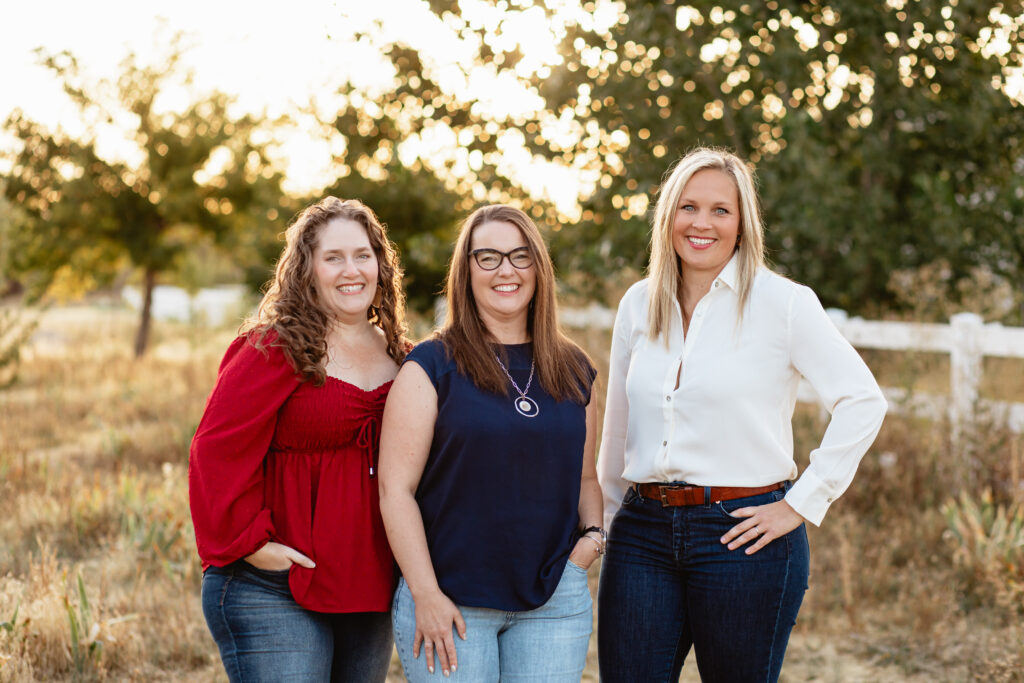
Brandy Vencel, Mystie Winckler, and Abby Wahl are the Scholé Sisters (no, they’re not related). Together they host a podcast and free online private community because their goal is to cultivate thinking moms because they believe in the revitalization of dialectic, the ordering of the affections, and in-person community. They believe life is too short to read bad books; that meaningful, drama-free discussion includes hearing different opinions, asking good questions, and loving truth, without fearing consequences. They believe reading widely, thinking deeply, and applying faithfully is the kind of self-education every woman needs. And that society will be revitalized by educated, confident, fruitful Christian women.
- ScholeSisters.com
- Sistership Community
- Scholé Every Day Book
- Simply Convivial and Simply Convival Continuing Education (Mystie)
- Afterthoughts (Brandy)
You may also enjoy:
- Ordo Amoris (with Abby Wahl)
- Charlotte Mason, Mother Culture, and More! (an interview with Brandy Vencel)
- Convivial Homeschool: Gospel Encouragement for Living and Learning Alongside Your Kids (with Mystie Winckler)
- Patience, Wonder, Ignorance, and Joy in a Classical, Charlotte Mason education (with Karen Glass)
- A Living, Humble, Joyful Homeschool Education (an interview with Cindy Rollins)
- Reading for the Love of God with Dr. Jessica Hooten Wilson
- Reading with Friends: Hosting a Book Club In Real Life (with Karoline Strickland)
- Faith, Story, and a Literary Life with Dr. Carolyn Weber
Check out all the other interviews in my Homeschool Conversations series!
[00:00:00] Amy Sloan: Hello, friends. Today, I am absolutely delighted to be joined by the Scholé sisters. And no, they’re not related, but I think you will recognize these guests. Actually, I’ve had each of these ladies on individually in the past, but this is the first time we’ve done a group episode. So I’m really looking forward to today’s conversation. So if you do not know the Scholé sisters, there’s Brandy Vencel, Mystie Winckler, and Abby Wahl. Together, they host a podcast and free online private community because their goal is to cultivate thinking moms, because they believe in the revitalization of dialectic, the ordering of the affections, and in-person community. They believe life is too short to read bad books. That meaningful, drama-free discussion includes hearing different opinions, asking good questions, and loving truth without fearing consequences. They believe reading widely, thinking deeply, and applying faithfully is the kind of self-education every woman needs, and that society will be revitalized by educated, confident, fruitful Christian women, as you are, if you are listening, I’m sure. So here at the beginning, let me just let each of you introduce yourself a little bit. Tell us about yourself, your family, and your experience with homeschooling. So Abby, why don’t you get us started?
[00:01:24] Abby Wahl: I’m Abby, and I live in Oregon in the Willamette Valley. My husband works on a farm, and we also raise sheep. We have five children, one grandchild, one daughter-in-law, and I am still homeschooling three teenagers. So there for a while, we had all teenagers because my little claim to fame tagline is, I had five children in five and a half years. So all of my children at one point were five and under, which is a lot because when you have twins, that’s actually two people at the same time. I think that’s the way math works. Yeah, yeah. Those first few years, we call the fuzzy years because we don’t really remember much of what went on. It was just a lot. So I started homeschooling because I couldn’t imagine sending my very precocious, questioning, oldest child to a half-day kindergarten that had a 45-minute bus ride both ways. Not to mention, he was already kind of reading and just insatiable with questions. I could just imagine him being told, no, no questions. Please sit down. Please sit down. No questions. And so also the thought of trying to go and drop off and pick up with infants plus toddlers. So really it was just me essentially getting out of picking up and dropping off because I didn’t want to do that twice a day or four times a day with infants and toddlers. So it was just a sanity saver. And then it turned out it was really great. So started researching and reading educational philosophy and had a lot of hit and misses there in the early years. I mean, we weren’t unschooling, but it was akin in the chaotic, fuzzy years. But it was really great. And we slowly grew our way into Charlotte Mason philosophy and classical education. And I think now it’s looking pretty excellent. And while I’m nearing the end, I have learned so much myself. So I think I’ve been doing this for over 15 years, if we’re not counting preschool, because it’s actually not classical to do preschool, right, Mystie? That’s right. Yep. It’s one of our controversial things, like you don’t actually need to do preschool, just life. So that’s us. And now that my kids are all big and teenagers and wonderful, we are taking a grand adventure. So this year we get to go to Europe, and that’s pretty spectacular. And I never thought that that was something we would do.
[00:04:22] Amy Sloan: Yeah. And those fuzzy years, it’s hard to have a vision for when all of these little ones are older and they’re responsible and they’re like really fun to be around. I love the teen years and young adult years for that very reason. How about you, Brandy?
[00:04:39] Brandy Vencel: Okay. So I’ve been married 24 years, and my kids are 17 to 23. I’ve got four of them. So our 23-year-old is married. My daughter-in-law is wonderful. She was homeschooled too. So cute. And they have one son who is like four months old, I think right now. I can’t do the math easily. So I homeschooled my children from the very beginning. Like there was no pulling them, you know, out of school or anything like that. And it’s funny how you look back and you’re like, so why did we? I mean, we had the precocious firstborn situation too. I think that happens to a lot of people where you’re like, really they’re teaching them how to read and he already knows how or something like that. But I really, we when we were first married, we lived like in a backyard apartment of a large family that had homeschooled in the past and their best friends homeschooled. So we were like suddenly thrown into this world of all of these homeschools. I had never really been around homeschoolers before. And they just had the coolest kids. Like their kids were so interesting and they weren’t this like cookie cutter graduate that had this set of interests that were like socially acceptable. And I don’t know, like each one of them was different and unique and I just loved it. And so I think really that’s what got us interested in homeschooling was just how fascinating these little kids were and how they felt like real individuals, not like, I don’t know, not like we felt like ourselves in our public school friends work, I guess. Like we felt like there was just a level of conformity that came from being in that environment. So anyway, so I found my philosophy basically right before we started. So I basically been doing the same thing for the last 19 years, just kind of like maturing it as we’ve gone on. But I mean, I even use the same curriculum now that I used in 2008. So there you go. Yeah.
[00:06:54] Amy Sloan: Which is if you want, if someone doesn’t know.
[00:06:56] Brandy Vencel: Ambleside online. So, I mean, I’m not going to say it’s the absolute best, but it’s kind of great.
[00:07:05] Amy Sloan: How about you Mystie?
[00:07:08] Mystie Winckler: Yeah, my husband and I were both homeschooled back in the eighties. And so we’re both second generation homeschoolers. We did try to start a classical school when I was pregnant with our oldest, just because we were kind of ornery firstborns who thought that we had to do everything better. And so when that didn’t pan out, I checked out pretty much every single day. I checked out pretty much every homeschooling book from the library and I was like, well, we’re going to homeschool better then.
[00:07:41] Amy Sloan: We’re going to avoid all the mistakes.
[00:07:44] Mystie Winckler: Yes, exactly. Of course. So when my husband and I decided, okay, we’ll homeschool then, we had a conversation about what was good about our homeschooling experience and what did we want to continue on as second generation homeschoolers. And both of us knew that what we really learned was what we read for ourselves. And I mean, mostly what we read, what we chose to read, because at that time when we were homeschooled, there was pretty much only textbooks. You either were, you’re a Becca, Bob Jones or unschoolers. And my parents kind of did half and half textbooks, Bob Jones in the morning, unschooling in the afternoon and weekly library trips. And so we said, well, you know, we kind of came to all education is self-education by rehashing our own educational experience, such as it was and decided we wanted to prioritize our kids loving to read like whatever that took or whatever that ended up looking like. And we did, you know, classical was kind of just coming onto the scene at that point and we did want to lean classical, but we really didn’t know what that meant. And so I went on a big research phase to learn what classical meant and eventually read Norms and Nobility because of Cindy Rollins doing a book club on it on her blog. And I was very inspired and felt like that really helped us cast a vision for what we wanted to do in our home. And so now we have a 22 year old down to 13 year old. Our second grand baby is due to arrive here any day now. And I have two kids at New St. Andrews College and two still at home. And it’s kind of weird to be in the stage where there are as many grandkids as kids living at home. It’s kind of a fast transition.
[00:10:11] Amy Sloan: Yeah, but such an exciting one. But that is, that’s really neat to hear all three of you, you know, you still are involved with homeschooling, but you’re also starting to see this fruit of the labor coming out and all three grandmas, which I actually didn’t realize ahead of time that all three of you are in that delightful phase. But, you know, at the beginning, as I was introducing you, I talked about how you guys are the Scholé sisters. And for those who are familiar with you, they’re like, oh yeah, Scholé sisters. But I can imagine someone listening for the first time, like what in the world is Scholé ? That doesn’t sound like English. What does this mean? So first, we like to define our terms, right? And then I also want to make sure that we understand the difference between what you mean by Scholé or restful learning and kind of the modern idea of like relaxation. So Mystie, I know you and I love defining terms. So I’ll let you get started with this one first.
[00:11:06] Mystie Winckler: Yes. So I think most of us were introduced to the word Scholé through Joseph Pieper’s leisure, the basis of culture. A Scholé is a Greek word that is translated leisure, but it’s also the word that English gets its word school from. So it has this connection to school, but it means leisure. So, you know, one common shorthand definition is restful learning. My husband, when he read leisure, the basis of culture said like, okay, so Scholé means that leisure is work. So it’s not like just taking it easy, which is sometimes what we use leisure to mean these days, but it is like work of the mind. It’s contemplation. It’s enjoying life for life’s sake, for worship. And so for our book, which we are here to talk about, we have a definition right away, right with the table of contents. And our definition is time spent pursuing truth, goodness, and beauty through reading, thinking, discussing, and reflecting. So it’s not leisure that’s doing nothing, but it is leisure spent connecting you to big ideas.
[00:12:37] Amy Sloan: Abby, what would you add to that?
[00:12:40] Abby Wahl: Well, I think that a lot of people have read also teaching from rest from Sarah McKenzie, right, who initially started kind of this venture. And so this idea that it isn’t stressful, that it isn’t anxiety inducing, it’s not just one more thing we have to add to our plates, but what it actually does is it feeds us. And so we can actually do our jobs better by taking time to learn ourselves in, we’re going to make the claim that it can be done in 30 minutes a day, and not even all at one setting if you need, that self-education really does help us become better mothers, better wives, better church members, probably I will say better women, right, a more fully human experience, right, because a lot of us are, you know, it’s very work culture, productivity, making sure we check all those boxes, but what can really, really make a difference is that we’re becoming educated, and that’s that’s scolae, and it’s every day we can do that.
[00:13:52] Amy Sloan: I like that you bring up that it’s not just like one more thing on a to-do list, because sometimes I think just in the homeschool world in general, right, where there’s like, okay, we need to do this, like what are the, what are the things we need to do to be good homeschool moms? And so we start like creating this list, this burden, you know, we keep adding more things, it’s like, oh, now, you know, rest, okay, I’ve got to put rest on the back too, and it’s not to be a burden, right, it’s a gift, it’s actually freeing us up to be more human. So Brandy, would you expand on what they have said already?
[00:14:24] Brandy Vencel: Well, I, I feel like we sometimes forget that we are body and soul. So, you know, like we’ll talk about, okay, you’re a homeschool mom, don’t forget to eat, you know, like, because we all did it in the early days where we were like, oh, I forgot to eat breakfast, and now I’m a total grouch, or maybe that was just me, but, you know, it’s like your soul needs feeding, too. And that’s part of what we’re getting at is this idea of, you know, just like you need to be responsible with your body and not forget to eat, not forget to be nourished, that there’s this intangible part of ourselves that also needs that. And it’s to our detriment, if we ignore that long term, like, sure, you can skip a day, just like you can skip a meal, you’re not going to die. But if you skip a meal for 30 days, we’re going to have a problem, right? And it’s the same kind of thing. But we don’t take it as seriously. Like, we have a word for not eating chronically, it’s anorexia, but nobody talks about, you know, like a spiritual anorexia, which I think a lot of us have, if we’re not careful, because it’s so easy to find other things to do than to spend time doing what we’re designed by God to do, which is to come to understand him, which is to come to understand truth, the things that he has made, the things that he has done. So I really think there’s like this nourishing component that is easy to forget, but so important to remember.
[00:15:58] Amy Sloan: Yeah, just like our bodies can atrophy, our minds and our souls can as well, right? Makes me think, is it in The Princess and Curdie, where George McDonald has Curdie, like has the ability when he touches the person, he can see not like what they look like on their outside, but like what’s really true about them on the inside. So that’s kind of a disturbing thought to think maybe we’re healthy on the outside, but our minds and our souls are warped. Yeah. Well, in your podcast, which if people aren’t familiar with, they should check it out, the Scholé Sisters podcast, but you always start with the segment Scholé Every Day. And now your new book, that is the title of your book. So why did you write this book? And yeah, tell us sort of the process of how you got from like the podcast to deciding to write the book, why you wrote it, all that good stuff, Brandy.
[00:16:50] Brandy Vencel: I mean, I think a book, in many ways, like a book is just the most organized and thorough way to present material, right? And so we have this thing that we’ve been talking about and talking around for, I mean, really amongst ourselves over 10 years, but the show is almost 10 years old, but there are discussions that precede the show even. And so we just, at some point, it feels like maybe we should put all this together so that people have one reference, where they can see what we’re really trying to get at here. And then we can build on it from there rather than maybe repeating ourselves or talking around it or never being quite clear enough or whatever. So for me, at least it was very, it was like a very clarifying endeavor, but we also wrote it because Mystie was like, you don’t have enough to do. So we’re going to add stuff. And then I found out that like, if you think writing is hard, editing is like even worse. So there is that part of it. Like we were just obeying Mystie and wasting our time. And look what happened.
[00:18:04] Amy Sloan: No, I mean, somebody could like go back and try to catch up on 10 years worth of podcast episodes, but for those of us who like may not be able to quite binge listen to that many at one sitting, this will be a great way also to, like you were saying, like cohesive kind of, these are the main ideas. This is what we want you to remember. So Mystie, did you, were you really the bossy pants behind this whole thing? That’s what I do.
[00:18:29] Brandy Vencel: We love her for it. It’s okay. We forgive her now. It’s like labor, right? Like we forgive you later because we forgot.
[00:18:38] Mystie Winckler: It has been, I think we’ve been working on the book for about at least three years, actually. And I did not expect it to take this long, but here we are, but it is actually done. So that’s really exciting. And I think, you know, as we’ve been the last few years talking about our plans for the podcast and different things, we’re coming up on our 10 year anniversary of the podcast. And we used to say at the beginning of every episode, for homeschool moms in the trenches, by homeschool moms in the trenches. And we sort of like our trench is, we’re climbing out of the trench. What are we going to do now? And so as we were having those conversations, we just realized that what we really wanted our mission to be was to encourage moms to read and to think and to really make that clear for ourselves and then for other people as well to kind of jump on board that train. A book is a great just starting off point. You can collect your best ideas and say them in a very, you know, clear, clear way. And our editor made us add more stories than any of us wanted to. So like once we got it started, then it was really our editor that became the bossy pants, but she’s great. And I think that this is the kind of book that will help ladies get local book clubs up and running and know that it is worth their time to read and then also to find people to talk about what they’re reading with.
[00:20:41] Amy Sloan: Yeah. Abby, how about for you? What is the book writing process been like? Anything surprised you about it?
[00:20:47] Abby Wahl: Oh, I have never written anything longer than like two blog posts for Mystie other than in college when I had to write a research paper on mad cow disease. So not the same. I’ve heard it both ways. Bovine spongiform encephalopathy. I know about this was really hard. So and I also discovered that I don’t know what a comma splice is, but I did it all the time. So that was good. I learned a lot of grammar. I also learned that we all could could make changes. It wasn’t just me and my my sad public school education. So I would not have done it without two other people, though. I don’t know if I could have finished a book on my own. It was it was an incredible amount of work, but it was very good. And I had lots of stories. I needed other things in my writing. So anyway, it was good. But I did look up our original like three years ago, like you said, we were doing this and one of our very ambitious goals, which I just love. So I’m going to share it because it was hilarious to me then and it’s hilarious to me now. We are going to save civilization and build Christendom. That is also our goal for this, because, you know, if we can’t go big, we might as well just stay home and read a book rather than write one. So I just wanted to share that we had a very ambitious goal to help build women up around us. And I think I love that so much.
[00:22:24] Amy Sloan: That is that is definitely on brand for you guys.
[00:22:28] Abby Wahl: Good. And so I just think like but after our first draft went through our editor, I don’t think any of us thought that was going to be happening. So anyway, we had a great time with this and we’re very happy with it. And and I won’t say proud, but yeah, like we finished this. We accomplished it like and we can actually congratulate the other people who did it. Like I’m like Mystie and Brandy, yours is so good. Thank you. So.
[00:23:01] Amy Sloan: So we don’t just need to read in community. We also need to write in community is what I hear you saying.
[00:23:05] Abby Wahl: Yeah, it would be good. Yeah.
[00:23:07] Amy Sloan: Well, you guys have all kind of brought up multiple times this idea of how important like wanting to encourage moms to read and to find communities to read. But I mean, you just say it like it’s important. But why is it important for moms to read for themselves? You know, most homeschool moms I know are reading a lot with their kids, which I would say also kind of counts. But you know, but also in addition, reading, reading on our own. And then what about the mom maybe who’s in the fuzzy years, Abby, or a mom who for whatever reason is very busy and is like, I do not have time to add this whole like reading on my own thing to my schedule. So why is it important? And what would you say to the mom who feels like it’s impossible, Abby?
[00:23:49] Abby Wahl: Okay, well, I’m going to address the impossible attitude first, because as our good friend, Pam Barnhill, he’ll used to say, I’m gonna open a can of worms. I would like you to check your screen time. You know, audit, like every week, mine texts me how many hours or minutes did I average a day on my phone. And if it is any more than 30 minutes that you have spent on your phone, I would definitely say you have time, no matter how busy you are. So that is my basically you have no excuses, quit whining, encouragement, or kick in the pants, whatever you want. But why moms need to read is because we are people who have a desire to know, right? That’s one of Aristotle’s most famous quotes, right? We all have a desire to know. And if we don’t, then there might be something that we need to check about. We need to wonder, we need to be looking for ideas. All of us are going to have problems. And one of the best ways to find creative solutions is to get out of our own heads and out of our own ways, and to expand our scope and our understanding. And we do this most easily by reading, because when somebody writes a book, they are putting so much time and effort and organization and thinking into what they’re doing, right? Writing is thinking on paper. And so when we are able to be mind to mind with greatness, great ideas throughout the ages, I mean, we just live in a such an amazing time where we can have any book pretty much any time delivered to us within a day or two, or instantaneously on a tablet, right? We don’t really have an excuse not to be interested in the world that God created and interested in the people that he created and how they glorified him through their works. And even the pagans were doing amazing things. So it also just changes our lives. It changes our perspectives, and it shapes us and molds us in ways that are too numerous to count.
[00:26:11] Amy Sloan: Brandy, what would you add to that?
[00:26:14] Brandy Vencel: Well, I mean, as far as moms reading for themselves and why it’s important, I would say, and this actually I got from an article in the Parents Review Magazine, which was something that was edited by the philosopher Charlotte Mason back in the late 1800s. But there was this, I quote it in the book, actually, there was this article called Mother Culture, and it had a lot of great stuff in it. But one of the things, I mean, it totally changed my whole perspective on things when I read this article for the first time many years ago, because it talked about this idea of like, you know, we get married, we’re like in our early 20s, like we are young, like, and I now have kids in their early 20s. And I’m like, we are so young, right? But we’re fine. We’re fine mothering these little tiny people who are like way younger than us, right? Like they’re new. So they’re, they’re fine with us. But it’s like, if we don’t keep maturing and growing, like if hypothetically, we just kind of pause there. My 23 year old son does not need the advice from a mom whose maturity level and knowledge level is a is a peer, right? Like he needs me to have gained 23 years of knowledge and wisdom and understanding since he was born. Because that’s what he needs to be able to tap into when he calls me on the phone and like, I don’t know what to do about this or whatever. And so the the article really gets into this idea of like, men at the time that this was written late 1800s, right? Like they’re going out into the world. And so they’re learning and they’re growing. And there’s all this stimulation. And so they are maturing. And the wife staying at home, if she’s not careful is not. And then she’s kind of like used up and the kids kind of dismiss her. Because they’re like, what does she really know? Like she hasn’t read a book since 1997, right? Or something. And so I just really, I was very struck by that, that like, it’s not, I mean, it is about me in the sense that I’m the one doing the work. But it’s not about me. Because if I want to be a fit counselor for these people that I love so much, then I need to invest in becoming the fit counselor that they need. When they’re young adults, and they’re launching out into the world. And you know, their dads at work and who are they calling? They’re calling me. And so I really think that that’s an important factor, which is why also, just to throw a little something in there, it matters what we’re reading. Right? Because like a trashy romance novel is like not going to do it.
[00:28:57] Amy Sloan: It’s not going to grow you in wisdom.
[00:28:59] Brandy Vencel: Not that I read trashy romance novels. I’m just saying. It’s not going to grow me up.
[00:29:06] Amy Sloan: I appreciate that you bring up that it’s not just for, it’s not a selfish endeavor, that’s just like self aggrandizing, like, oh, this is just for us, that it’s actually also something outward focused on being a source of wisdom for those who are younger, you know, the young men and women that we have in our lives, whether, I mean, I would even expand that not just our own children, but as we minister and serve in the church, right? That desire to continue to deepen further up and further in idea, our wisdom and our understanding really does matter so that we’re not just, you know, kind of useless for the people around us. Yeah. Oh, Mystie, what would you add or expand to what’s been said? Yeah.
[00:29:54] Mystie Winckler: What Brandy had to say just reminds me of the Proverbs. It’s like, whatever you get, get wisdom. And we’re reminded throughout the book of Proverbs and scripture to get wisdom. And I do think that books are an easy way these days to get wisdom. I mean, of course, that starts with the Bible and reading the Bible. That’s a foundational reading. And then also like the difference between a book, especially a book, you know, published over a hundred years ago that has stood the test of time, something that is by a known respected thinker is so much different than reading, you know, a social media post, even by someone who is a good thinker, because the medium is a part of the message. And a book is a medium that usually these days, you could just throw up a book. Anyone can do it. But across time, across time, a book is a thinker’s set of ideas that has gone through a refining process. They’ve spent time honing their words and crafting their message, and they take what they think, and they put it in its best form. And then it goes through editing, and then it is published. And so when you have someone’s book, you have their best thinking. They’ve done all this work for you so you can get at the idea easily. And that’s in contrast to social media posts, which are intended to be short-lived. They’re intended to be raw and unedited and on the fly. And perhaps there’s a time and a place for that, but it’s not the same concentrated dose of wisdom. It’s just not. And so if we do want to learn and grow in education and grow in wisdom, we will turn to books that have stood the test of time.

[00:32:21] Amy Sloan: You know, I talk to my kids about how you can only think with the words that you know or with the ideas you’ve been exposed to, right? So that’s why it’s so valuable to have a continuing growing and deepening vocabulary, to be exposed to metaphor and symbolism, all these things, because that actually enables you to think more deeply. But to what you’re saying, I’m also thinking about just the medium. Like you were saying, the medium is part of the message. So a book trains us in long-form thought, you know, actually following an argument, sticking with it. Or even with fiction, it may not be an argument, but still it’s that same idea of a long-form idea. Whereas shorter – you know, the short videos and the short posts are training us to make quick snap judgments, to take something in and just like think a thought immediately rather than sitting and contemplating over time. So that’s another part of that, I think. But we’ve been talking about, you know, books and ideas and all these things. And I kind of want to move like from reading specifically to just then what do we do with the ideas? Because we don’t just like sit around thinking thoughts all the time. So one thing that also goes along with what Brandy was talking about is sharing wisdom and as we talk to our children. So we’re taking these ideas, a lot of them are older ideas, but now we’re engaging with our children on current events or current ideas. How do we deal with these current issues? What are some ways that we can talk to our children about them? Mystie, I’ll let you take that one first.
[00:33:52] Mystie Winckler: Yeah, I think it is important to prepare our children for the world they are entering. And when everyone is little, you can have your safe and cozy home where none of the big scary ideas, you know, need to intrude necessarily. And, you know, there is something for that just early years environment. But as they get older, it is good for them and really necessary for them to encounter people and ideas that they disagree with and learn how to engage well, not just how not just know that they disagree, but to understand what the other person’s perspective is and how they get there to understand kind of the story behind the opposition as well as understanding where the Bible comes from to put together a biblical argument that can be persuasive to someone who disagrees, not just like an argument where you’re finger wagging, but you’re actually engaging with an idea without fear or even defensiveness because you’re secure in the truth. And that takes maturity of thinking and it takes practice and it takes faith and trust in God’s word and trust in God’s providence. And we want to send our children out into whatever sphere God has for them, ready to engage, not just to be safe and protected, like we’re putting, wrapping them up in bubble wrap, but that we’re actually giving them a sword and a shield to go out and participate in the battle.
[00:36:22] Amy Sloan: Yeah. I know that even young children can learn that the world is not safe. So if we try to artificially create a safe environment for them and the first time they’ve faced a challenge is where they’re having to deal with it for the first time on their own, in their own life, that is not going to be very helpful for them. I was very thankful that we had read lots of overcoming dragons and evil and darkness stories with Isaac before he received his cancer diagnosis, right? This is not, but we know there’s dragons, there’s a dragon slayer. Abby, what kinds of things would you add to as you’re talking with current issues with your kids?
[00:37:04] Abby Wahl: Well, I mean, we have intense conversations at our household and we have a lot of opinionated people. But one thing we have discovered is that drilling down on what they actually believe by asking questions, right? As our teenagers get older, I mean, they’re still coming to us for our opinions and our thoughts and things like that, for sure. Like I get a lot of questions about challenging topics and, you know, how to deal with it. And I think you know, ideologies of the world. And so having some background knowledge for that is really, really helpful. But also just being able to, if there is a current issue, right? I have an older daughter and we recently both read Keri Gress’ book, The End of Woman. And so we’re talking about feminism and that’s been a great thing. I also gave her as a young adult bad therapy, right? Like these are really hard books to read because they are not fun books. But having a common vocabulary and having a book that is a modern book, but has such great ideas. And right, like Mystie was saying, kind of has that holistic picture of it. And you’re having not just a blog post with something pithy, but the logical arguments, right? And then calling our kids out when they’re not being logical, right? Well, you have an opinion, but you’re not actually, that’s just, you know, circular logic or, you know, calling them out for a little bit of that. Which, you know, my teenage boys love that, right? They really want to argue and things like that. And so it’s a great time to help them hone their skills and, you know, use rhetorical devices in a proper way and really understand how people, right, how they are being, right, how the world is being hoodwinked or led astray because they’re using really good, you know, modes of pathos or ethos, you know, like these things. And so figuring out how to do that is really important.
[00:39:19] Amy Sloan: Yeah. I will say though, that when I have taught logic to my own children or to other children, one of the rules I established at the beginning is I’m going to be teaching you about logical fallacies, but you’re not allowed to throw these in your parents’ faces. That is against the rules of logic class. They just have authority. They actually do just get to tell you, even if they’re illogical. But feel free to use it with your siblings. That’s fine. But no two-quokkas at your parents. Brandy, what has your experience like been with discussing current issues with your kids?
[00:39:53] Brandy Vencel: I feel like there’s this combination of wanting to make sure we’re exposing them to current issues when they’re older. So things like getting a subscription to a newspaper or whatever, like magazines, like we have real printed material coming into our house. We have some magazine subscriptions. We have some newspaper subscriptions, that kind of thing. There have been times where I just read the news aloud because I can annoy people by being overly interested in the news.
[00:40:27] Abby Wahl: Because news is not schole.
[00:40:28] Brandy Vencel: Some people say that. So you have to have some exposure going on. But then as my kids were older and they have jobs and there’s all this stuff going on, I felt like there’s this combination of wanting to make sure I feel like there’s this combination of being available often at odd hours. I actually feel like I have bags under my eyes today because of just someone was suddenly willing to talk about something that I knew was bothering them at starting at 1130 last night. That was an extra late night. But being available to talk when they’re ready to talk. But then I think curation. So I don’t always have the answer or maybe a thorough enough answer. But if we’re talking to them enough, then we find out, oh, this is what they’re talking about. So for example, one of my daughters had a situation at work. So I have two adult daughters living at home. So one of them had a situation at work where it was like Christians trying to justify certain like sexually inappropriate behavior. And she had encountered arguments that were Christian arguments, but she had never encountered someone trying to make some sort of like argument as a Christian for something that she knew that was immoral. And so I bought her Rosaria’s Five Lies book. And so she’s been reading through that. But it’s like you kind of have to have this like you don’t have to have every answer, but you’re kind of like the resource person. Right. So there’s another time someone came home. I’m like, here is Wes Huff’s YouTube. Go use this to figure out your textual issues with scripture. I’m not going to give a lecture on that today. It’s late. You can watch this guy. But I mean, I just think there’s this it doesn’t have to necessarily be where the font of all wisdom. But one thing I do think I figured out is I need to have my pulse on what’s going on also, because I have to be ready with some of these resources. And I mean, I know how to ask people. It’s not like I need to know everything. But there is a sense in which just kind of staying generally aware of things is really helpful, because then your response when your kids like, for example, I had one come home. She had gone somewhere with someone from work. She’s like, Did you know this person’s a witch? Oh, okay. But like, actually, being aware that that’s a growing phenomenon in our culture kept me from flipping out. I think about 10 years ago, my response would have been like, what, you know, but so it’s just like kind of having your pulse on things actually helps you be the non anxious presence in the situation instead of being like, here, I’m going to up the anxiety because I there was a time when I would have been that person. So I just feel like there’s these pieces that go together, right? So like you staying on top of things, you making sure your kids are actually exposed to things, you listening, and then you being ready with resources and all of that kind of works together to being able to have some good discussions when the time comes.
[00:43:57] Amy Sloan: Yeah. So we’re having the conversations with our kids, Lord willing, and having an open an open home where we can ask questions. And I always tell my kids like, you can ask anything. Nothing is awkward. Well, it might be awkward, but I’m okay with being awkward. So ask the questions anyway. But we’re also thinking about engaging with ideas beyond our families, right with others. And sometimes, like your daughters are experiencing, you’re engaging with ideas with people who do not agree with you, and who come from very different perspectives. So how can we listen well, with understanding to people with whom we disagree, but also continue to pursue truth, Brandi?
[00:44:40] Brandy Vencel: Yeah, I really think when I was younger, I think when I listened to someone and I knew, I mean, you don’t always know that you disagree with someone, right? But like, when you’re in that situation where it’s like, immediately evident, there’s a conflict here. It’s like, you want to have the right thing to say. So you start listening, so that you have the rebuttal, right? Like, that’s the one track that your mind is on. And it’s, it’s like a form of listening, but not listening. I think when we’re doing that, but it’s like, we’re kind of feeling the importance of this conversation. And so the more I would tell myself, like, don’t do don’t do that. Everyone says that’s the wrong way to do this. I would just keep doing it. Because I didn’t really have an alternative. And it wasn’t until I realized I need to tell myself and I kind of like learned this in a different context. But just like, when you have a bad habit, the solution is often to replace it with a good habit, not to replace it with nothing. Right? And it was like, well, this is my habit. My habit is to get a little bit nervous. And so just start working my rebuttal right away. Well, then like, what’s the alternative? Because the alternative is not nothing. And telling someone to list or telling myself to like, listen better, I think was just too non defined. Like it wasn’t, wasn’t really telling me anything. And so for me, it was like, I started realizing what I need to do is look for the common ground that I have with this person. Like, even though we disagree, there probably is some place where we agree, which will be the starting point for the next level of the discussion is actually going to be the place where we agree. And so when I was able to tell myself, look for the place of agreement, it was like, Oh, now I have listening skills that I didn’t have before. Because now I’m listening and looking for something that will be the point of commonality. So for me like that, because really you use that to solidify the relationship with the person. So you get future conversations, but you even can use that as the jumping off point to like, continue the conversation you’re already in. So for me, I don’t know, for me, I just needed to have that replacement. I couldn’t just say like, be a better listener. That didn’t, didn’t do anything for hours. Yeah, just stop. Just be better. Come on. Just be better.
[00:47:09] Amy Sloan: That’s so important too, because when we’re just listening in order to reply, instead of actually to understand, it’s like we are ignoring the humanity, that person is an image bearer of God, but we’re no longer viewing them as an image bearer. We’re just almost viewing them as a vehicle for the argument or for the conversation. And we’ve actually really dishonored them as a person at that moment. So that’s interesting. I have to think about that more, but Mystie, what is your kind of take on this idea?
[00:47:42] Mystie Winckler: Yeah, I have a similar, I guess, a different take on this same idea where if you’re looking for the place of commonality with the person, that’s like the relational element of the argument, of the argument, but even terrible ideas, terrible errors usually have a kernel of truth that they have distorted, or they’ve taken truth only partially, and then that creates an error and a distortion. But if you read through history and you read through philosophy, then it’s very evident that you can overcorrect from an error and end up with a very similar kind of mistake being made, where if you say, okay, so we have this error, and in reality, there’s a kernel of truth in the error, but it’s taken wrongly. If you assume that everything about the error is erroneous, and you throw it all out, and you want something the exact opposite, then there’s probably some kernel of truth that you’re actually rejecting in order to reject the error. And then we get this kind of seesaw effect of ideas where we’re really not seeking truth, we’re just reacting against error, and that’s not a healthy way of thinking. And so that’s why Scholar Sisters is kind of reclaiming that classical idea of a dialectic, a dialogue, a back and forth, where if both people truly do want truth, they will be looking for the truth in what the other is saying. And they might look for, or they might notice the points of departure, but you don’t want to ignore or react against any element of truth, even if it’s keeping bad company.
[00:50:11] Amy Sloan: Yeah. Abby, what would you add to this idea?
[00:50:15] Abby Wahl: I mean, similar things, right? Finding common ground, keeping the relationship. I mean, I think that the best thing we can do is, conversation is humanizing. When we stop having conversations, then this is when we get so… The media would love us to believe that no one ever has conversations anymore, and that we’re so polarized, and that we believe so many different things. I mean, I can agree with people not in my political party on a lot of things. There’s things that we disagree with, but that doesn’t… And just because we hold different positions does not mean that they themselves are evil or whatever Q name, right? Fascist or stupid, right? Anything. When we start name calling or lumping people together, it dehumanizes them, and it takes away from the ability to have a conversation about ideas. So if we can keep the main thing, the main thing, then we can actually hold different opinions and be fine with that. And I can still… All my family are not believers, and so we have very different beliefs about everything. But yet, we can still get together for family meals and still have conversations that are really good. And I think it’s great sometimes when my kids say things that are like, you believe that? I’m like, out of the mouths of babes. It’s great. And they just don’t have the same history or I know how that’s going to go over. They don’t have the whole, I guess I would say fear of man. They only have the fear of God, and they’re happy sitting in that because they don’t have any of that baggage that sometimes we adults bring into things. So take a cue from kids who just want to say, don’t you love Jesus? Why don’t you want to go to heaven?
[00:52:13] Amy Sloan: Yes, kids can make things both easier and more awkward sometimes at the same time. All of this, though, is reminding me, I think it’s a G.K. Chesterton quote. If it’s not, I mean, it ought to be, but I am actually pretty sure it was G.K. Chesterton. Something like the problem with a quarrel is it interrupts a good argument, right? And so when it’s just name calling or just quarreling, you actually have ruined the opportunity for a really good dialectic, a really good argument in the classical sense of that conversation.
[00:52:47] Abby Wahl: I think the other thing, too, is just to become unoffendable, right? I think that’s a lot of it, too, is like, don’t take things personally from other people because if we’re offended or we get defensive, then we were talking about this earlier, it’s a lack of maturity on our part, right? If we’re standing in the truth, then we don’t need to be offended and we don’t need to come up with like, we don’t need to get them on our side always. Sometimes you just need to plant that seed of truth and be okay with that and be mature enough to say, oh yeah, I still care about you and I’m not going to be offended by your behavior.
[00:53:28] Amy Sloan: I mean, because ultimately it’s like we only have control over our own actions, our own reactions, right? We can’t actually control or change anyone else around us. That’s actually kind of freeing to be like, you know what? I’m not the Holy Spirit, so I don’t have to take that burden on and, you know, it’s a lot less stressful that way. Well, how do we move from all this reading and thinking and great ideas to actually applying and embodying truth so we don’t just end up as Gnostics who sit around thinking our, you know, deep secret thoughts without actually putting them out here in the world?
[00:54:05] Abby Wahl: Yeah, so I think that Brandy touched on it a little bit, right? We need our souls nourished as well as our, you know, our bodies and our minds, right? I think if we are following the greatest commandment, right, to love the Lord your God with all your heart, mind, soul, and strength and love your neighbor as yourself, this helps us to understand that it isn’t just in our minds and it isn’t just in our hearts, but it actually has to be an outworking and it has to, we will be known by our fruit. So how do we embody truth is, well, are we reading truth and are we actually thinking about how we can apply it and then repenting when we don’t apply it correctly or don’t even do it or ignore it? And those are the things that we can practice, right? Apologizing to your children when you have a harsh word that stirs up anger. I think memorizing scripture is one of the best ways so that we hide God’s word in our heart and then it comes out. The application can seem hard to do because not everything is like proverbs that, you know, is very good at directing us to, you know, do the right thing. But I think when you read a lot and you have a variety of things, it is amazing to me how God just puts an idea in and then everywhere you go, you find something like that again. Like, oh, he’s talking about sanctification again, talking about having a hard time. Oh, having this character in this book is really struggling, but they’re, you know, praying to God. Like, it’s amazing how these, I guess, Charlotte Mason would call it the science of relations where things, you know, touch one another and then just bring it into a fuller picture of what we’re supposed to do. I don’t think it has to be, you know, this formulaic thing. Well, I’ll just read this and then I’ll think about it and then suddenly I will produce a widget that will make me apply it just perfectly. It’s much more organic than that. And I think just training your mind to kind of be looking for those things is really helpful. And I don’t know, whenever I have a problem, I will ask for a book recommendation and somebody usually has something for me. And then I can take some of the ideas and fit it to my situation. And that’s very, very helpful.
[00:56:37] Amy Sloan: Brandy, what would be your perspective? Oh, I think you are. Oh yeah. Can you start again? Because I think you were muted or it just wasn’t picking up at first. I think my cord is dying on my microphone.
[00:56:56] Brandy Vencel: So I, I think sometimes we have too narrow of a definition of application. And so then we’re like, well, I don’t have something I can immediately put on my to-do list. Therefore, I don’t have an application. And I’m just not sure. Like that is how it works for some things, right? But probably the less directly practical the book seems, the less, um, the less likely it is that your application ends up on a to-do list. And so to some extent, some of this is just this idea of like, as you are transformed, as you renew your mind, you are changed. And then you live out the truth that like, if you’ve really apprehended truth, you can’t help, but live it out. So it’s like, you don’t have to manipulate yourself into an application. It just starts to happen. But I think about how, for example, like I’ve spent tons of time reading economics books over the last couple of decades. And I mean, even reading them with my husband, like not just by myself. Well, it’s not like I’m going to make any policy decisions for this nation or something, right? Like, like that’s not my calling in life. So I’m not going to have that kind of application. There could be some guy somewhere who reads the exact same book list and like literally puts things on his to-do list because he’s in charge of some But for us, it’s like, it comes back around once or twice a year when we need to vote, right? So now we’re not just voting like, oh, brainless party line or brainless, like this, you know, thing that was sent to me in the mail, but instead, oh, I actually, because we’ve read enough, we have the ability to think through this proposition that we’re trying to come up with. we have the ability to think through this proposition or this bond measure or whatever it is, or this person’s platform that they say that they subscribe to or whatever. So, you know, it’s just like, that is an application, but it’s not immediate. I might’ve read the book in January and I don’t vote till November, but it’s still, you know, it still goes together because you’re building out a framework for how to think about things. I mean, that’s just one application, but I just think when you start knowing truth, then it just comes out in all the different aspects of your life. And so those things are applications. They’re just not the kind of thing you put on a list. They’re not as measurable, I guess.
[00:59:36] Amy Sloan: Yeah. And going all the way back to something I think you said at the very beginning, thinking about it, like with the food, right? Like how we eat or don’t eat. You don’t necessarily like remember every meal that you’ve had over the past six months, but who you are, your health, your strength, your stamina now is based on all those six months of food that you ate, right? Even all the many, many meals that you don’t even remember what they were, but they are now become a part of who you are. And so it’s impacting you now. And I think what we read or contemplate or study, of course, is very similar. I don’t even remember a lot of the details of the things that I have read. Actually, I’m really bad at remembering the details, but I would like to think that they have still been part of my soul formation, like who I am now and the way I think has been impacted by those things, much like sermons. I don’t remember all of the details of all the sermons I’ve heard this year, but they have been used by the Lord as part of my sanctification. Mystie, what would be your thoughts about this?
[01:00:38] Mystie Winckler: Yeah, I think that the applications can be very unexpected, and we might not even realize at the time the influence of the ideas that we’re reading on our actions and our thought patterns, but they’re there. And a few examples over the years, I’m currently rereading Bleak House by Charles Dickens, but I remember the first time I read it, my third child was a baby. And at that time, I was pretty sure that whether or not the dishes were done, whether or not the laundry was caught up really didn’t matter. There were bigger and better things to do, and you just kind of had to put some time, I guess, into the mundane chores, but as little as possible. And I really disdained general housework. And so I was painting the kitchen, a much more interesting project than doing the dishes, and listening to Bleak House. And it wasn’t until probably several months after I finished Bleak House even, and bits of it come back to mind, and I realized that actually every female character in Bleak House, we actually learn about who she is. We learn her character from the way she keeps house. And it’s not because that was Charles Dickens’ theme. It was just a way he communicated about the character. And it works because it’s true. The way we keep our house is a testimony to our character. He wasn’t making up that connection to use it. It just is there, and he was utilizing it as a way to set these characters up. And so then that was just a convicting realization. And it’s not like it was part of the point of Bleak House at all, but that was the character formation that I needed at the time. And so the Holy Spirit applied it in that way to me. Another one, it was a couple years ago, we read Irreversible Damage in Inside Sistership for a book club on transgenderism among especially school age or teenage girls. And you think, okay, this is a polemic, like I’m gonna just get arguments for reinforcing my views, and that’s what I expected. But there was just this one liner in the middle of the book, where Abigail Schreier says, in her different conversations with these girls and their families, she realized that it’s not so much that these girls wanted to be boys. They just had no desire and no reason to be a girl. They wanted to be anything other than a girl. And that was just like a pierce to the heart statement. I was like, oh man, like what we need are girls who love being girls. And then my mind’s like working on, how can we do that? How can we how can we do that for our own daughters? How can we do that for ourselves? And then how can that change our perspective on random girls that we meet around town who are having issues? Like what if, how can we cast a vision for how wonderful it is to be a girl? And so just kind of these ideas, you never know which part of the book, whether it’s a novel or a nonfiction, really is going to be used by the Holy Spirit in your life. But it is the Holy Spirit applying those ideas as you encounter them.
[01:05:18] Amy Sloan: That’s incredible. I love both of those examples. I especially like that one comes from fiction and one from nonfiction, because sometimes we can maybe think, well, I guess I go to nonfiction for my practical stuff and I go to fiction for my fun. But actually, that’s not the way it works. I think I have been changed more by fiction many times than nonfiction. Well, this has been an absolute delight. I’m also very proud of ourselves that we found a time that worked for four very busy ladies. The calculus of that was a lot, but we made it. But here at the end, I do want to ask you guys the questions that I ask all of my guests. And the first will be kind of familiar to you. It’s almost like a Scholé every day kind of question. It’s just, what are you personally reading lately? So Mystie, I’ll start with you.
[01:06:09] Mystie Winckler: Well, right now I am trying to keep up with all the various book clubs. So that means inside Scholé Sistership, I’m reading Modern Times and Bleak House and Basic Economics by Thomas Sowell. And then we’re also reading The Christian Family by Bavinck. And my local book club is reading Dietrich Bonhoeffer’s The Cost of Discipleship. So right now it’s like all assigned reading and all varied, but that just makes for really interesting connections. And I’m definitely a multiple books going at once kind of person.
[01:06:53] Amy Sloan: Yeah. Well, you never know what mood you’re going to be in. You need to have multiple books going at any given time. I’ll actually mention, there is a new, well, by the time this episode comes out, I assume the book will already be published, but Simonetta Carr’s newest picture book biography is actually on Herman Bavink. So I have to check that one out. That’s cool.
[01:07:13] Abby Wahl: Yeah.
[01:07:13] Amy Sloan: All right. How about you, Abby? What are you reading lately?
[01:07:16] Abby Wahl: Um, again, Basic Economics, and I’m about to pick up Bleak House again. I have to pause during the school year because I have a lot of literature that I’m teaching already. And so having another big literature is hard for me. So when I get to go on Christmas and Thanksgiving breaks and different breaks, then I can dive into more fun reads. But right now we are reading The Odyssey, the translation from Emily Wilson, because it’s extremely readable. And I’m teaching that in literature. We’re doing the Old Testament this year. So right now we’re in Judges, which is an incredibly violent book. And it’s full of teenagers. So we’re just talking about Samson and then the Levite with his concubine. So that should be a real fun and not an awkward conversation this week. I am also reading Awe by Paul David Tripp. I got that at my library. So I did a book for our Bible study in our church, and it wasn’t very well written. This one is much better written. So I like Paul David Tripp. I think he’s, in this book, he’s, it’s an interesting idea, but how if we lose our awe, then it causes all sorts of problems. And that’s what’s really pretty wrong with the world is his premise is that we’ve just lost that awe and wonder, and that leads to real problems. Or we see awe in the wrong things. So those are all the things I’m reading right now. I’m probably actually reading more, but I can’t think of. Oh yeah, and then End of Woman, Bavinck, and Xenophon.
[01:09:00] Amy Sloan: That Tripp book sounds really, really excellent. You know, humility and doxology is also like worship and wonder. So I often like, I think that wonder and awe is such a huge part of the end of education. So that book definitely sounds like one I should add to my list. All right, Brandy, what are you reading?
[01:09:21] Brandy Vencel: I’m not going to repeat what they’ve already said. There is some crossover between the three of us, just of necessity. I guess Abby did mention one of mine. I was going to bring up Economicus by Xenophon. So we’re reading through it. I’m leading a group through it inside of sistership as part of our, we have a mentorship going on called a feminism detox. So mine is Xenophon and it’s just been so fun so far. I really, it’s one of, Xenophon is one of those things where it reminds you that when people write about ancient authors, they make them sound like convoluted, complicated and fancy. And actually they’re like regular people. And if you get a good translation, it’s pretty accessible, like all by itself. So we’re having a great time. It’s been great. And it’s, it’s been fun because it is one of those books where even though it was written thousands of years ago, there’s a lot of direct application. This is just talking about estate management, like a good estate management. So it’s like it’s common humanity stuff, you know? Exactly. So the other book I’ll bring up, this is what I’m listening to when I’m, I’m working on cross-stitch Christmas ornaments, which is what I do this time of year. I know this is going to be later, but we’re recording in the fall and I’m working on these ornaments and I’m listening to the five second rule by Mel Robbins. And I am convinced you laugh. I am convinced that actually in her own way, she is expressing a lot of what Charlotte Mason meant by the way, the will and the ability to make yourself do something. And like, there’s, there’s just a lot of things in there where I’m like, actually, this is what Charlotte Mason was talking about, but it’s like in modern language, which I think is great. So when I have people come and take a class with me and they keep saying like, I just have a really hard time making myself do anything. Like this is now my go-to book for those people because it’s just so simple.
[01:11:30] Abby Wahl: The only reason I was laughing is because I was telling Mystie about this. Oh really?
[01:11:35] Brandy Vencel: Really?
[01:11:35] Abby Wahl: Yeah. And I said, I heard, I heard it like a podcast on it. Like it’s like a countdown thing. And I was like, I just don’t think she has enough for a book. So I was like, it was fine idea as a podcast, but I’m just not sure it really needed to be fleshed out into a book. So.
[01:11:51] Brandy Vencel: I wondered how she was going to pull it off too. And there are a few places where I’m like, yeah, this could have been shorter because she is kind of repeating herself, but she has whole chapters on like how she basically cured herself of anxiety. And it is like, I learned to take control of my thoughts and direct my thoughts. And I mean, like she has a number of things like that where she’s going through and talking about applying it, using the rule with some other concepts to apply it to very specific situations that really, really weigh people down. So it it’s like her chapter on anxiety is actually excellent.
[01:12:28] Abby Wahl: Okay.
[01:12:28] Brandy Vencel: Cause I’ve always thought like people will ask me why I don’t struggle with anxiety and I couldn’t figure it out. And I was like, Oh, because I naturally do what she’s teaching in this chapter. Like for whatever reason, like that just comes naturally to me, but she’s like, Oh, you could, this is a learned behavior. You could actually learn how to control your mind. So it’s super good. I mean, you have to wade through the fact that like, she’s not a Christian, so, you know, she’s neither was Xenophon. Yeah, exactly. But Xenophon is not going to be like, so your divorce was great, you know, but Mel Robbins might be, so, you know, you got to kind of take it with a grain of salt, but still, I think it’s a helpful book for at least some people. So.
[01:13:10] Amy Sloan: All right. Well, all of these are so many amazing titles. The problem with these questions, as you guys well know, having many book recommendations on your podcast as well as, and you’re just like, Oh man, I thought I was, you know, checking some things off my TBR and now I’m just adding more book titles. It never ends.
[01:13:29] Brandy Vencel: All right. The problem is your wallet. That’s the problem. Yeah, yeah.
[01:13:33] Amy Sloan: But again, like back to what Abby was saying, right? If we’re going to save civilization, man, I kind of like keep building my library. That’s right. All right. Final question is what would be your best tip for turning around a homeschool day that seems to be going all wrong, Brandy? I’m sure you’ve never had a day like that. Never.
[01:13:51] Brandy Vencel: Well, okay. So I’ll be really honest. Like 99% of the time I turn it around by apologizing because it’s my fault. I mean, even if, you know, like the train got out of the station and then my kids are like, you know, whatever you usually, if I kind of backwards engineer it, it, I, it’s my fault. So, um, so usually the quickest way to turn it around, I only have one student now. So, um, I mean, he just canceled school on me sometimes. I mean, we have other issues now, but, but back when I had multiple students, you know, I, I would say most of the time the solution was for me to apologize and just do like a formal reset. Like everybody come in the living room, I need to apologize. And then we’re gonna start fresh with mom making better life choices.
[01:14:46] Amy Sloan: Yes. It would be really nice if it could, it was just always our kid’s fault, but I agree. Like most of the time mom has a good bit to do with it for sure. Mystie, what would be your best tip?
[01:14:58] Mystie Winckler: One of my go-to strategies for a reset was just to get outside. And so oftentimes that was me. If the piano practice was just a bit too much, step outside, just walk to the end of the driveway and back. Um, if it’s the kids, if there are math tears, then they know run around the house, do some laps and come back and we’ll try again. But movement, drink of water, some fresh air, even if it’s super cold or super hot, that will usually help.
[01:15:32] Amy Sloan: Yeah. Just like a little house plant. You need your sunshine and your water.
[01:15:37] Brandy Vencel: I made a bet with myself on how long it would take her to say a drink of water.
[01:15:44] Abby Wahl: Did you win?
[01:15:47] Amy Sloan: My daughter says hydrate or dihydrate. Oh, now she’s got all of us saying that hydrate or dihydrate. All right, Abby, last but not least, what would be your best tip for turning around the day?
[01:16:03] Abby Wahl: So I, I have teenagers who cannot yet drive themselves. So part of my job is to drive people everywhere. And so we were actually, I was driving my kids and I printed off our little, um, uh, itinerary here or your outline here. And I had him read the questions out loud, just so I had it once more kind of going over these ideas. And I said, okay, what, what’s the way we turn things around boys? And he’s like, are you going to use this? They were both like, you’re going to use this on the podcast, aren’t you? I was like, only if you give me something good and you give me your permission. Um, and which they did. So, um, they said, yeah, probably a walk. And I said, okay, that’s your hot tip. Yeah, that, that helps just like get, get outside for a few minutes, just take a break. Cause that, that helps. And I said, and my big tip is if things are not going well, I usually just need to feed you. And then they also responded with, yeah, a really delicious breakfast really sets the tone for the day. And, uh, and especially if someone else prepares it. So, cause you know, you get to a point where your kids are capable of fixing their own breakfasts, but it either takes too long or they just kind of skip it because they don’t want to deal do breakfast either. But I have found that if I need a lot of buy-in for the day, or if we’ve had a couple days that have been a little more challenging, um, a big breakfast goes a long way to, um, making my children love me and love school again.
[01:17:35] Amy Sloan: Yes. Got to start the day with, with protein. That’s right. Well, guys, thank you so much for taking the time to chat with me today. Um, where can people find you and individually as a group and your new book all around the internet? Oh yeah, go ahead.
[01:17:56] Abby Wahl: Um, you can buy our book on Amazon and at this point we should have it on audio on Kindle and, um, you know, all the usual places. Yes. All the usual places. Um, and we really thank you for doing that. Um, and then also if you want to join the most excellent community that is, um, ad-free, drama-free and, uh, free always is sistership. So schoolaysisters.com slash sistership. And it is an active and lively place where homeschool moms get to talk about what really matters. And we talk about our own self-education as well. We get book recommendations and, um, there’s just a lot of wisdom and a lot of principles that, um, we discuss and educational philosophy.
[01:18:43] Amy Sloan: And Brandy, where can people find you in your Charlotte Mason wisdom?
[01:18:49] Brandy Vencel: Uh, uh, my website is afterthoughtsblog.net. And from there, there’s a button at the top, I believe that takes you to the Charlotte Mason think tank, which is where I teach her basic principles.
[01:19:04] Mystie Winckler: And Mystie, how about you? I write and podcast at simplyconvivial.com, uh, about homemaking and doing life cheerfully.
[01:19:14] Amy Sloan: And I’m going to have links to all of, all of those things, links so that you can buy their new books, go late every day, or download the audio book or both, you know, get a few copies, give them out as presents, have a book club, have a book club with friends and read the book together. Um, I’ll have links to all of those things and the show notes for this episode over at humilityanddoxology.com. I would love it if you would take a minute to leave a rating and review for the podcast, to share this episode or the video if you’re on YouTube, to share it with a friend. And until next time, happy homeschooling.