Homeschooling can feel overwhelming, especially when expectations are high and encouragement feels scarce. In this episode of Homeschool Conversations, I sat down with Whitney Newby (homeschool mom of four, author, and founder of Brighter Day Press) for an honest and hope-filled discussion about homeschooling as a way of life rather than a checklist.
Whitney shares how homeschooling became part of her family story almost by accident and how her approach has shifted from recreating school at home to embracing organic, life-giving rhythms. She reflects on the beauty of leaning into children’s strengths, the joy of reading aloud together, and the deep relationships formed through shared days.
The conversation also addresses real challenges, including burnout, overcommitment, and the pressure to “do it all.” Whitney offers practical wisdom on guarding margin, setting boundaries, and recognizing what is truly essential for each unique family. Her encouragement to weary moms is especially powerful, reminding listeners that unseen work matters deeply and that God sees every act of faithfulness.
We also dive into the importance of choosing books with wisdom in today’s cultural climate. Whitney explains how she navigates the library, vets reading material, and keeps open conversations with her children, grounding the entire approach in Scripture and discipleship.
The episode wraps up with favorite recent reads and practical advice for turning around homeschool days that feel like they’re falling apart, emphasizing grace, prayer, worship, and the freedom to pause when needed.
- Homeschooling as a Family Story, Not a Plan
- Letting Go of School-at-Home Expectations
- Leaning into Strengths Instead of Chasing ‘Well-Rounded’
- The Joy of Books and Time Together
- Avoiding Burnout by Guarding Margin
- Encouragement for the Weary, Unseen Mom
- Keeping Christ Central Through Intentional Rhythms
- Navigating the Library with Wisdom
- Reading Lately and Resetting Hard Days
- Key Takeaways
- You may also enjoy:
- Find Whitney Newy Online
- Check out all the other interviews in my Homeschool Conversations series!
{This post contains paid links. Please see disclaimer.}
Homeschooling as a Family Story, Not a Plan
Whitney Newby never intended homeschooling to be part of her family’s long-term plan. What began as a one-year experiment just weeks before kindergarten became a lifestyle that reshaped her family’s rhythms. “We honestly never saw homeschooling as part of our family story until about two weeks before our oldest son was to go to kindergarten,” she shares. With four children now ages 13, 10, 8, and 6, Whitney and her husband homeschool while running their family business, Brighter Day Press, embracing a life built around learning together.
Letting Go of School-at-Home Expectations
Like many homeschool parents, Whitney initially tried to replicate a traditional classroom at home. “I started out…trying to replicate school at home because that’s all I knew,” she explains. Over time, her approach shifted toward a more organic rhythm where “all of life is learning.” Children practice math on the swings, read across the house, and grow within a flexible structure that feels increasingly natural. “Now I’m finding it feels more natural than it would for me to send my kids to school.”
Leaning into Strengths Instead of Chasing ‘Well-Rounded’
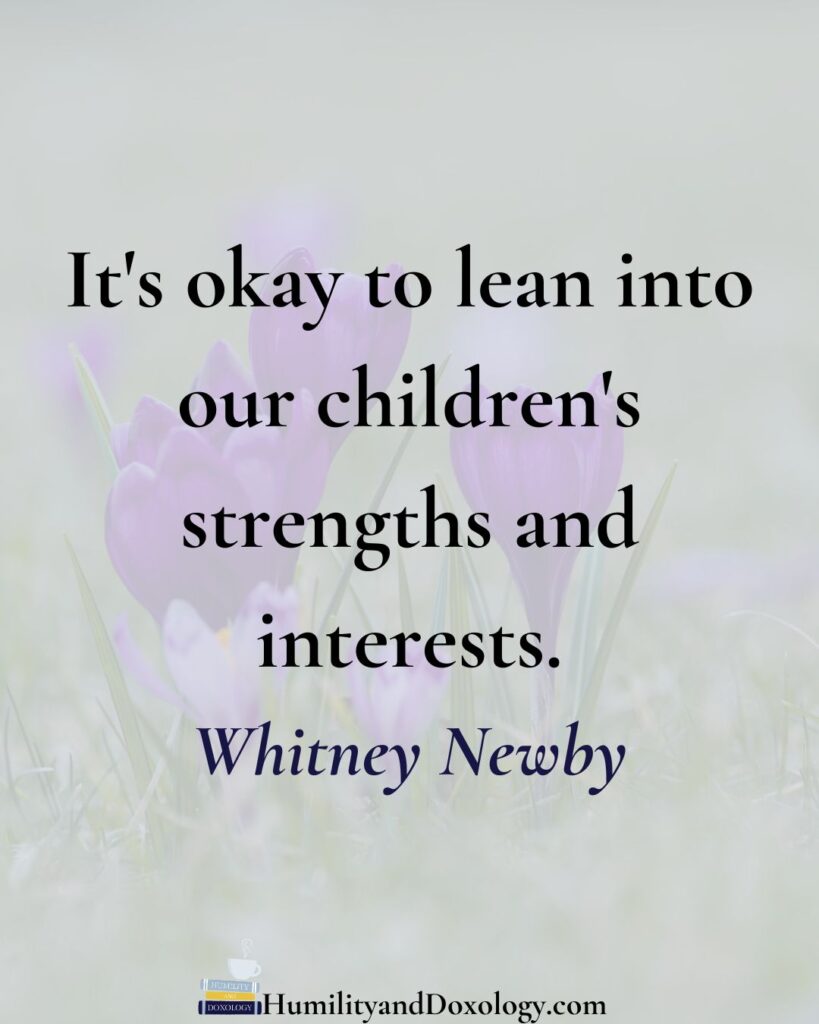
As her children grew older, Whitney embraced strength-based learning. “It’s okay to lean into our children’s strengths and interests,” she says, pointing to her 13-year-old’s passion for piano. Homeschooling allows him to devote hours daily to music, something she sees as a gift rather than a deficiency. “That he is really able to lean into his strengths and passions and interests and grow…that’s okay.”
The Joy of Books and Time Together
Reading aloud stands at the heart of Whitney’s homeschool. “My favorite part by far is reading aloud to my kids,” she says, describing shared experiences with classics she herself never read growing up. The result is deep connection, shared humor, and lasting memories. While being together constantly can be hard, Whitney reflects, “I look back at the last eight years and I have zero regrets about the amount of time that we’ve spent with one another.”
Avoiding Burnout by Guarding Margin
One of the greatest challenges Whitney names is the pressure to “do it all.” Overpacked schedules can crowd out meaningful learning. “It creates a frazzled homeschooling environment where no one is thriving,” she explains. By paring down commitments, protecting mornings, and identifying family essentials, she has learned to say no to good things for the sake of better ones.
Encouragement for the Weary, Unseen Mom
Whitney speaks tenderly to mothers who feel invisible. “So much of what we do as moms and as homeschool moms is never seen by the outside world,” she says, yet it is deeply important. Scripture memory has been a lifeline for her, especially Psalm 121. “Even when we are feeling so unseen, we are not unseen by the Lord.”
Keeping Christ Central Through Intentional Rhythms
Balance, Whitney admits, is elusive. “There is rarely balance,” she says honestly. What helps most are intentional mornings and firm boundaries. Rising early, guarding focused work times, and monotasking allow her to be fully present. “It’s just easier to do one thing at a time and to do it well.”
Navigating the Library with Wisdom
Choosing books wisely has become a discipleship practice. Whitney grounds her approach in Philippians 4:8, striving to fill minds with what is good and true. “I actually call myself my kids’ book concierge,” she laughs. Instead of browsing shelves, she relies on vetted resources like Honey for a Child’s Heart and reviews that evaluate worldview. Open conversations remain key. “I never shame them when they come to me,” she emphasizes.
Reading Lately and Resetting Hard Days
Whitney recommends both fiction and nonfiction, sharing titles that have shaped her thinking. When homeschool days unravel, she turns to worship, prayer, and grace-filled flexibility. “There are some days that just feel like we need to close up the books and get outside,” she says. “We’ll come back tomorrow.”
Key Takeaways
- Homeschooling can grow into a natural family rhythm over time
- Recreating school at home often gives way to organic learning
- Leaning into children’s strengths is both freeing and fruitful
- Reading aloud builds connection and shared family culture
- Too many good activities can still lead to burnout
- Guarding margin creates a healthier homeschool environment
- Scripture memory anchors weary hearts in truth
- Intentional mornings help center the day on Christ
- Discernment matters deeply when choosing books
- Grace-filled flexibility can reset even the hardest days
You may also enjoy:
- It’s Time to Talk to Your Kids About Porn with Greta Eskridge
- The Great Book List Roundup: Books and Websites to Inspire Your Next Reading Adventure
- 4 Top Tips For Taking Care Of Yourself As A Homeschool Mom
- Homeschool Without Overwhelm
- Discipleship: the Heart of Home Education (with Sheri Renno)
- Keys to a Successful Homeschool Year (with Amber Smith)
- Faithful, Capable, and Nerdy: A Homeschool Conversation with Rachel from The Nerdy Homeschooler
- Nurturing Rhythms and Rest in the Homeschool Journey
- Finding Peace in the Chaos of Homeschooling
Find Whitney Newy Online
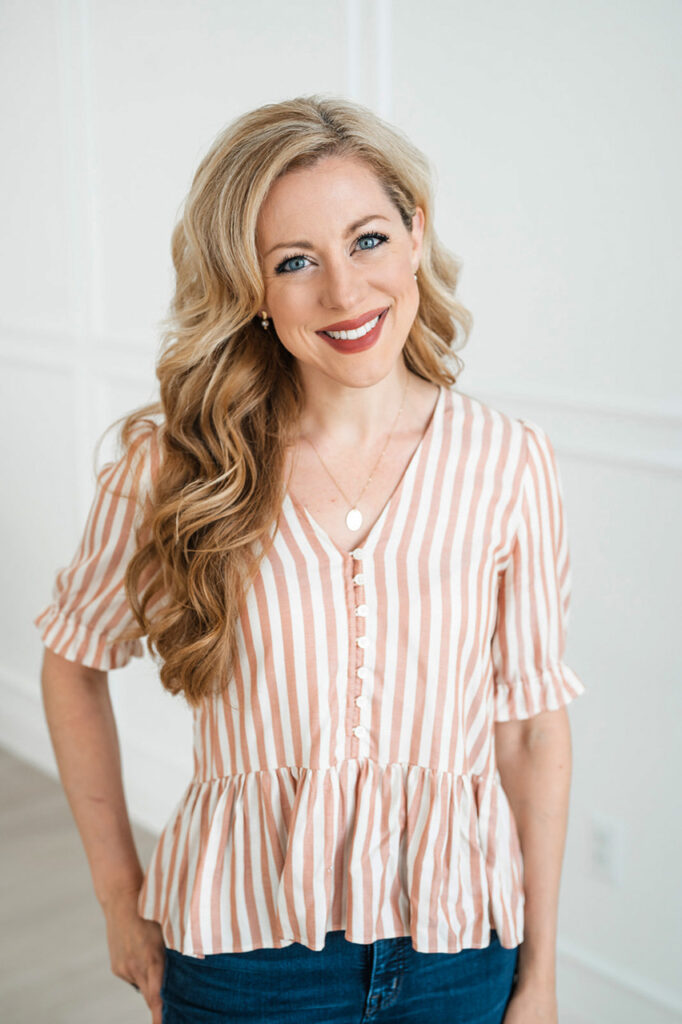
Whitney Newby is an author, artist, and the founder of Brighter Day Press, a ministry that creates literature-rich, gospel-centered resources for family discipleship. She has a Bible degree from Moody Bible Institute and is a registered nurse. Whitney makes her home in South Carolina with her husband and four children.Follow Whitney Newby Online
Check out all the other interviews in my Homeschool Conversations series!
[00:00:00] Amy Sloan: Hello, friends. Today I am joined by Whitney Newby. She is an author, an artist, and the founder of Brighter Day Press, a ministry that creates literature-rich, gospel-centered resources for family discipleship. She has a Bible degree from Moody Bible Institute and is a registered nurse. Whitney makes her home in South Carolina with her husband and four children. And I’m a North Carolina girl, but I have lived about five years of my life in South Carolina, so even though it’s like the other Carolina, I have definitely a soft spot in my heart for South Carolina. But Whitney, here at the beginning, tell us a little bit about yourself, your family, and how you guys got started homeschooling.
[00:00:43] Whitney Newby: Yes. Well, it is great to be here and to talk to another Carolina girl. Best in the world. Yes. We’ve only been in South Carolina actually for a little over a year, but we were in North Carolina for seven years. So, you know, a lot of my life has been in the Carolinas. But yes, so I have been married to my husband, Sean, for almost 17 years, and we have four kids who are currently 13, 10, 8, and 6. And so we spend our days running our small business, Brighter Day Press, and also homeschooling. So my husband and I both share those responsibilities of working and homeschooling. So we spend a lot of time together as a family, which we love. And we honestly never saw homeschooling as part of our family story until about two weeks before our oldest son was to go to kindergarten. He was all registered for kindergarten, and I just felt uneasy about him being away from me. And I also was nervous about how he would do in a school setting as a very active five-year-old boy who had a hard time sitting still. And he was already reading. He was already, he was really thriving with what we were doing at home. And so I just figured, you know, let’s try this for one year and we’ll definitely send him to school in first grade. But then that was eight years ago now. And we just fell in love with the lifestyle of being together, learning together. And I mean, there are definite hard parts of homeschooling. There are really tough days. But overall, we’re beginning to just see fruit of really intentional parenting and discipleship over these homeschooling years because that’s what it is. It’s one-on-one life together. And so we’re just really thankful for the opportunity to homeschool.
[00:02:39] Amy Sloan: So your two oldest children are the ages of my two youngest. And I will tell you now, my older three, well, so I have two adult children and then one in high school and then my 13 and 10-year-old. It is such a joy. You have so much to still continue to look forward to just that fruit, like you were saying, like you’re starting to see the fruit. It just gets better from here. Like it gets harder and better all at the same time. And it’s just such a joy.
[00:03:07] Whitney Newby: I love hearing that too. I think, I think we’re taught to fear the teen years and we just have a 13-year-old. So we are just on the brink of that. But honestly, this is my favorite age yet. So yeah.
[00:03:20] Amy Sloan: Oh, man. When you have like an adult kid who’s like still wants to talk to you about like the inside totally nerdy jokes, it’s the best. Oh, it’s the absolute best. Oh, I love it. Well, over these years, kind of moving from, well, let’s just try it, you know, in kindergarten, it’ll be fine to now eight, eight plus years. And I’m sure that you’ve seen your homeschool and your approach to education, like grow and change over those years. So what are some of the ways it’s deepened or adjusted?
[00:03:49] Whitney Newby: Yeah. You know, I started out as I think a lot of moms do, trying to replicate school at home because that’s all I knew. And so I had, I bought a vintage desk from the thrift store and put a chalkboard on the wall. And I pictured myself standing in front of it and teaching my son while he was just, you know, paying full attention. And that lasted, you know, maybe an hour. And then I was like, this is not realistic, especially with three younger kids at my feet. I was, I had a newborn at the time. It was a lot. And, and so these days, I feel like homeschool, we definitely have a rhythm and we have a schedule that we keep, but it is so much more organic. And I see, you know, my kids are moving around the house, whether at the kitchen table or they’re practicing piano or, you know, out on the swings, uh, practicing multiplication or whatever it might be, all of life is learning. And so it, it all counts. And so I’m seeing that. And so I think early on, I felt like maybe homeschooling felt a little bit unnatural to me or unnatural to the way that, you know, people do things. And now I’m finding it feels more natural than it would for me to send my kids to school. This is actually so natural for our kids to be at home, learning from us and with us. And so also, I think just recently I was thinking about how at my middle school and high school, our school, and I had a great school experience, but they really, really prioritized having well-rounded children. And so I think we really leaned into our weaknesses of, okay, well, you’re not really great at this. Let’s really lean into that. And for us, I’m finding that it’s okay to lean into our children’s strengths and interests. And so even I’m seeing that, especially as our kids get older and our 13 year old, for example, is, uh, an amazing pianist. And because of homeschooling, he’s able to spend a couple of hours every day, playing piano, practicing, writing music. And I love that, that he is really able to lean into his strengths and passions and interests and grow, maybe not in a well-rounded way, but that’s okay.
[00:06:07] Amy Sloan: There’s actually so much research too, that backs up this perspective on strength-based learning. Um, as an approach, I did an interview, I think maybe even in season one, like years and years ago, um, with my friend Shawna. And so I will put that link in the show notes as well. Um, but that’s such a beautiful part of homeschooling. I love that. Yes.
[00:06:29] Whitney Newby: You know, it was funny too, when I was in high school and hearing all the time, how important it was to emphasize equally, you know, body, mind, and spirit. And yes, that’s a, that’s a great approach, but I was actually visiting Duke university for a college tour and the admissions counselor, she didn’t know what our high school’s approach was, but she said, we’re actually not looking for well-rounded ones. We’re looking for angular ones, the ones that really excel in one area. And that kind of turned my thinking on its head because I was like, what am I, what am I really good at? You know? And, um, and so it’s okay to pursue those, those God-given passions and interests and help your kids do that as well.
[00:07:12] Amy Sloan: I love, I love that. I mean, I have to not go off on a rabbit show with that because there’s so many things I want to chat there because, because there’s the other side too. Like I have a daughter who is majoring in accounting, um, but she also loves literature. And so a lot of people push back on her as an accounting major because they’re like, but you like books. And she’s like, why can’t I like both things? So I think we have to hold both of these things. It’s not like, well, only focus on one area. Um, but it’s also not like, well, if you’re good at this, you can’t possibly be good at a different thing. Right? Like, so there’s, and I think with homeschooling in particular, we have the, the freedom and the flexibility to look at the individual child in front of us. Is this a child that just really is, is very gifted and like passionate about this one thing, or are they a child who’s interested in many things and we can give them that flexibility and freedom as well and not, you know, put them in a box and be like, well, you like books, so you can’t also like math or those kinds of things.
[00:08:12] Whitney Newby: Absolutely. Oh, absolutely. And I just, yeah, I love seeing how different each of our kids are and their, their different strengths and interests, and they are wildly, wildly different from one another. And so how do we lean into those while also, you know, making sure that our kids can function in the world, you know, we’re not, we’re giving them practical life skills as well. And yes, we still have to do math, even though none of us are math people, you know, because you need to be well-rounded in that way. So yeah, it’s such an interesting thought.
[00:08:43] Amy Sloan: Yeah. Well, we are already kind of like touching on some things I can hear that you love about homeschooling, but what are some of your other favorite parts of homeschooling?
[00:08:53] Whitney Newby: You know, I think my favorite part by far is reading aloud to my kids. I did not grow up as a reader. And so I missed so many of the classics that I feel like a lot of my friends read. Even, I mean, Charlotte’s Web and Anne of Green Gables and the Chronicles of Narnia. I am experiencing those stories with my kids for the first time. And we have read, I mean, hundreds of wonderful picture books. And I think just, just we both, we all enjoy them probably equally as much. And we’ve bonded over them. We have inside jokes that come from great literature and books. And so that would probably be the top thing. And then I think also just really getting to spend the majority of my days with my kids, even though that is on a practical note, that is sometimes one of the hardest parts of homeschooling is that we get very little break from each other. I look back at the last eight years and I have zero regrets about the amount of time that we’ve spent with one another and that I’ve been there for all of their major moments and milestones. And we have just gotten closer than I think that we could have, you know, if we were spending our days apart. So I’m just really, really grateful for that.
[00:10:08] Amy Sloan: It’s certainly true that like being together all the time can sometimes be the hardest part of homeschooling. I mean, it really is. No, it can be difficult, but also, especially now that I’m, I’m on this other side of the hill with my kids, you know, they’re growing up. I have two out of the home. Like I’m nearing the end within, within the decade for sure of my homeschool journey. And I do not regret a single minute that I have spent with my kids. And I just love being with them. I love them. They are such a joy and delight. And that is not because every day with them has been a joy and delight.
[00:10:44] Whitney Newby: Yes, exactly. I think that’s a good point.
[00:10:46] Amy Sloan: Yeah. But like, I often say it’s the best hard thing I do for sure. Yes. Oh, I love that.
[00:10:53] Whitney Newby: I love that. And cumulatively, you know, you see the fruit and you see the relationships that have been born out of just so much time together. Yeah. So sweet.
[00:11:04] Amy Sloan: Well, we’ve kind of touched a little bit on, oh, we’re together all the time. That can sometimes be challenging, but what are some of the other challenges of homeschooling that you have faced and how have you sought to overcome those challenges? Yeah.
[00:11:19] Whitney Newby: You know, I think there is a pressure in our culture and especially among homeschooling parents to do it all. And specifically for our homeschool parents to replace what you feel like your child is missing from a traditional school experience, like the sports and the extra activities to try to replace those in your homeschool. So I know a lot of friends of mine, it feels like they are involved in so many activities that there’s hardly time to actually homeschool because their schedule is so packed. And I know that can, that can happen so quickly because even with just four kids, if each of them is doing a sport and they’re all taking piano, I mean that alone is going to pack our schedule. And so really just kind of paring it down to the essentials. And for us, we don’t do a sport in every season and we definitely don’t do it in every season for every child because we’ve just found it’s too much. And we also make sure that we guard our mornings and early afternoons so that we actually have time to just spend time on homeschooling without being stressed out about getting everything checked off. And I think this past year I went through a season of just burnout that was less related to homeschooling and more related to work commitments and things that were on my plate. And so now we’re in a season of really paring it down to the essentials and asking the question for our family, what are the essentials? And I think that’s different for every family. But for us, we are committed to having these mornings and early afternoons at home. So we don’t commit to things, you know, in the middle of our day. And we’re also committed to serving at our church and being in community with our neighbors and our church, fellow church members. But in order to do that, we have to have margin in our schedule. And so I think that has been a huge challenge for me to not just pack our schedule with good things but with too much because it really, it creates a frazzled homeschooling environment where no one is thriving.
[00:13:27] Amy Sloan: When I talk to people about planning their homeschool, I like to think about time budgeting in the way we think about our money budgeting because we would never plan our money budget where we’re like, we’re just going to use every single penny and maybe even like live on credit and it’ll be fine. Or, oh, well, let’s just think of all the things we want to spend money on and we’ll just put that in our plan without actually looking at the money we actually have, like living in reality, right? We would never do that with our money. If you are doing that with your money, let’s talk about that. But anyway, we wouldn’t, right? But somehow we forget and we treat time as if it’s either infinite or we can just make it do whatever we want. But we have limits with our time. We have to live within the realities of the finiteness of the time God has given us too in our families. And each of us, even as individuals, like there are some moms that have more mental, emotional, physical stamina than others. And so you can’t even compare yourself to other moms or your kids to other kids. And so starting first with, okay, these are the most important priorities for our unique family, starting there first and then choosing other things around that. We’re not choosing a lot of times. I see this more and more. I see this more and more. It’s not choosing the good things versus the bad things, right? You’re having to say no to good things.
[00:14:54] Whitney Newby: Exactly. Exactly. And for, yeah, I think even looking at our schedule and saying, okay, for me as the mom, what is life giving specifically to me? Because if I am doing well, emotionally, spiritually, physically, that will spill over into the lives of my children and into our homeschool. If I am not doing well, or I am frazzled or stressed or burnt out, that also spills over into the life of our homeschool. And for me specifically, uh, the pressure of being part of a co-op, uh, I know co-ops are really life-giving to some people. I have personally not found a co-op that is life-giving to me personally, even if my kids are enjoying being with their friends or whatever. Um, it just has not, it’s not been life-giving. And so that’s been one thing that I’ve had to say, you know, at least in this season, we’re not doing co-ops. We’re just going to do our school at home. And that is okay. And I think I wish more moms felt the freedom to just say it’s okay. Not in this season, you know, maybe in another season.

[00:15:56] Amy Sloan: I love that. Yes. Mothers are born persons too. And what, what works for us is important in our homeschool.
[00:16:02] Whitney Newby: Yes, definitely. If mama ain’t happy, it’s, it’s so true, unfortunately. Yes.
[00:16:09] Amy Sloan: So, oh, I know that this is already going to be such an encouragement to, to moms, especially those I think who are starting out and there can be so much pressure for new homeschool moms, especially like they go on social media, they’re like, how do I be a good homeschool mom? And suddenly they’re like, well, here’s 20,000 things I’m supposed to do, right? Yeah, exactly. So no, please, I want, I want people to hear this today. I can already tell from this, from this conversation, it’s going to be, I hope an exhale, a release of a burden. So here is your chance. You’re talking to a new homeschool mom, a younger homeschool mom, and she feels weary and she feels unseen. What would you want her to know most?
[00:16:53] Whitney Newby: Yeah, man, I’ve been there. I’ve so been there. And so I want her to know that she’s not alone in that feeling. And I think it’s hard for a lot of us who have maybe come from a job where you are being applauded for your work. You’re getting a bonus for good work. You’re at least being, you know, our work is acknowledged and now it’s just not. And so much, so much of what we do as moms and as homeschool moms is never seen by the outside world. And yet it is so important. And frankly, probably the most important thing that you will do is within the walls of your home, as you pour out your very life for your children and you share the gospel with them and you teach them with a biblical worldview and all these things, whatever you find important. I mean, you are, you are pouring into the next generation. And, and so one thing, one thing that has helped me because I’ve had years of feeling this way, especially in these really little years where maybe, you know, a mom is starting to homeschool and is feeling stretched then during the day, but then also nursing a baby through the night or, you know, feeling stretched then 24-7. And one of, one of the things that has really helped me is, and I think it’s an underutilized tool for believers, is just scripture memory and reciting the truth back to you when it feels like the lies are really loud or just the discouragement is really loud. And if you don’t know where to start, I love Psalm 121. It’s one that became so dear to me as a brand new mom. And it’s the famous Psalm that begins, I lift up my eyes to the hills from where does my help come? And then the rest of the Psalm, it’s only eight verses, so it’s easy to memorize, but it just tells believers who God is, who he has promised to be, how he promises to never slumber or sleep. He never turns his back on us. Nothing that we’re going through is a surprise to him, that he is our sustainer. He keeps us from this time forth and forevermore. Just these incredible promises of who God is, even when we are feeling so unseen, we are not unseen by the Lord. So I would just encourage her to, to remind herself, preach the truth to herself in those moments. Amen.
[00:19:20] Amy Sloan: And the Psalms are a good place to start as you were talking and thinking about a mom who’s feeling unseen and you were connecting it to Psalm 121. My mind was going to Psalm 139, but the psalmist is like, you know, where can I flee from your presence? If I ascend to heaven, I’m there, like in the light and the dark. God sees us. He knows us. And reminding ourselves of what is true from scripture is such a gift. And, you know, there is also, you know, I often do memory work. Part of our morning time is scripture memory work with my kids. And so like, hey, mom’s memorizing it too. Don’t just have your kids reciting, like recite with them, put on scripture music. Our family actually loves to sing the Psalms. And so I’ll put some references about Psalm singing in the, in the show notes too, but there’s so many ways to just like fill your mind with what is true because we’re bombarded with lies and discouragement from without, but honestly from within. Absolutely. Like, I mean, that’s my life today. So I’m going to go turn on some Psalms when we’re done.
[00:20:22] Whitney Newby: We all need it. We all need it. And just to be intentional about, about speaking truth to ourselves, but we have to know the truth in order to do that, you know, and it comes straight from the, from the word. So yeah, definitely.
[00:20:36] Amy Sloan: Well, I have a feeling, I know how you might respond a little bit to this, but if someone’s like, well, how do you do it, Whitney? How do you balance it all? You’re a mom, you’re a small business owner, you’re homeschooling and you’re teaching and how do you do it all? How do you keep Christ at the center?
[00:20:53] Whitney Newby: Yeah. You know, honestly, I feel like, especially in this season for me, there is rarely balance. I am often having to step back and realize that I am leaning really hard into one area and neglecting another. And so just being prayerful about that. But I will say that two things have really helped me the most, and that would be having intentional mornings and also setting really clear boundaries on my time. And so as for intentional mornings, we have a house rule that our kids cannot come down to the main area of our house until seven 30 in the morning. And that’s always been our rule. Our older two kids will go ahead and get dressed. They’ll read their Bibles in their room. They may get some homeschool done or something, but we are not all engaging until at least seven 30 in the morning. And so I know that the time that I have before seven 30 hits, I can be intentional, uh, with my, with my time. And so I spend time in the word starting at about five 30 in the morning and I have to go to bed early. You know, you have to be intentional the night before as well, but I will look at the day ahead. I’ll get a little bit of work done. Um, I will do a quick workout. And then at seven 30, I am ready to engage with my kids to tend to their needs. But I found early on that if they were, if I was being woken up to their needs or sleeping until, you know, the very last minute, that was not a good way to start my day. And so I think just, yeah, offering that your day to the Lord at the beginning of the day. And in fact, my husband and I spend Monday mornings praying together over our week. And that has been super helpful to just say, okay, here’s what’s on our plate. Now let’s give it back to Jesus and, and do that together. And then also some really strong boundaries on my time. So when it comes to homeschooling, I, well, and with everything I try to monotask. So I am not multitasking. I am not trying to run a small business while I’m also homeschooling. I’m not texting a friend back while I’m supposed to be helping my son with math, whatever it may be, whatever I’m supposed to be doing in that time. So for me, that is from the time my kids come down until after lunch, I am fully theirs. And so I put my phone in the other room. I turn it on so I can hear the ringer and my close friends and my family know that if they need me, they can call me, but I’m not going to respond to a text. And so that has been so helpful, not only for my kids’ behavior, because they know that they have my full attention, but honestly, for me, it’s just easier. It’s just easier to do one thing at a time and to do it well. And then after lunch, they go to about an hour long rest time. We all do. We go to separate, separate places where we are quiet. We’re not on screens. Our kids are reading. They may be finishing homeschool. But during that time, I work and get stuff done. And I work a lot in the fringe hours. But again, just making hard lines on what I’m doing at various times has been so helpful.
[00:24:06] Amy Sloan: That’s a really good encouragement and exhortation to me as well, because especially recently, I’ve gotten into a lot of bad habits with trying to multitask too many things. And we think we’re being more efficient that way, right? And we feel like, but this is better. But sometimes it actually ends up making things worse. Yes. So that’s a good word.
[00:24:25] Whitney Newby: Making things harder. We are not made to be jumping from one thing to the other constantly. So. Totally. Yeah.
[00:24:33] Amy Sloan: Well, Whitney, I know that online you have spoken a lot about navigating libraries with wisdom. Yes. And people who have been around homeschool conversations with humility and doxology for a while know that we talk a lot about books and reading with wisdom and discernment and joy. But there is, we are living in a difficult time and not all books are pointing, actually, maybe most books, many books are not pointing our children towards what is good and true. So as you go to the library with your kids, what are some of the principles or practical tips you use when choosing books for your family?
[00:25:10] Whitney Newby: Yeah. Oh man. It is really hard in 2025, 2026 to walk into a library that feels like there is agenda on every shelf and it feels, it feels intentional in a lot of ways. And sometimes it is, but I will tell you something. I tell my kids a lot that is that as believers, we are called to strive toward what it talks about in Philippians 4, 8, to think on things that are true and noble and right and lovely, admirable, excellent, praiseworthy. And that does not just apply to kids. It applies to us as parents as well. And so as we are going to choose books, but not only books, magazines, media, movies that we are consuming, we are to think on these things. And so I am, I actually, I call myself my kids book concierge because I want them to come to me with their questions of like, okay, what, what should I read next? That is one of my favorite questions that they ask me. And so I will tell you probably my, my best secret weapon for finding great books is not roaming around on library shelves because that is, that is nearly impossible for a kid or an adult to just scan a library shelf and find something great and worthy of our time. But I love books about books. So one of my favorites is Honey for a Child’s Heart by Gladys Hunt. And there is an updated version by her son, Mark Hunt. So if you don’t have that book, look for that. That is so good. And it talks about just different books for different ages and genres and interests, and they’ve already been vetted. And so I go through with a highlighter and I will look for books that we don’t already have and check those out online at our library. So that even if we don’t find something great on the shelves, I know that we’re bringing home something from the library that I’ve already vetted. And then for the books that aren’t part of, you know, that I don’t know about ahead of time, I will vet those books mainly through a site called redeemedreader.com. They are one of my favorites because they talk more than just, oh, this has language or this has sex or this has whatever. They talk about the worldview that it’s coming from. And so I think it helps us as parents to really know, okay, what’s the, what’s the foundation of this book? And then if the book that my kids are interested in is not on redeemedreader.com, I will go to Amazon reviews and Goodreads reviews because a lot of times a helpful parent has chimed in with a one star or two star review and just kind of let you know what is going on. And that, that is not a perfect system. There will be books that, that make their way through, but ultimately I want to keep an open conversation with my kids and I never shame them when they come to me. If they’ve seen something that is just really not appropriate or doesn’t align with our worldview, I want them to come to me and have a conversation about it. And, um, I was actually really encouraged recently. I just finished a book by Greta Eskridge called, I think it’s called it’s time to talk to your kids about porn.
[00:28:28] Amy Sloan: Yeah. I’ve had Greta on the podcast.
[00:28:32] Whitney Newby: Oh my goodness. And I highly recommend that book. And even, even beyond just talking about porn, like talking, having open conversations about what your kids are reading and consuming. I think she just had some really helpful points about that.
[00:28:47] Amy Sloan: I love all of that. Yeah. And actually I’ve had the redeemed reader ladies on, um, both as a group and individually. So I will put those links in the show notes and my chat with Greta. Um, but I, I think that’s such a good reminder that we have so many resources. Um, I remember my own mom, we had a copy of honey for a child’s heart back when I was being homeschooled back in the day. Um, and so there’s many, you know, old, the older books, but it can feel overwhelming with the new books. So I’m thankful for the folks that redeemed, redeemed reader and people like them who are keeping us up to date. Cause I cannot keep up with my children’s reading. No, there’s no way. Oh, of course not. But it’s also such a joy. Like you’re starting to get to this age where you’re older children, you know, they’re going to have more freedom. And I’ve seen that with my own children as they’re getting older and they’re reading things I don’t know about, um, to be able to see because they’ve read good books and because we have open conversations, they can come and talk about, Oh, I noticed this and this book, or, you know what, I’m going to choose to not finish this book because of this thing, or I’m going to choose to finish this book, but let’s, can we talk about it, mom? And those are the moments where it’s just like, that’s great. I don’t want to artificially like curate my children’s book. Exactly. Back like in a way, well, I just will keep you from evil. And if I can just create a perfect book list, you will never be sent, you know, never send or because that’s not actually true with us. Absolutely. Create that environment where we can talk about it and have those conversations.
[00:30:15] Whitney Newby: Yes. Oh, I love that too. And actually, uh, yeah, recently some of the books that I’ve read this year, I’ve passed along to my 13 year old and because they’re, they’re just good literature and they may have stuff in them that is not, you know, I mean stuff that we’re not wanting to replicate in our lives. And that’s the point, you know, I want to have those conversations and I want them to exercise those muscles while they live under our house. I like under our roof. I want to have those conversations before they’re out on their own and making these decisions. So yeah, I love that point.
[00:30:50] Amy Sloan: Wendy, this has been absolutely delightful. I’m so glad we’ve gotten a chance to chat today here at the end. I want to ask you the questions I ask all of my guests. So the first is speaking of books, what are you personally reading lately?
[00:31:02] Whitney Newby: Yes. You know, I had a goal this year to read 50 books and I’m almost there. And so I’ll tell you my top two because, um, they’re two that I have loved for fiction. I loved Theo of Golden by Alan Levi. I’m not sure if you’ve heard, have you heard of this book?
[00:31:22] Amy Sloan: I’m trying to remember who it was. Someone else, one of my other podcast guests actually recommended that and mentioned it and I can’t remember who it was now, but I haven’t read it. So tell us all about it. It was Hal Prather. Do you know the Prather’s from like homegrown learners? Okay. Yes. Yes. So it was Hal Prather. He mentioned this book.
[00:31:41] Whitney Newby: Okay. So Alan Levi, he is actually, this was his first, uh, fiction book and it was self published, but it has done so well. It kind of went viral. It came out, I think in October of 2023, but it’s kind of gone viral and has made it onto the top 10 of all Amazon books. So pretty amazing, but he is a strong believer. And, um, and so there are gospel themes just woven throughout this book, but it is beautiful storytelling. Basically the premise is that this older man named Theo arrives in a fictional city in Georgia and, uh, sees in a coffee shop, these, uh, illustrations of people on the wall that are members of the town. And he goes one by one and purchases the art and then gives it to this person in order to hear their story. And the way that their lives intertwine is just so incredible. And, um, so I highly recommend that it’s actually one that I, I gave my husband after I read it and was like required reading, you have to read this. And then he handed on it onto our oldest son, and then he handed it on to our daughter. And so four of us have read it and it is just, it’s an excellent book.
[00:32:58] Amy Sloan: So that sounds really good.
[00:32:59] Whitney Newby: Okay.
[00:33:00] Amy Sloan: So I know I’m going to have to add it to my book stack. Yes, for sure.
[00:33:05] Whitney Newby: For sure. And then the other, the other favorite that would be a nonfiction book is called, we shall all be changed by Whitney Pipkin. And she is talking about a theology of death, which does not sound like a book you’d want to pick up, but it’s, it’s working through the story of her mother, um, as she was dying. But the point is even if we’re not, you know, right, staring down death, uh, we need to be developing a theology of death before, before we get there. And just some of the scriptural reminders, uh, and, and her vision of just what eternity will look like and just how Christ walks with us through our suffering. She is an excellent writer. And it was, it was one of my favorite books as well. So highly recommend whether or not you’re walking through something like that. Um, it was really impactful.
[00:34:02] Amy Sloan: Definitely sounds like one I need to add to my list.
[00:34:04] Whitney Newby: Yes.
[00:34:05] Amy Sloan: I am going to look back here. I’m trying, I cannot think of the title and I’m like looking on my shelf. And so I’ve been really blessed this year by two books by, or while over the past couple of years by two books by Colleen Cho or Chow, I’m not exactly sure. Yes. Um, so one is in the hands of a fiercely tender God. And I read that, um, near the beginning of my son’s cancer diagnosis, but she just recently came out with one that’s dealing with looking at these issues of death and heaven. And because she is nearing the end of her earthly journey, and it is incredible. And I wish I had the book like right here, so I can tell you the title. I can’t remember, but I will put it in the show notes for this. Definitely.
[00:34:48] Whitney Newby: I need to add that to my list. I mean, I think even as those who feel like we’re not walking through that you, we never know. We never know when our last day will come or, you know, a scary diagnosis or a family member or whatever. And so to be, to fix our eyes on eternity, um, is always a good idea. So yeah, I actually just finished one, um, called this homeward ache and it’s about heaven and I’m blanking on the author. Now I read it last week. Um, Amy bake Lee, I think is her name. Anyway, also really recommend that one along those lines. Okay.
[00:35:30] Amy Sloan: Well, we just know that my, my Amazon cart is going to be overflowing after this chat. I love it. I love it.
[00:35:37] Whitney Newby: That’s a good thing.
[00:35:39] Amy Sloan: Okay. Whitney final question is what would your best tippy for turning around a homeschool day that seems to be going all wrong?
[00:35:47] Whitney Newby: Oh my goodness. Oh, I’ve definitely had these days, uh, for me that would require turning on some loud worship music at some point and just kind of recalibrating and saying, okay, um, even praying with my kids. I I’ve gotten in the habit of just praying out loud in joy. Like, thank you Lord for the way that you’re working in this or this beautiful day that you’ve given us or in need of, wow, our day is really, really rough and I need your strength and joy to make it through that kind of thing. So prayer worship music. Um, also there are some days that just feel like we need to close up the books and get outside and maybe not come back to them today. We’ll come back tomorrow. We, we homeschool year round so that we can take as many breaks as we need. And there’s a lot of grace when that happens. So yeah, we spend a lot of time outside, um, really for, for all of our mental health. I love it. Yes.
[00:36:47] Amy Sloan: Well, Whitney, where can people find you all around the internet?
[00:36:50] Whitney Newby: Okay. So our website is brighterdaypress.com. You can find so many book lists that we have curated that for all different ages, genres. We also have, uh, all kinds of resources for family discipleship. And I am also at brighterdaypress on Instagram. So those would be the two main places.
[00:37:13] Amy Sloan: And I will have links to both your website and social media on the show notes for this episode over at humilityanddoxology.com. Thank you to those who are watching or listening. If you would take a minute to leave a rating and review to pass this episode along to a friend that you think it would encourage. That is such a great way to, to spread the news about homeschool conversations, but also bring a smile to another homeschool parent who might need it today. And until next time, happy homeschooling.