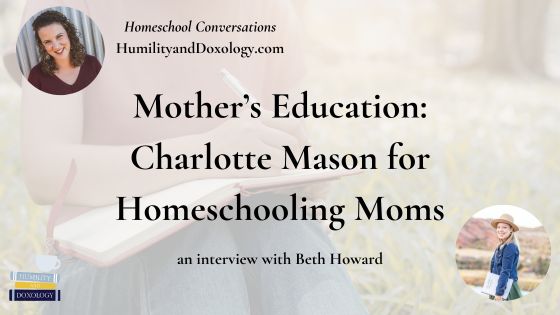
What does it look like to homeschool faithfully through changing family seasons, chronic illness, and the everyday realities of motherhood? In this encouraging homeschool conversation I spoke with Beth Howard about Charlotte Mason homeschooling, mother’s education, lifelong learning, and finding joy in the daily work of home education.
Beth Howard is a writer and educator whose work focuses on helping mothers continue their own intellectual and spiritual growth while homeschooling their children. In this conversation, Beth shares how her family began homeschooling, how her approach has changed over time, and why Charlotte Mason principles have become such an important framework in her home.
If you are a homeschool mom feeling overwhelmed, discouraged, or stuck, this episode offers practical homeschool encouragement and realistic wisdom. Beth talks honestly about navigating homeschooling while managing chronic pain and autoimmune illness. She explains why hard homeschool days are often connected to stress, health, or outside pressures rather than curriculum problems, and why faithfulness matters more than perfection.
You’ll also hear a thoughtful discussion about mother’s education and why learning is not only for children. Beth shares how she created her own rich educational life during a painful health season through books, notebooks, nature study, and intentional learning. She explains how mothers can pursue truth, beauty, and goodness in small ways, even with little children at home.
If you love topics like Charlotte Mason homeschool methods, classical homeschooling, mother culture, homeschool habits, nature study, homeschooling with littles, and Christian homeschool encouragement, this episode is for you.
{This post contains paid links. Please see disclaimer.}
- How Homeschooling Changes Over Time
- Favorite Parts of Homeschooling
- Homeschooling Through Hard Seasons
- Charlotte Mason in Daily Life
- What Mother’s Education Means
- How Moms with Littles Can Keep Learning
- Best Tip for a Bad Homeschool Day
- Key Takeaways:
- You may also enjoy:
- Find Beth Howard online:
- Check out all the other interviews in my Homeschool Conversations series!
Beth shared that before becoming a homeschooling mother, she had been a teacher in the North Carolina school system. When her daughter was young, the family considered preschool, but practical realities led Beth to teach at home instead. She laughed while remembering those early school days full of laminated alphabet materials and eager plans.
Later, discovering Charlotte Mason changed everything. Beth explained,
“I found Charlotte Mason when she was about four and I started reading the volumes and that kind of changed the entire trajectory of our homeschooling.”
What began as a temporary plan became a long-term family lifestyle. Beth said simply,
“It’s been the best decision of our life.”
How Homeschooling Changes Over Time
Beth reflected on how homeschooling looks different with a second child and changing family seasons. With her oldest child, she admitted she was intensely focused on education. But with her younger son, family life created more limitations and more freedom.
She described his early years as,
“this elongated, sweet, wonderful, quiet growing time where we’ve spent so much time outdoors.”
That perspective is encouraging for homeschool moms who compare children or worry about doing things differently with each child. Growth often comes through adapting to real life rather than recreating identical experiences.
Favorite Parts of Homeschooling
One of Beth’s favorite aspects of homeschooling is getting to witness who her children are becoming in everyday life.
“I love seeing the people my children are becoming in real time.”
Beth also spoke warmly about simply enjoying her children’s company.
“These are two of my favorite human beings on the planet. And I get to hang out with them every day.”
Homeschooling offers academic opportunities, but it also creates deep relationships formed through shared days and ordinary moments.
Homeschooling Through Hard Seasons
Beth openly discussed managing chronic pain and autoimmune illness while homeschooling. She explained that difficult homeschool seasons are often connected to outside pressures like health struggles or stress rather than educational failure.
Her guiding principle has become:
“It doesn’t have to be perfect. It just has to be faithful.”
That mindset helps families continue steadily, even when they need to scale back or simplify.
Charlotte Mason in Daily Life
Beth uses Charlotte Mason principles as a framework rather than a rigid formula. She emphasized flexibility, saying each child is a person and families must make adjustments.
In her home, narration is central.
“We read and we narrate.”
Books, outdoor time, stories, and rich ideas form the backbone of their learning life.
What Mother’s Education Means
Beth is passionate about the idea that mothers need education too. During a severe pain flare, she began gathering books, notebooks, and subjects similar to what her daughter was studying.
“I started basically homeschooling myself.”
That season helped her realize mothers also need beauty, truth, and ideas to sustain them through hard times.
How Moms with Littles Can Keep Learning
For mothers caring for babies and young children, Beth encouraged starting small. Read poetry. Learn birds or flowers. Take walks. Notice sunsets. Read aloud while nursing.
“It really just is this intentional choice to have living ideas and continuing to learn something, anything.”
Best Tip for a Bad Homeschool Day
Beth’s practical advice for turning around a difficult homeschool day was memorable and simple:
“Go outside or add water or both.”
Fresh air, movement, nature, showers, baths, hydration, and a change of scenery often help reset everyone’s attitudes.
Key Takeaways:
- Homeschooling often grows and changes over time.
- Different children may need different approaches.
- Relationships are one of homeschooling’s greatest gifts.
- Hard homeschool days are not always curriculum problems.
- Faithfulness matters more than perfection.
- Charlotte Mason principles can be flexible and practical.
- Narration and living books are powerful tools.
- Mothers need continued education too.
- Small moments of beauty and learning matter.
- Going outside can rescue many bad days.
You may also enjoy:
- Homeschooling in a Health Crisis
- Encouragement for the Homeschooling Mom with Chronic Illness
- Charlotte Mason Living Education for Little Learners
- Getting Started with Charlotte Mason Homeschooling with Amy Fischer
- Imagination & Baby Steps in Charlotte Mason Homeschooling (with JoAnn Hallum)
- Patience, Wonder, Ignorance, and Joy in a Classical, Charlotte Mason education (with Karen Glass)
- Modern Miss Mason (with Leah Boden)
- Scholé Every Day: Restful Learning for Homeschool Moms
- Narration as the Art of Learning: A Conversation with Adrienne Freas
- Mother Culture for the Homeschool Mom
Find Beth Howard online:
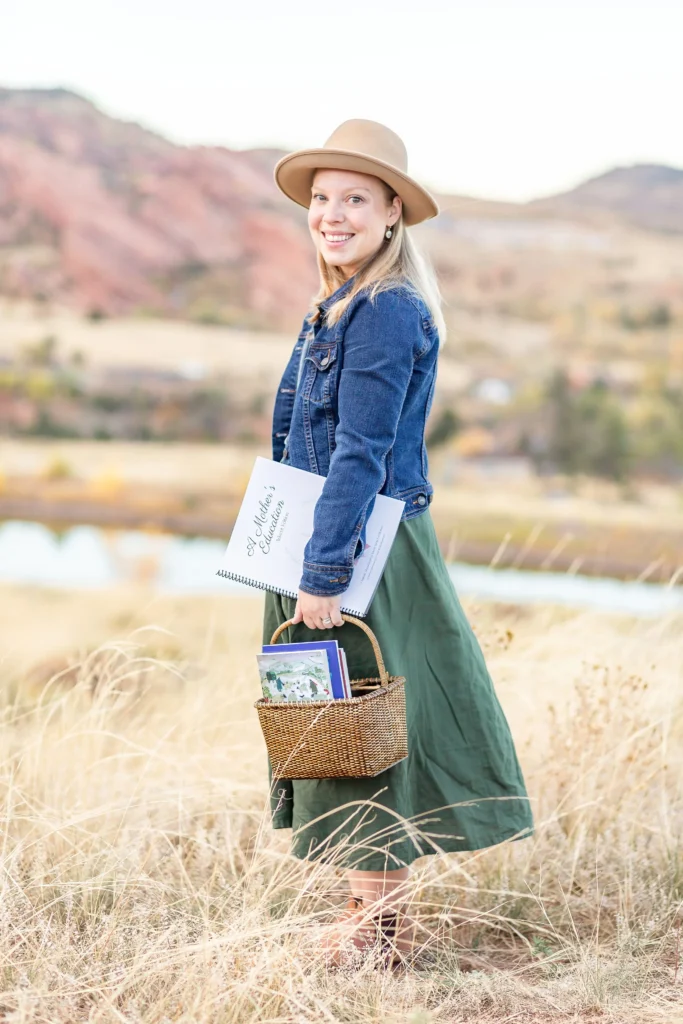
Bethanyanne Howard is a writer and educator focused on a mother’s education within the Charlotte Mason tradition. Her work centers on the belief that mothers are persons, shaped by what they attend to, read, practice, and love. Rather than treating education as something delivered only to children, she invites mothers to recover their own intellectual and spiritual formation alongside the work of homeschooling.
Check out all the other interviews in my Homeschool Conversations series!
[00:00:00] Amy Sloan: Hello, friends. Today, I am delighted to be joined by Bethany Ann Howard. She is a writer and educator focused on mother’s education within the Charlotte Mason tradition. Beth’s work centers on the belief that mothers are persons shaped by what they attend to, read, practice and love. Rather than treating education as something delivered only to children, she invites mothers to recover their own intellectual and spiritual formation alongside the work of homeschooling. And Beth, I’m really looking forward to chatting with you today. So at the beginning, just tell us a little bit about yourself, your family and how you guys got started homeschooling.
[00:00:41] Beth Howard: Thank you for having me. So I’m Beth. I am I’m in my late 30s. I’m not quite claiming the 40s yet, but I have two children, a daughter who is 12 and my son is six. And my husband and I and our kids live in Colorado. So we we really love all of the outdoor aspects Colorado has to offer. We’ve done the typical get a Labrador and hike and ski and bike and all of those fun, wonderful things. And I used to be I actually used to be a teacher in the North Carolina school system many, many years ago. So when my daughter was born, I was already staying home and it was about time for her to start preschool when she was around three. And we realized that in order for us to send her to preschool part time, I would need to go back to work full time. And that didn’t seem like a great option. So I leaned heavily into this idea that I used to be a teacher and I can get a kid ready for kindergarten. So she actually she was not three. She was about two. I was so excited and so enthusiastic. And her first day of school picture, she’s in a diaper with a balloon. She I her age is written out in months and I have like laminated the alphabet and all of these wonderful things to do top school. And when I look back on it now, my husband brought this up recently because I told him a story of how when our daughter was about three, she had an imaginary butterfly named Arthur and we would keep him in a vase. And he got out one day and I spent hours looking for this, looking for the butterfly, this imaginary butterfly. And finally, we took breaks. We read stories. We did all of these things. We went outside and thankfully Arthur was outside. And my husband goes, oh, so that’s when you realized you needed mother’s education type stuff. It’s like, yeah, probably because I was so excited to do school and I needed something to do with her. I like poured all of my love and energy and attention into fostering this like top school when she was little. And I found Charlotte Mason when she was about four and I started reading the volumes and that kind of changed the entire trajectory of our homeschooling. So when it came down to put her in kindergarten, we just we didn’t. And then it came time to put her in first grade and we didn’t. And now she’s in she’s in year seven and we just haven’t put her in formal, you know, in person, everyday schooling. And it’s been the best decision of our life.
[00:03:22] Amy Sloan: I love hearing that story. And I love the imaginary butterfly, Arthur. Cultivating the imagination right away.
[00:03:31] Beth Howard: We also had pet kittens that we found at Home Depot. They were pink and purple and obviously not real, but they got out every day. So every day of my life for many, many, many months, I was looking for imaginary animals around the house.
[00:03:44] Amy Sloan: Well, and I guess that doubles as a little bit of, you know, moving the body, keep getting some energy, right? Well, you already have have talked a bit about some of those changing ideas from the beginning when you first started with top school and you were so enthusiastic. And I love the enthusiasm of first time homeschool moms. I remember that, too, with my oldest. But now you’re in year seven. You’ve been introduced to Charlotte Mason pretty early on. What are some other ways you’ve seen your approach to education grow or change over the years?
[00:04:18] Beth Howard: Yeah. So my daughter, bless that first born child. And she got so many different things for me. And she mostly like she got the outpouring of my know it all. And I can do this perfectly aspect. And then my sweet second born son comes along. And there’s there’s just a lot more limitations when you have two children or more than one child. And you end up having. You end up having to, like, adjust your entire philosophy a little bit. So my daughter, I was like a hundred percent focused on her education and it consumed, I mean, a lot of our days, even in the early years. And my son, he really has had this like elongated, sweet, wonderful, quiet growing time where we’ve spent so much time outdoors. We’ve spent so much time just like immersing ourselves in beautiful, wonderful stories, because despite finding Charlotte Mason early, I was still that first time homeschool mom who was like, yeah, but also we’re going to do this thing instead. It’s not wrong. It’s just what we did.
[00:05:34] Amy Sloan: I think, too, it’s been helpful for me as a mom of five, 10 years from my oldest to my youngest. And there’s changing family seasons. You know, just the realities of of daily life, the schedule for the family, let alone anything else, are very different when I just had, you know, two little ones versus when I had a couple little ones and then a whole host of, you know, teens in the house as well. And it’s been helpful for me to remember that just like God knew the child, this child needed me as the mom. Also, the birth order and the logistics of family does not take God by surprise. And so also designed each of those seasons and the changing realities, some from my own personal growth and just some from. The realities of life situations changing. He uses that for my my kid’s good, too, because it’s easy to compare and be like, oh, I didn’t do this thing with this kid or I wish I had done that differently with the other kid. And remember, at the end of the day, the Lord works all of that out for our children’s good.
[00:06:37] Beth Howard: Yes. And I think with my daughter, too, like I definitely I hovered a little bit more and I haven’t been able to do that as much with my son. But there’s been so many wonderful things that I’ve seen. Like he he has this beautiful affinity for stories and storytelling. And like even because he’s listening in on his older sister’s schoolwork and has for I joke that he’s been Charlotte Mason since birth because like he she was already in formal schooling when he was and I mean, literally an infant. Again, the first time mom thing like I wish somebody I so my son came to our family through adoption and it was less than a week after he came home. I was like, yeah, we’re going to start our school year. And I wish I had another mom who would have just been like, can you just like sit down and read a book with your daughter? And like, it’s fine, it’s fine. Put this off until October. No, no school started back. We have to start school. So he’s been listening to these stories since basically since birth. And he just has this like wonderful affinity for it. And it’s been so sweet to see that progress.
[00:07:47] Amy Sloan: That is really beautiful. Well, you’ve already mentioned a few things that I can tell you love about homeschooling. But what are some of your other favorite parts of homeschooling?
[00:07:56] Beth Howard: I I love seeing the people my children are becoming in real time. I think that’s probably the best one I’m I I know I would get. I also I really love it when they get to go off and be with their friends in you know, they do an enrichment program. They get to come back and tell me all of these wonderful, exciting things that happened. But at home, I get to kind of see this process of them like these glimpses of them becoming the people who they may end up being one day. And I get to watch it unfold. I tell my husband, I was like, it’s it’s insane to me that like these are two of my favorite human beings on the planet. And I get to hang out with them every day, every single day. I get to spend my time with them. And it’s it’s just so wonderful that that part gets to happen. And then, you know, I I love teaching, obviously, like I love teaching them and learning alongside them and being with them. We also have our homeschool things where like somebody doesn’t want to do math today. And now we have to do math today. But even that of just like walking through that with them has been so wonderful.
[00:09:04] Amy Sloan: I saw something recently that was like, I’ve gotten to basically be a part of creating my own favorite people. And I just so relatable, especially now I have, you know, adult children even. And I’m just like, I I just really like them. You know, I really like being with them. They’re my they are my favorite people in the world. It’s such a privilege. I’ve gotten all this time with them.
[00:09:25] Beth Howard: My daughter. So we are like in the last six months before teenagehood and or the teenage years. And just thinking about her preteen years, I’m like, she’s so cool. Like, I get to hang out with her all the time. And then my son, he’s like the funniest kid I’ve ever met. And it’s like, yeah, I just I get to like be around you and get to know you.
[00:09:46] Amy Sloan: It’s it’s so neat. I love that. Well, as much as we do love being with our children, and it’s great. Sometimes there are still hard homeschool moments, hard homeschool days. So what are some of the challenges you have faced homeschooling? And how do you seek to overcome those challenges?
[00:10:04] Beth Howard: Yeah, I I’ve been thinking about this question. So I manage a chronic pain disease and multiple autoimmune conditions, and it affects my health in various ways. But that always has become kind of the litmus, the litmus test of really what our season sort of looks like. I’ve kind of learned that our hardest homeschooling moments have never really been because of my children. It almost always comes down to, you know, stress or health or something like that. And the feeling like our homeschooling is out of sorts is the byproduct of an outside, you know, something that’s off outside of that. So things that I have to remind myself and the way I get through that is really leaning on habits and having like a solid foundation of habits, which is really hard when things feel off, because then you just want to like throw everything out the window and buy all the new curriculum and try all the new things because this did not work today. And if it didn’t work today, it’s not going to work tomorrow. I highly recommend that you never buy a new math curriculum in the middle of a bad math lesson. Like, don’t do that. But just reminding myself that it doesn’t have to be perfect. It just has to be faithful. I don’t have to do things perfectly. I’m never going to meet the standard of perfection, but it can be faithful. So we can, you know, if we need to scale back a little bit, we can. But whatever we’re doing needs to be done faithfully, even when it’s hard. And that is easier said than done.
[00:11:48] Amy Sloan: Yeah, I think that’s such a wise reminder as well, because we can, you know, you have good days and bad days. And if you’re constantly judging or grading yourself or your children or your homeschool based on your feelings at any given moment, you will either be filled with pride or filled with despair. That’s not a very healthy way to keep track of things. But just doing those little things day by day and remaining faithful over time really does add up.

[00:12:18] Beth Howard: Yeah, and I think, too, it’s good for our children to see us like, you know, I have told my kids at different times, you can do this. Tired. It’s like, well, I’m tired. It’s like, you can do things when you’re tired. That’s OK. It’s OK to be tired. But for mom, too, like there without being whiny about it, I don’t I don’t want to, like, perpetuate this mindset with my children that mom can be whiny and fussy, too. Sometimes I am like I’m absolutely going to be whiny about something sometimes. I’m like, yeah, I I also don’t want to, you know, do the laundry today or I don’t want to. I don’t want to teach math today or I don’t want to read this book, but it is good for us to do it. So we’re going to we’re going to set the timer and we’re going to do it. And, you know, I can’t control a lot of things, but I can control my attitude about it. So if the next right thing is to be faithful to doing the dishes, I’m going to do the dishes because that is good for us to do.
[00:13:16] Amy Sloan: And then we’re modeling that humility, that repentance, right, that faithfulness, that perseverance, all those things we want to see grow and develop in our children. It’s good for them to see that sometimes moms also are struggling. That doesn’t mean we’re giving up, right? We don’t want them to give up when they hit a hard point in their math lesson or whatever. We want them to persevere. So we kind of need to imitate or model that for them as well. Yeah, exactly.
[00:13:42] Beth Howard: And I mean, I apologize to my kids constantly about, you know, I have to show them what it means to, you know, authentically apologize and repent for sins that I’ve, you know, committed against them when I’ve had a bad attitude towards them, really for no other reason other than like, I am tired. It’s like, so in our family, we say you can be tired, but you can’t be mean. So. I like that. That’s a really good one. I’m going to steal that one. Yeah, go for it. We we use it for a lot of things, like if we’re hiking and it’s hot and like, you know, when it gets really hot or really gross, it’s like, yeah, you can be hot or you can be uncomfortable, but you can’t be mean. That’s just what it comes down to.
[00:14:24] Amy Sloan: Very, very true. Well, how do you apply the philosophy of Charlotte Mason in your day-to-day homeschool life?
[00:14:33] Beth Howard: Yeah, I so I am I’m not a purist. I don’t think anybody can be truly a purist of the Charlotte Mason methodology because we’re all dealing with our own unique personhood, but also our own unique people. You know, every if we believe that every child is a born person, then we’re going to have to make adjustments to different things. So I really look at what she offers, her principles and her methodology as a framework for our home, like these guidelines that we kind of work in. And then there’s a lot of freedom within it to make adjustments and changes. So our homeschool is very heavily dependent on the methodology of Charlotte Mason. We do most everything. We don’t do folk dancing at home or and what else do we not do? People are sometimes surprised when I’m like, oh, yeah, we don’t do that. Like, really? It’s like, well, my daughter takes dance classes. Like, we’re not going to do folk dancing, the three of us.
[00:15:35] Amy Sloan: It’s a little tricky to do in the living room with just a couple of kids, right?
[00:15:39] Beth Howard: Yeah. My husband works from home. He works in the basement, but the vent from our homeschool room is connected to the basement. And he came upstairs one time and he goes, can you please stop singing folk songs during my morning meeting? I can’t. This is folk song time. So we listen to our folk song in the car now once a week and not during his morning meetings.
[00:16:03] Amy Sloan: I love it.
[00:16:05] Beth Howard: Yeah. But we also operate with a lot of grace that we’re living in new times and modern times. And there’s things to be adjusted and changed. But we do rely a lot on the principles that she’s laid out. I would say the thing we do the most is narrating books. We read and we narrate. And that is a lot of it when we go outside.
[00:16:28] Amy Sloan: Yeah. Well, I think that’s just wise, regardless of what someone identifies as their primary homeschool philosophy, right? That we’re homeschooling people. We’re homeschooling an actual individual human in our home. We’re not homeschooling a list of do’s or don’ts. We’re not homeschooling a philosophy, right? We’re homeschooling people. So it’s really important to keep that in mind.
[00:16:52] Beth Howard: Yeah. And I mean, I know that there are a million and one Charlotte Mason book lists or curriculum choices or things like that out there. And when it really comes down to it, is there isn’t a single book list or curriculum that gives you permission to ignore the person in front of you. So if you’re holding on with this tight fist to what you feel like you have to do because a curriculum or a book list tells you this is what you have to do, to the point where it’s affecting the person in front of you in that relationship, then there has to be changes. And it’s not that relationship.
[00:17:26] Amy Sloan: It’s usually the curriculum or the book list. And it’s OK.
[00:17:29] Beth Howard: You can let that go with grace and kind of move on to something different.
[00:17:35] Amy Sloan: Well, I know that one of the things you love to talk about and encourage moms about is this idea of a mother’s education. So what does the idea of mother’s education mean to you?
[00:17:45] Beth Howard: Yeah, so I talk about mother’s education all the time now. This is something that I did not create. This comes from the Charlotte Mason methodology when she had a mother’s education course and had these categories of books that she would encourage mothers to read and send out exam questions and they would send them back to her. And it was a three-year-long program that she kind of walked mothers through. And a few years ago, I went through my autoimmune disease came out of remission and caused a chronic pain flare that was the most difficult season of my life. I spent months on the couch. I was going to doctor’s appointments multiple times a week. I was in physical therapy. It was a really, really bad time for my physical and my mental health. And I was kind of looking for any amount of reprieve. So I was on my phone a lot. Like, I was on Instagram. I was on because I just needed an escape. And that wasn’t working. And the area that I was in with constant pain. So my chronic pain disease is fibromyalgia, but it presents as nerve pain. So it feels as if my body is on fire when it’s at its worst. And it’s not something that you can take a medication for. When it’s really bad, there’s no relief. So I started kind of collecting books around myself that my daughter was already doing. I was like, OK, she’s doing history and science and nature study and all of these things. And I put together my own curriculum for myself. I was like, I’m going to read a book about motherhood and all of these things. And I put it all together. And I had this little stack of books. And then I had my notebooks. And I started basically homeschooling myself. Because one of the beautiful things about a Charlotte Mason education is at some point, you go, oh, wow, this is incredible. I wish I had been educated like this. And I wish I, like, this is redeeming my education. And I started to think, what if I just, instead of wishing I had been educated like this, what if I actually educated myself this way? What if I took what she does and did it for myself? And it took a while. And after several months, I came out of the pain flare. I started feeling better. And I wrote everything that I had done. And I shared it as a mother’s education. And I’ve started talking about this with other moms about how you can actively pursue truth, beauty, and goodness even when things are hard, even when you’re in the middle of homeschooling, even when you’re up in the middle of the night or something is difficult. Because it gives us this anchor to go back to when things are hard. Now we have living ideas to change our thoughts too. Now we have beauty worth pursuing. So when something is hard, there’s like this beautiful aspect that we can kind of go make a connection with.
[00:20:58] Amy Sloan: That’s really beautiful and encouraging. I think it will be helpful for other moms to hear because sometimes it can be like, oh, wow, mother’s education is for people who have all this time or all this energy or maybe when my kids are older and just being able to see that if something’s worth doing, it’s worth doing even in small ways and bite-sized ways. I have found that it is especially helpful when you do it in community. I have some amazing local women and we meet together once a month and discuss what we’re reading. And even in the past difficult season over the past couple of years for our family, I haven’t been able to do as much as I used to read in the past, but to still do a little bit and then to have that opportunity to discuss has been tremendously a gift to me.
[00:21:48] Beth Howard: Yeah, and the thing that kind of made it click for me that a Charlotte Mason education isn’t just for children was part of all of these health issues that I was having, I had to have an MRI done on my brain and my spine because I was having, I lost feeling in my hands, I lost dexterity, there was just a lot going on. And when that happens in your 30s, your doctors get really worried about things. And I was in the MRI machine and when they do the one on your brain, they kind of strap your face to the table. So they put like this cage over you and it’s miserable. And yeah, it was a really hard experience, but I closed my eyes and I started doing a picture study in my mind and revisiting all of these paintings that my daughter and I had been studying for the last few years. And it was able like that act of just revisiting these paintings and going over the detail in my mind, it got me through this MRI procedure. So when I came out of it, I was like, oh, we’re not making things beautiful for our children because Instagram taught, or even because Charlotte Mason tells us to, we’re doing this because it actually is this area to escape to when we need to escape.
[00:23:14] Amy Sloan: It’s actually good for all persons
[00:23:18] Beth Howard: and mothers of all persons too. Exactly. And I think about this when she was, when she had her school system, I did a, with one of my mother’s education groups, I kind of like mapped out all of these historic events that happened in Charlotte Mason’s lifetime. And we can see World War I occurred in Charlotte Mason’s lifetime. And it’s not farfetched to think that some of the boys that she educated in the PNAU system went on to fight in World War I. And they also had this immersion of beauty in their education. They had folk songs and hymns and poetry and artist study. And she had hoped that these paintings would hang in their hallways of their imagination. And I wonder sometimes, did these men or these boys walk through those hallways when they’re in the middle of a war zone? Or, so these acts of beauty, they really matter for all people.
[00:24:15] Amy Sloan: Well, do you have any advice, especially for a homeschooling mom who’s home with littles and it already feels very difficult and overstimulating and so few spare moments? How can she find time to still cultivate that rich educational life?
[00:24:32] Beth Howard: I think for especially moms who have very small, small humans, it matters that, I’m not gonna say, everybody has time in the day because that’s not true. Everybody does not have time in the day. But you might have small pockets of time during the week where you have 10 minutes to, honestly, I suggest a book of poetry. If you need something beautiful to stimulate your intellect, find a book of poetry and just try to read a poem every couple of days. You don’t have to memorize it. Just read it or read it out loud. When my daughter was an infant, I used to read aloud to her, but I would read my books out loud to her. So she got books about parenting spoken to her while I nursed. Which is good for her vocabulary. We also read picture books, but just reading aloud to your kid is good. So if it’s a book that you want to read, that’s also okay when they’re teeny, teeny tiny. But just remembering that this aspect of a mother’s education, it’s not just your reading life. It can be taking a walk and being intentional with learning the flowers in your area or the birds in your area or planting a garden. My daughter had colic. I’m talking about my daughter a lot, but that’s when she had colic and I used to put her in a backpack and go for a walk where I could see the mountains. We had just moved to Colorado because if she was going to scream, she could do it where it’s pretty. Might as well. I did the same with my son. If he didn’t want to nap, I was like, cool, let’s drive over to the lake and I’m going to put you in the backpack. And if you’re not going to nap, you might as well not nap at a lake instead of me going crazy by your crib. So there’s different facets of it. It really just is this intentional choice to have living ideas and continuing to learn something, anything. It doesn’t have to be, you sit down and read War and Peace this year and that’s going to make you better educated. It can be like, I went outside and I noticed the time the sun set and that’s good.
[00:27:03] Amy Sloan: I think too, especially in seasons where life is more challenging or you have lots of littles and limited just mental and emotional energy, it’s especially important in those seasons to choose something that you are interested in, not something that someone else tells you that you should be interested in, kind of to your point about, maybe this isn’t the time for War and Peace unless you are a person who adores Russian literature,
[00:27:28] Beth Howard: which case maybe it is, maybe it is.
[00:27:30] Amy Sloan: But start with something that you’re going to be motivated to keep with, not something that feels like one more chore and burden on your day.
[00:27:40] Beth Howard: Yeah, and if I know, so I like to share about nature journaling and I go through sports where I nature journal a lot or I nature journal zero things. That’s just, it’s never an in-between thing for me. And the times that I nature journal zero things is because it’s probably nutcracker season or baseball season or we’re driving all over the place and I haven’t had time to sit down and paint something beautiful in my journal. So there are months where I just, I write down like, we saw a mouse. That’s, and like the location. But it was an intentional action of noticing. I paid attention to something else outside of the scope of, you know, getting in the car and driving to the next thing or making the next dinner. In one of the PNU or PNU articles, Mother Culture, there is a line that our continued education is to the benefit of our future usefulness. Because our children do grow up and they, my preteen now, she wants to like talk to me about ideas, like really rich ideas. And it’s so interesting, but I have to stay caught up. So we’re not just talking about Bluey anymore or these other things. Like she wants to engage with me or she, now she’s recommending books to me. I’m like, hey, I think you really should read this one. And so it’s a, when we give this like rich living education to our children, they want us to engage with it also and talk to us and share that. So it does help to kind of pursue it in whatever way is reasonable for you. That way, as your children grow, they can kind of see this model, but also they can engage with you.
[00:29:30] Amy Sloan: And then one day they’re going to be grown and gone and you still want to be an interesting person
[00:29:37] Beth Howard: who is interested in the world around you.
[00:29:39] Amy Sloan: We say we want to have children who are lifelong learners. We want our children to leave our home and still want to continue to learn on their own. And so we want to be those kinds of people too.
[00:29:49] Beth Howard: Yes, exactly. I have a neighbor who, we talk about plants all the time. We’ve been chatting about the weather. I can’t remember, actually, I know I’ve commonplaced it, but I can’t, it was from a program at Tinker Creek. She says that there are a couple of things, topics of conversation worth discussing and weather is one of them. So we’ve been having like, every time I see them, we just have a conversation about the weather. And, but like we were talking today, my neighbor and I about, are we going to have more bugs this year in Colorado? What’s that effect on our garden? Because we haven’t had like that deep freeze that kills off the larva. So it’s like, oh, and then my son brings up in Little House on the Prairie. He goes, oh, grasshopper weather. Because it happened on the banks of Plum Creek. They never got the deep freeze to kill the grasshoppers. So it’s been an interesting like intersection, science of relations between all these different facets of our educate, multiple areas of our educations. Yeah, I was just thinking, oh, it’s the science of relations. I know.
[00:30:56] Amy Sloan: You’ll have to, you’ll have to come back and let us know what happens this summer. So now I’m- I absolutely will.
[00:31:01] Beth Howard: I’m, I mean, I’m selfishly hoping that we don’t have a bunch of grasshoppers because they will decimate my garden. But we’ll see.
[00:31:08] Amy Sloan: Well, maybe that means all the extra cold we’re having here in North Carolina will minimize our mosquitoes this summer. I can at least hope. I can hope.
[00:31:17] Beth Howard: Yeah, right. So write this down in your nature journal and then come back.
[00:31:20] Amy Sloan: Yes. We’ll check in with each other on our bug situation later this year. Exactly.
[00:31:25] Beth Howard: That’ll be the follow-up episode, right?
[00:31:27] Amy Sloan: Yes, exactly. Bonus. Oh, Beth, this has been a delight. Thank you for sharing your story and your experience with us. Here at the end, though, I do want to ask you the questions that I ask all my guests. So the first is, what are you personally reading lately?
[00:31:42] Beth Howard: Oh, okay. So I am apparently this year going on a deep dive of French literature from the French Revolution. I’m currently reading Count of Monte Cristo with a friend and then I’m reading Les Mis with other friends. And so that is really interesting. I accidentally got an abridged copy of Count of Monte Cristo, though, so I need to go and get the bigger version. I’ve been flying through that book. But I’ve fallen in love with the story.
[00:32:14] Amy Sloan: I had read Count of Monte Cristo as a teenager and it was a massive tome at the time. But I must have somehow gotten an abridged version because when I re-read it as an adult with a book club, I was like, I do not remember all this talk about drugs. Did I miss this the first time through? I don’t know. Maybe I was just a homeschooled kid. I didn’t like pick up on it. But I was like, I don’t remember this happening.
[00:32:39] Beth Howard: Yeah, I’m pretty sure that’s the abridged because that didn’t happen in my book yet. Wow. You have so much to look forward to. I did order it today. I was like, I got to get caught up, so.
[00:32:51] Amy Sloan: Oh, that’s great. All right. So final question. What is your best tip for turning around a homeschool day that seems to be going all wrong?
[00:32:59] Beth Howard: Oh, go outside or add water or both. Do both. Even if it’s cold, any version of precipitation or water in whatever form it comes in, go outside and add water. We’re making-
[00:33:12] Amy Sloan: And hydration, too. Sometimes you just need to drink some water.
[00:33:15] Beth Howard: Yeah, or send the kids outside and take a shower. There’s something about taking a shower that like resets your whole day. So, yeah. Excellent tip.
[00:33:25] Amy Sloan: And I had a feeling, I was like, I bet she’s going to say go outside after hearing some of the other things you were sharing.
[00:33:31] Beth Howard: Yes. Go outside. That is, we live close to a duck pond. So we go to the duck pond on good days, too, but there have been days where I’m like, you know what? Let’s just go to the duck pond. Just go check on those ducks. If you’re going to be sad and miserable, you might as be miserable with the ducks. Exactly. We have a bag of poultry feed that we can give the ducks.
[00:33:57] Amy Sloan: Yes, let this be a lesson. If you weren’t listening or watching, you cannot feed ducks bread. I know you think you can, but it’s so bad for them. It would be like if you gave your child cotton candy all the time. Are the ducks near us? They’re so morbidly obese. And the pond is like growing so much like algae and it’s dirty because people keep going and feeding them in spite of all the signs that say, please don’t feed the ducks. Yeah.
[00:34:22] Beth Howard: It’s not good for them or their ecosystem. We’ve brought them peas before when my son was little. They seem to like the peas, but we usually, we have, we have like duck feed that we bring. I’m relieved to hear that. That probably still isn’t great, but there’s something about feeding ducks.
[00:34:41] Amy Sloan: It is kind of fun, isn’t it? It is. Oh, Beth, where can people find you all around the internet?
[00:34:47] Beth Howard: So my website is the charlottemasonhome.com and then my Instagram is the same name, the charlottemasonhome. And every quarter, I lead a mother’s education community where we read a variety of books. Usually it’s two in community and we discuss them on Zoom, but we also share our nature journals and our handicrafts. And it’s a really wonderful time of fellowship. And then I have a membership where we kind of pursue our, continue to pursue our living education, but really take the principles of Charlotte Mason and apply them to ourselves as mother teachers.
[00:35:24] Amy Sloan: I love that. And I will include links to those things in the show notes for this episode over at humilityandduxology.com. Thank you to everyone who has listened or watched today. I would love it if you would take a moment to share this episode with a homeschool mom friend that you think would enjoy it or be encouraged. And until next time, happy homeschooling.