Why do the classics still matter, especially for Christian homeschool families? Dr. David Noe (pastor, classicist, and lifelong student of Greco-Roman antiquity) joined me on this week’s Homeschool Conversation to explore the enduring value of classical literature and ancient languages.
Our conversation tackles common concerns Christian parents face, including whether reading pagan authors is wise and how to cultivate discernment without dismissiveness. Dr. Noe offers a compelling framework rooted in charity, humility, and a biblical understanding of providence. He explains why classical literature helps us better understand Scripture, Western culture, and the human condition.
We also address practical questions about studying Greek and Latin. Are ancient languages a waste of time? Is it ever too late to start? Dr. Noe challenges modern assumptions about efficiency and reminds listeners that learning doesn’t have to lead to mastery to be worthwhile. Even small efforts can deepen enjoyment, imagination, and intellectual life.
Listeners will also hear about a lesser-known classic Dr. Noe wishes more people read, why Ovid’s Metamorphoses still shapes Western literature, and which figures from antiquity he’d most like to meet.
Whether you’re a homeschool parent curious about classical education or a lifelong learner wondering if it’s too late to begin, our conversation offers a refreshing perspective on why the old books still speak.
- How a Teenage Curiosity Sparked a Lifelong Love of Antiquity
- Learning the Classics Alongside Your Children
- Pagan Authors, Christian Readers, and the Practice of Charity
- Why Classical Literature Still Matters
- Are Greek and Latin a Waste of Time?
- Is It Ever Too Late to Start?
- Why Classical Education Is Worth the Effort
- A Lesser-Known Classic Worth Reading
- If He Could Meet One Person from Antiquity
{This post contains paid links. Please see disclaimer.}
How a Teenage Curiosity Sparked a Lifelong Love of Antiquity
Dr. David Noe traces his interest in antiquity back to an unexpected place: listening to radio sermons while working on his family’s farm. Hearing Charles Swindoll reference Herodotus during a series on the book of Daniel opened a door he hadn’t known existed. “I went to the public library and checked out Herodotus and began to try to read it,” he recalls, admitting it was far too daunting at the time. That early curiosity resurfaced during his undergraduate theological studies, when he realized that Greek and Latin references filled the works he admired. “I realized this entire world is closed off to me. I’m just kind of skimming the surface,” he says. That realization led him to begin studying Greek and Latin intentionally, shaping what would become his vocation.
Learning the Classics Alongside Your Children
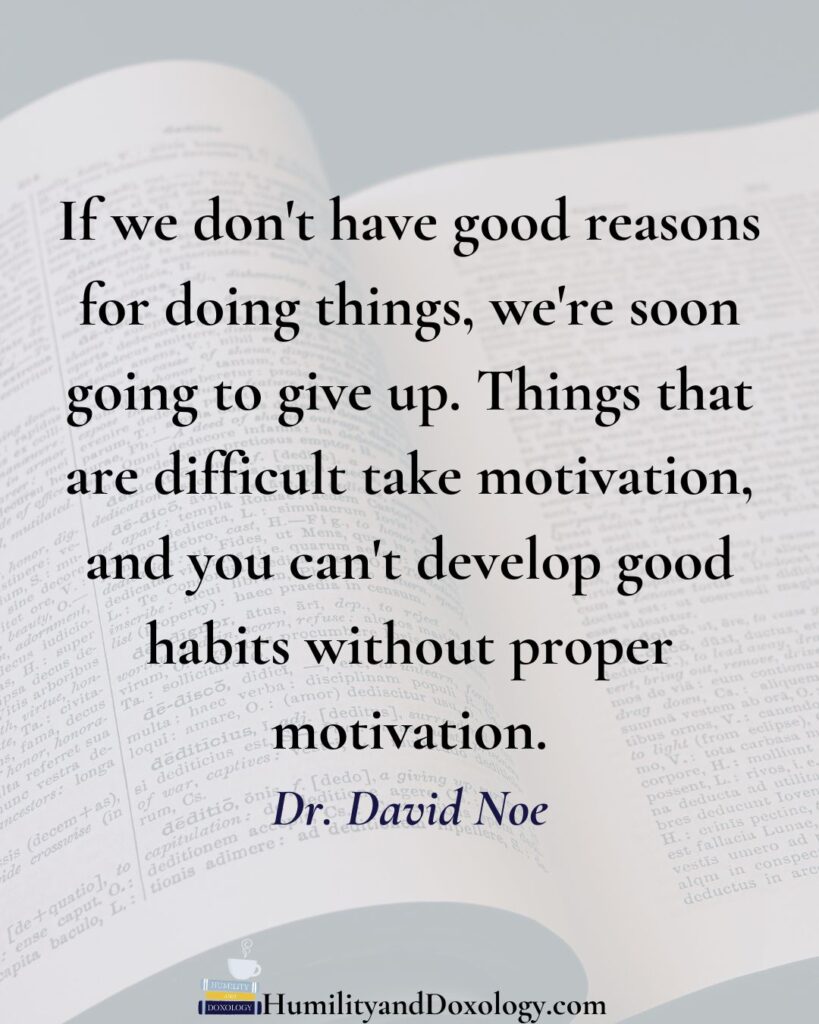
For parents intimidated by teaching Homer, Plato, or Virgil without having read them themselves, Dr. Noe emphasizes disposition before content. He encourages parents to examine their reasons for studying the classics, noting that “if we don’t have good reasons for doing things, we’re soon going to give up.” He cautions against the idea that reading great books automatically produces moral improvement, explaining that this motivation often collapses when readers encounter morally troubling passages. Instead, he urges attainable goals and steady habits, reminding parents that “anything worth doing is worth doing poorly.” Progress, not mastery, is the aim, and perseverance matters more than expertise.
Pagan Authors, Christian Readers, and the Practice of Charity
Addressing Christian concerns about reading pagan literature, Dr. Noe frames the issue through charity and discernment. He argues that ancient authors deserve the same fairness we extend to living neighbors. Criticism, he insists, must not be the first impulse. “If the first impulse is, what can I find that’s wrong with this, you’re going to miss out on a lot of the good things that others have to teach.” Christians can read pagan authors humbly, learning from them while testing ideas against Scripture, just as Paul instructs believers to do.
Why Classical Literature Still Matters
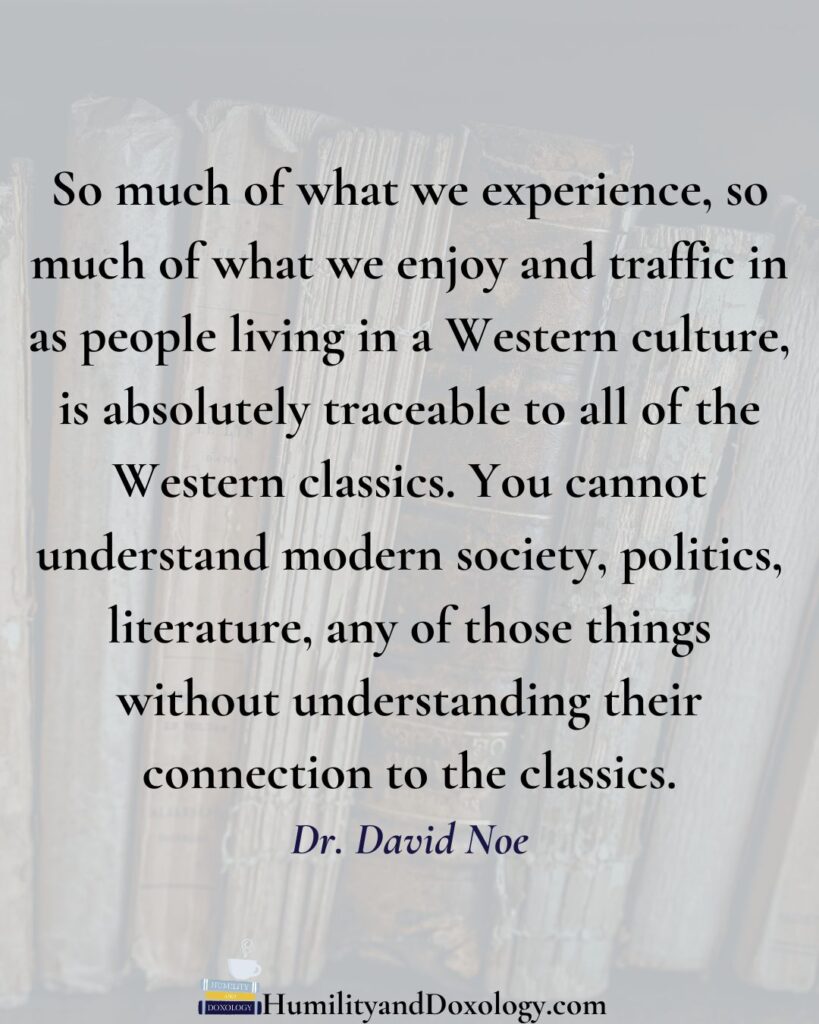
Dr. Noe outlines several reasons the classics endure. On a cultural level, he explains, “You cannot understand modern society, politics, literature, any of those things without understanding their connection to the classics.” Historically, the survival of these works suggests enduring value, even if that survival is not infallible proof of excellence. Theologically, he emphasizes God’s providence in history, noting that Christ’s incarnation within the Greco-Roman world was not accidental. “The New Testament is written in Greek,” he reminds listeners, adding that understanding the classical world deepens our grasp of Scripture itself.
Are Greek and Latin a Waste of Time?
Dr. Noe challenges the assumption that ancient languages must justify themselves through efficiency. He points out that few people apply such strict standards elsewhere: “You never watch a football game. You never eat an ice cream cone,” he quips. Beyond enjoyment, Greek and Latin shape the mind, stretch the imagination, and connect students to centuries of intellectual tradition. Even modest study fosters appreciation. “It’s okay not to be great at it,” he says, comparing language study to learning piano well enough to love music for life.
Is It Ever Too Late to Start?
For parents or teens who feel they’ve missed the window for classical learning, Dr. Noe is unequivocal: “Definitely not.” He compares late-starting language learners to the explosion of pickleball among seniors, noting that desire matters more than age. Readers can begin with abridged texts, summaries, or listening to the language aloud. “Let your interests direct you from there,” he advises, emphasizing that curiosity, not perfection, fuels learning.
Why Classical Education Is Worth the Effort
When parents wonder whether classical education is worth the work, Dr. Noe encourages clarity of purpose. Literature, he argues, allows children to encounter the world’s brokenness at a measured pace. “Literature is a way to get a glimpse into the lives of others,” he explains, helping students grow in understanding without being overwhelmed. We can compare reading to nourishment: not every meal is dessert, but delight still belongs at the table. Classical education feeds both mind and imagination, shaping long-term habits of thought.
A Lesser-Known Classic Worth Reading
Dr. Noe highlights Ovid’s Metamorphoses as an underappreciated classic. Though not suitable for young readers in its entirety, he calls Ovid “the most witty and compelling storyteller” of antiquity. With more than 240 mythological tales, Ovid’s influence flows through Western literature, from Chaucer to Dante. “Everything that he touches is so entertaining,” Dr. Noe says, noting how often later writers assume familiarity with Ovid’s stories.
If He Could Meet One Person from Antiquity
Pressed to choose just one figure from the ancient world, Dr. Noe selects Cicero. Having spent years studying his work, he admits curiosity about Cicero’s character, shaped so differently by speeches and private letters. On the Greek side, Aristophanes intrigues him for his odd pairing of conservative moral vision and outrageous comedy. These contradictions, Dr. Noe suggests, remind us that ancient authors were as complex and human as we are.
Key Takeaways
- Curiosity, not expertise, is the best starting point for studying the classics
- Parents can learn classical literature alongside their children
- Reading pagan authors requires humility before discernment
- Classical literature helps Christians understand Scripture and history
- Moral formation is not automatic or guaranteed by great books
- Greek and Latin shape the mind even without mastery
- It is never too late to begin studying classics or languages
- Interest should guide which authors and texts are chosen
- Literature offers a safe way to encounter human brokenness
- Classical education nourishes both intellect and imagination
You may also enjoy:
- Recovering the Common Arts in Classical Education
- Scholé Every Day: Restful Learning for Homeschool Moms
- Classical Homeschooling with Humility and Hospitality: A Conversation with Dr. Joylynn Blake
- The Harmony of Learning: Greg Wilbur on Music, the Quadrivium, and Loving God Through Beauty
- Narration as the Art of Learning: A Conversation with Adrienne Freas
- Faith, Story, and a Literary Life with Dr. Carolyn Weber
- Wisdom, Truth, and Cultural Discernment with Dr. Carl Trueman
- Classical Education for Students with Special Needs
- Natural Philosophy: Recovering a Natural Science and Christian Pedagogy (with Ravi Jain)
- Latin for Children: our favorite homeschool Latin curriculum from Classical Academic Press
- Plutarch for the Homeschool Family (with Dawn Duran)
- Why We Pursue a Christian Classical Education in Our Homeschool
- Repentance and Discipleship in Christian Classical Education (a video interview with Dr. George Grant)
- World Mythology in Your Homeschool: Why Should We Study Myths and What are the Best Mythology Books to Read?
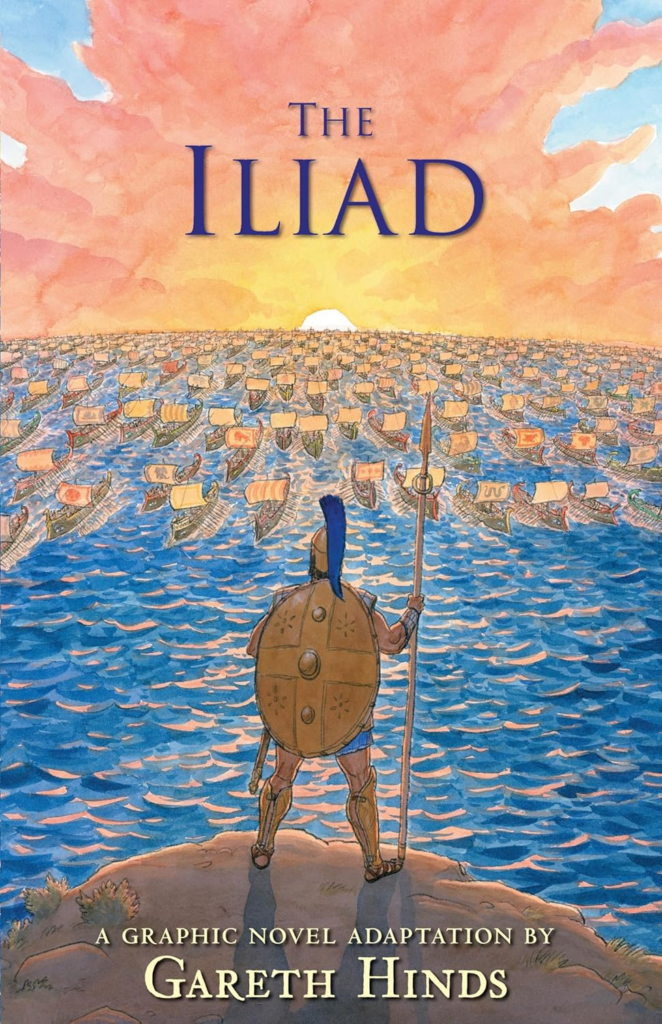
During our conversation, I mentioned the Iliad graphic novel by Gareth Hinds.
Find Dr. David Noe online
David Noe is Pastor at Reformation OPC in Grand Rapids, Michigan, husband and father of four, lifelong student of Greco-Roman antiquity, philosophy, and many other things. He has been blessed with extraordinary teachers, living and dead, and earnestly desires to leave something worthwhile for those who live after him, by God’s grace. His projects include Greek and Latin instruction, speaking Latin, podcasting, translating Reformed theology and literature, and cultivating the life of the mind ut Deus vult.

Check out all the other interviews in my Homeschool Conversations series!
[00:00:00] Amy Sloan: Hello friends. Today I am absolutely delighted to be joined by David Noe. He is pastor at Reformation OPC in Grand Rapids, Michigan, husband and father of four, a lifelong student of Greco-Roman antiquity, philosophy, and many other things. He has been blessed with extraordinary teachers, both living and dead, and earnestly desires to leave something worthwhile for those who live after him by God’s grace. His projects include Greek and Latin instruction, speaking Latin, oh it’s not a dead language for some of us, all right, podcasting, translating Reformed theology and literature, and cultivating the life of the mind. And just before we start with with our discussion, I wanted to kind of tell my listeners why I’m especially excited to chat with you. So last fall we were having dinner with some friends from church and my friend Matt was like, have you heard of the Ad Navseam podcast? I was like, I haven’t, but it sounds right up my alley. And so I decided, like a good scholar, to start at the beginning and really, you know, go from there to the end. So I’m working my way through. But if you are at all interested in the classics, I definitely recommend the podcast. What I especially love about it is it’s full of deep scholarship. I can tell that you and your co-host Jeff know what you’re talking about. And so I love that you’re learning deep things. But you guys do not take yourselves too seriously. There’s the best like puns and dad jokes and pop culture allusions. I was like, this podcast is my favorite thing ever.
[00:01:42] David Noe: Oh, thank you so much. That’s exactly what we’re going for. Awesome.
[00:01:47] Amy Sloan: Well, here at the beginning, can you just tell us a little bit about what first sparked your own personal curiosity and interest in antiquity? And then how did that kind of grow and change over time?
[00:01:59] David Noe: Sure. Yeah. So my first encounter with antiquity was when I was a teenager, I was listening to a radio preacher. I grew up on a farm and so there was a lot of time in the tractor without much to listen to. So I used to listen to a well-known radio preacher. This was before I was reformed, a man named Charles Swindoll. And he’s a good speaker. And he was explaining the book of Daniel and he kept referencing Herodotus. And so I went to the public library and checked out Herodotus and began to try to read it. And it was much too daunting a task for me at that point. But that was my very first introduction to classics. And then when I became an undergraduate, I was studying theology and I found that so many of the authors that I admired and was reading, they would reference Greek and Latin. And I realized this entire world is closed off to me. I’m just kind of skimming the surface. So I self-consciously thought I better kind of go back to the beginning and see if I can do this from the start, still being 19, 20 years old, rather young. I have time. So then I began studying Greek and Latin and that’s been my, I guess, my vocation ever since.
[00:03:17] Amy Sloan: I love hearing how it actually, even from the beginning, had that connection to theology. It actually reminds me of my daughter, my oldest daughter. So I teach my children Latin. I figure it’s a random thing I have some knowledge of. I might as well pass it on, right? Yeah, that’s great. Sometimes to their chagrin. So she took up through two years of high school Latin before she finally convinced us to let her move on to French. What? And she literally burned her Latin textbook in the fire with permission, but it was she burned it. Okay. So fast forward, she is now a college student. She’s fascinated by medieval literature and medieval history. And so she’s just doing all sorts of independent study and she’s like, huh, you know, it would be really helpful if I knew Latin. So she’s pulled out my old Wheel-X and other Latin resources and is teaching it and reviewing it herself now.
[00:04:17] David Noe: That is wonderful to hear.
[00:04:19] Amy Sloan: Yeah.
[00:04:20] David Noe: Yeah.
[00:04:20] Amy Sloan: You know, don’t worry if your kids hate it. Just keep going. Well, as parents who are, you know, starting wanting to maybe introduce some of these classics to their kids. Sure. And then they get a little intimidated. They’re thinking Homer, Plato, Virgil. Like I never read that myself. How do I start? What advice would you give to the parent who’s having to kind of learn for the first time? Right.
[00:04:47] David Noe: Sure. Well, I think I try to focus mostly on disposition or attitude. And then secondly, on habits.So these are not in opposition to or in place of good content. But once you’ve already decided upon the good content, these are the things we’re going to do. Then the second question is, what is my disposition and what’s going to be my habit or method? So whenever anyone asks me about studying Latin or Greek or anything like this, I immediately ask them, what are your reasons? Because if we don’t have good reasons for doing things, we’re soon going to give up. Right. Things that are difficult, they take motivation and you can’t develop good habits without proper motivation. So I would spend a little bit of time thinking about why exactly do I want to do this? And it can not even be an extended amount of time. You can take 10 or 15 minutes, write down, here are the five reasons or the 10 reasons that I want to study this material. And I think that process of reflection will help sort out the good from the bad reasons. One reason that I hear often is that studying certain kinds of authors will make you a morally better person. And it’s maybe not a surprise to you that I’m really skeptical of that kind of reasoning. It might make you a better citizen in some ways, but in terms of actual moral improvement, probably not going to work. And the reason that it’s important to think through that is because later on when you encounter morally objectionable things in these authors, you might be inclined to quit if you think I’m reading these so that I can grow morally. So I would be very careful about that particular motivation. But in terms of being able to develop your imagination, being entertained in a proper way, we all consume a lot of entertainment. So it’s really the question of what kind of entertainment am I going to consume? And so I think articulating some of those reasons first is really important. And secondly, as to method and habits, I always compare the study of these things to the study of music and the pursuit of athletics. Because everything in those two disciplines that I’m aware of in terms of good method tracks identically onto the study of languages and literature. So frequent practice, focused practice, stopping your practice when you become fatigued. Don’t push through an injury. For example, you might think, I want to read all of Plato. That’s really not a very achievable goal. A better goal would be something like, I want to read one page of The Republic in the same way that you might say, I want to learn how to throw the ball accurately to first base, rather than saying, I want to win the World Series. You have to have really attainable goals. And then when you have those goals, I would say, in addition, it’s important to realize anything worth doing is worth doing poorly. I mean, think of our role as parents and friends and so forth. Sometimes, at least for myself, I’m not a very good friend to those around me. Or I really fall down as a parent. Well, because being a friend and being a parent are inherently good things to do, I don’t quit. I can’t quit just because I’m not doing them very well. Because anything worth doing is worth doing poorly. Now, you don’t set that as the goal. You don’t say, I’m going to try to do a bad job. But if you don’t have the success you want, that’s not a reason to give up. And so that’s what I would say in terms of method.
[00:08:44] Amy Sloan: Yeah. So even if you can’t explain everything about the Iliad to your student, still worth reading and struggling to get it together, right?
[00:08:53] David Noe: That’s correct. Yeah. So St. Augustine has a beautiful metaphor. Now, this applies to sanctification, not to the study of literature, but I think it’s analogous. He says it’s better to crawl along on the road to full sanctification than to be running at breakneck speed in the opposite direction. So similarly, it’s better to understand a little bit of the Iliad, right, than to consume lots of poor literature, I would suggest.
[00:09:26] Amy Sloan: I would like to go back to a comment you made a little bit earlier as you were discussing reasons and maybe a reason that might be thrown out that isn’t a good reason. Because this is one of my hobby horses when it comes especially to the classical education world, which is what I swim in. Because I hear even Christians speaking of the reason why we give our children this classical education as about raising up good men. And I say, I don’t just want really smart pagans coming out of my homeschool. That would not be great. Or even very moral pagans. I want them to distinctively see the difference and to love the Lord. So how would we then distinguish between the kinds of wisdom that we are, of course, going to be gleaning from our study of of ancient literature, but kind of distinguish that, at least as Christians, from what it truly means to be a good person?
[00:10:26] David Noe: Yes, that’s a great question. So I tried to think of it in terms of Paul’s description in 1 Corinthians, where he talks about the fact that he planted, right, so he was responsible in the ecclesiastical context, he was responsible for getting the Corinthians started. Then someone else came along, Apollos, his fellow worker, who watered, right, administered the ordinary means of grace. But it’s only God that gives the increase, right? So my criticism of reading these things in order to become a moral person, I think it’s very easy to slip into a kind of deterministic mindset. I mean, I find myself slipping into that very often, which is, if I just do everything correctly, then the outcome has to go according to my plan, and God’s providence just doesn’t work that way. And so it’s much better to think about, how can I, by God’s grace, set the right environment so that then he can do what he wants with this situation? So in educating my children, in educating my students, I’m not really responsible for the end outcome, right? You can read excellent authors, and God, by his Holy Spirit, can use that to grow you in wisdom and maturity, both the cardinal virtues and the classical virtues, or you could do all that and it not profit or benefit you in terms of what God’s design is. So I try to think of it in terms of setting the proper environment, much as Paul says, the planting and the watering.
[00:12:10] Amy Sloan: Yeah, that’s a really helpful framework. I like to talk about how homeschooling isn’t a vending machine.
[00:12:15] David Noe: Yeah.
[00:12:16] Amy Sloan: We don’t just put, or parenting, for that matter, we don’t just push the right buttons, you know, give our kid just the right book at the right time, create the perfect environment, and then expect God to just, like, give us a result at the end.
[00:12:28] David Noe: That’s exactly right, and if I can add maybe a little to that, Augustine in the Confessions, he has this expression where he tells God, give what you command, so da quod iubes et iubes quod vis, give what you command and command whatever you want, right? So God, you grant to me what you command from me, right? And then you command whatever you think is right, and this is a direct response, I’m convinced, to what the Roman poet Horace says when he’s explaining Roman religion, and it’s just like you said, Amy, Horace said Roman religion is do ut des, which means I give, I do something, so that you, the God, give me something back. It’s a vending machine, right? So you do all the ritual, you put your quarters in, you’re supposed to get the snack, right? So the Romans had a really transactional view of the gods, as did the Greeks, and we’re doing all of this ritual, but the gods aren’t giving us what they’re supposed to do, what they’re supposed to give, so the only explanation is the ritual is messed up, and so the heart is completely missing from that.
[00:13:40] Amy Sloan: Yeah. You know, on the other side of things, so we have one perspective that might idolize, right, this sort of, oh, if we just give our kids these books, we read all the right things, we’ve studied the right things, we’ll get this great result out, really smart, really moral kids. On the other side, I’ve also experienced personally a lot of pushback of like, why, as a Christian parent, would you even want your kids to be reading these pagan authors, right? Right. So how then ought we think about sort of that question, how do we approach them with humility, right? We ought to not come and sit in judgment over Plato or Aristotle, let’s learn, but also teaching our children with discernment.
[00:14:25] David Noe: Excellent question, yeah. So there’s a great Latin expression, nil nisi bonum de mortuistic endomest, which means one should say nothing except good about the dead, right? And that’s kind of a starting point, I would say, for reading literature generally. It’s not the ending point, right? But when Christ in the Gospels commands us to love our neighbor, and then the person asks, well, who’s my neighbor, and Christ makes it as broad as can be conceived, I would suggest that even the dead are our neighbors, right? If after this podcast ends, Amy, and I’m talking about this with my wife or something like that, and I say a bunch of gossipy and slanderous things about you, which I won’t, that’s clearly wrong, right? Because you’re not here to defend yourself. And because no argument is right until you hear both sides. So why would we say that about the dead, right? Why would we give ourselves license to just dismiss them out of hand? They’re not here to defend themselves. And I think that this is not difficult. It’s not difficult to defend from Scripture that charity extends even to those who aren’t living. Now, of course, it doesn’t mean you can never criticize someone, right? I’m not saying we just take whatever non-believers or believers for that matter, right? Whatever they say, when Paul says, test the spirits, he doesn’t say anyone who professes Christ gets a full pass immediately. Whatever any minister or anyone says to you, you completely accept it without discernment. In fact, in Galatians 1, he says, if I say something false, you have to reject it, even if I are an angel, right? So my point is just generally that yes, discernment has to come in, but it can’t be the first thing. Because if the first impulse is, what can I find that’s wrong with this? You’re going to miss out on a lot of the good things that others have to teach. And that comes in every area of our lives, right? Just because someone bears the name Christian doesn’t mean that the, unlike say Plato or Demosthenes, doesn’t mean all the teaching that they purvey will be acceptable. You still have to use discernment.
[00:16:47] Amy Sloan: It’s almost easier, actually, in some ways to read a pagan, because, you know, I joke with my kids, like, pagan’s going to pagan, you know? That’s right. It’s not surprising or shocking if a pagan says something pagan. Correct. It’s a lot sneakier when you’re reading someone professing to be speaking for the Lord. Yeah.
[00:17:06] David Noe: Exactly. Right. And we shouldn’t be surprised by this, right? Because there’s all kinds of, you know, masquerading sheep and wolves in sheep’s clothing and so forth. There’s going to be a lot of deception. And sometimes Christians are a little bit gullible, right? The deception is perpetrated on them because we’re trying to be trusting.
[00:17:26] Amy Sloan: So what would be the value then of studying? It’s not to create, you know, good people. And we’re listening. So what are some of the values of studying some of these classic works?
[00:17:36] David Noe: Yes. Well, I think it’s a kind of love for neighbor in order to be familiar with the things that they are familiar with, right? So much of what we experience, so much of what we enjoy and traffic in as people living in a Western culture is absolutely traceable to all of the Western classics. You cannot understand modern society, politics, literature, any of those things without understanding their connection to the classics. So that’s kind of a first broad, a first broad kind of answer to the question. You can get more specific by saying two things. First of all, the classics survived because human history has a filtering effect on artistic production, right? It has a kind of a filtering effect. It’s not always the case that the cream rises to the top, but very often it is. Here’s an example. Lots of people really love the works of C.S. Lewis and J.R.R. Tolkien, right? And I like them too. I like them too. I’m not convinced they’ll be around a thousand years from now, right? Maybe they will be. Maybe Tolkien in particular is the best literature of the 20th century, but the jury’s still out on their long term viability, right? So the fact that things have survived artistically is kind of a good argument for their enduring value. It’s not a fail safe argument. There’s bad stuff that survived and good stuff that didn’t, but it’s a good starting point, right? In terms of what do I want to read that’s going to have value? But then another stronger argument is specifically for Christians, and that is Christ’s being born in the Roman province of Judea at a particular time and place was not an accident, right? It was God’s specific providential will. If Christ had been born in Central America, if he had been born in Australia, if he’d been born in Mongolia, one of those places, then those cultures would have a unique hold on the imagination of Christians. This is not to say that Greco-Roman culture is better morally than the literatures and cultures of those places because that’s not true, right? It’s just not true. It’s just to say that God spent a lot of time and effort preparing people for the birth of his son and gave us all of these resources to understand his ministry, like the New Testament is written in Greek. The Book of Acts is filled with Greco-Roman gods and goddesses. The geography of the Roman world, all of these things are really essential for a Christian to understand.
[00:20:20] Amy Sloan: And Paul often even quotes from their poets, right?
[00:20:24] David Noe: Yes, he does. That’s right.
[00:20:25] Amy Sloan: Because “one of their own has said.”
[00:20:27] David Noe: That’s right, in Acts 17 and many other places. Exactly right.
[00:20:32] Amy Sloan: Well, kind of shifting from the literary part of antiquity to the languages, you have personally devoted years of your life to studying and teaching Latin and Greek, but some parents worry that these ancient, you know, dead languages are a waste of time. So how would you respond to that concern? What is so great about Latin and Greek?
[00:20:56] David Noe: First, I’d quarrel with the premise about the wasting of time, and I would ask them to do a kind of audit. And I would say, hmm, studying Greek and Latin are a waste of time. So you’re telling me that you have so economized your time in every area that every moment is precious and you don’t waste any. So you never watch a football game. You never eat an ice cream cone. You never sit on the couch and stare at the ceiling or drink a cup of coffee, right? So I think we’re highly selective, first of all, in when we decide to be careful with our time. And I’m no different than anyone else, right? I waste a lot of time. It’s all just a question of what are you going to do with the time that you have? So I don’t think we really need to justify the study of a language in terms of economizing time. That’d be the first thing I would say. And again, I like to compare it to things like, do you season your food, right? Do you wear clothing that has different colors? Or are you so efficient and strict that everything is, I’m only going to do this if this is useful? Clearly, that’s absurd. But suddenly, when it comes to studying something, then all the arguments for efficiency come out. But beyond that, I would just say, if a person doesn’t think that Greek or Latin is enjoyable, beneficial to the mind, encouraging to the imagination, it’s probably because they have never read it. They’ve never tried it. And it’s hard to quarrel with thousands of years of tradition, right? Pretty much everyone that these parents would admire in terms of literary, scientific, and religious accomplishments, they were trained this way. So Lewis and Tolkien, whom I just mentioned, their careers are not imaginable without the study of Greek and Latin. These are things that they did deeply, devoted a lot of time to. And it’s okay not to be great at it. It’s okay to do your best, right? I took piano lessons as a kid for eight years, and I never got very good at it. But it’s so valuable in terms of my enjoyment now of church music, being able to sing, appreciating the talent of others, right? You try something, then you can appreciate, wow, this is hard. Someone else does it really well. I enjoy their success. Just like we live vicariously in sporting events. We think, wow, look at what that person is doing. That’s amazing. I played a little basketball, and you get some enjoyment that way, right? Maybe that’s not going to be, as I think back about my answer, maybe it’s not especially helpful to parents, but you can ask more questions.
[00:23:47] Amy Sloan: Well, I think just even just with that reminder that you don’t have to be great at it for it to be worthwhile, that’s so important for us to hear. I have seen, even with sports, I’ve seen such a change in the past few decades, even of parenting, let alone comparing it to my own childhood or my husband’s childhood, where it used to be like kids could just go play baseball, and some kids were better than others, but you just went and played on the local team. Now there’s so much pressure with it doesn’t count unless you’re doing the extra travel ball, and you’ve got your special coaches on the side, and it’s like everyone has to be the greatest, or why waste time doing it? Yeah, that’s a great point. Most of us are just ordinary. Most of us are probably not going to end up being phenomenal Latin and Greek scholars. That doesn’t take away from the value of our studies.
[00:24:39] David Noe: That’s right. All of us, by definition, are average in most things. That’s just how it is. God has distributed talent in so many different ways that we each have our little area of excellence, but average in other things. Yeah, that’s a great point.
[00:24:54] Amy Sloan: It takes away the pressure, I think, for homeschool parents, in particular, who might feel like, I can’t do this perfectly, or I don’t know everything. It’ll be okay. I also think generationally, maybe your grandchildren will be even better at Latin than you are.
[00:25:11] David Noe: Right. Again, so much is disposition and attitude, right? The best we can hope for as parents is that our children will value the things that we value, right? If we have the best we can hope for and pray for, I should say, beginning with their faith, but generally with other kinds of things, right? If we start out with a begrudging, yeah, we have to do this because some guru has told me Latin’s important, and I’m a homeschooler, so I guess I better do Latin. That’s not going to work, right? It’s just much better, I would say, to approach it with your kids along the lines of, we’re going to do this, and I think it’s important, and I’m going to learn as much of it as I can also as your parent, and I’m going to encourage you, and let’s just persevere and see what happens.
[00:25:58] Amy Sloan: Well, we kind of have lumped Latin and Greek together here. I don’t know if I’m even allowed to ask you this question, but if somebody had to choose just one, if they were like, I can’t do both, do you have a personal favorite or a general answer you give?
[00:26:13] David Noe: Yeah, I get asked this so many times, and I usually say it’s like one’s children, right? If you had a favorite, you would never admit it, right? I like to think of them as really different. So Greek is the older sister, right? Greek has maximum flexibility and precision. Now theological ideas and philosophical ideas and ideas of beauty, they can be expressed in any language. Some languages, I think, are a little more suited by their structure to expressing some ideas than others, and Greek is really good at expressing theological and philosophical ideas that are sophisticated, and Greek is just really flexible and beautiful. Latin, on the other hand, its beauty, poets like Virgil and Lucretius, they had to work really hard to take the Latin language and make it a poetic and beautiful language like Greek, I would say. They spent several centuries actually refining some of the poetic expressions of Greek and trying to bring them into Latin. Thereafter, Latin was really useful for many, many things and arguably has a longer life than Greek. So that’s just kind of the broad terrain, but I would just say that a person should pursue their interest. I clearly remember when I was playing piano as a kid, and I had this little egg timer that my mom put on the piano, 60 minutes, and I talked her down to 45, and then I talked her down to 30, and they were very generous, my parents were, in insisting that I learn the piano, though I wasn’t any good at it. I was never exposed to Bach, Beethoven, Haydn, the things that now I really, really like, and so I wanted to play pop music on the piano. That was my interest, and my parents, they were generous in helping me find those things that drove my interest. The fact that I gave up is my fault. They did what they could to accommodate me. So for whatever the kid is, if he likes history, then he should be exposed to Roman historians like Tacitus and Livy. If he likes drama, fiction, mythology, he should be exposed to Ovid or to Homer’s Iliad, things like that. So really let the interest of the student direct the course of study, in terms of what to read.

[00:28:43] Amy Sloan: That’s really helpful. I think just letting the delight and the interest be a part of the decision.
[00:28:49] David Noe: Yes.
[00:28:50] Amy Sloan: Having the freedom to do that, that’s a good reminder.
[00:28:53] David Noe: Yeah, they even make comic books on the classics, right? Which maybe they’re not the best, but again, in life, we seldom get the best. We have to make choices between, you know, things that are not the best. We have to make hard choices. So if your kid is only reading the classics in comic book format, it’s probably better than Spider-Man, I would say.
[00:29:14] Amy Sloan: Yeah. I don’t know if you’ve seen the Gareth Hinds graphic novels of Iliad. He also has done several others.
[00:29:22] David Noe: Is he the illustrator for the Laura Ingalls Wilder books?
[00:29:26] Amy Sloan: No, no. I’ll put a link in the show notes, and afterward, I’ll see if it’s in my stack, or it might be in a kid’s room. I am not a big personal graphic novel fan. I find it very visually difficult to take in and understand, but I have some children who do, and the art that he did, the symbolism, the way he used different colors and symbols to connect the different gods and goddesses and the different characters of the story was definitely very entrancing.
[00:29:56] David Noe: Fascinating. I must be thinking of someone else with a similar name, but yeah.
[00:30:01] Amy Sloan: All right. So if someone’s thinking, well, great, now I feel like I’ve missed the boat. Like, my kids are teenagers. I’m an adult. Or maybe it’s someone listening who’s like, my kids are about to graduate, and I never learned any of this. Is it too late? Have we missed it? We think of these languages with our young children when they can memorize. Is it too late?
[00:30:23] David Noe: Definitely not. Are you familiar with pickleball?
[00:30:26] Amy Sloan: Yes.
[00:30:27] David Noe: Pickleball is a huge phenomenon. No one ever played pickleball because it didn’t exist. Never, ever played pickleball. Now, the number one group playing pickleball is seniors, probably people over the age of 60, and they are really, really serious about it. So this demonstrates that it’s never too late to learn something new, and it all depends upon one’s desire. So certainly someone much younger can just begin reading the classics. They can start reading the very first work of Western literature, which is Homer’s Iliad. You can read an abridged version, right? You can read the spark notes. There’s nothing wrong with that. And then eventually kind of work yourself up to, I’d like to read the whole thing. And then maybe you think, I bet this is more interesting in Greek. I’d like to hear what the Greek language sounds like. There’s thousands of resources available online, almost all of them for free, that can get you into learning these kinds of things. And then just let your interests direct you from there.
[00:31:30] Amy Sloan: That’s a really great tip. I think it’s interesting how different languages, when you hear them, even if you do not know that language, you think if you’ve heard someone speaking in French versus an Asian language versus Russian or something, you may not know what they’re saying, but you can pretty much quickly identify, oh, that was French or that was German, right? Or you just pick up on the differences. I think actually Tolkien talks about how language reflects a culture. And so even though I don’t personally do, I haven’t learned Greek yet, I still have time, right?
[00:32:04] David Noe: You have lots of time.
[00:32:05] Amy Sloan: So much time, but I don’t know it yet, but I love, I love the Iliad. And so it’s really a delight to me sometimes to just listen to bits of it being read while in Greek, because it does, there’s something different. You can hear the poetry, you can hear something about the story differently when you’re hearing it in the original than when you’re reading it in translation.
[00:32:28] David Noe: Yeah. Let me drop the first line of the Iliad on you. Like that. And the very first word is mainen, wrath, anger, sin goddess, the wrath of Achilles, son of Peleus. So the very first word in Western lit is anger. And that you can trace the arc of that word throughout the entire epic, right? I think this is a wonderful affirmation of the scriptural notion of original sin, right? Homer, he wasn’t reading Moses. He wasn’t reading any of the Hebrew prophets. And yet Western civilization begins with something broken, right? Anger as the first word. Now in the 24 books of the Iliad, there’s lots of beauty. There’s tremendous beauty of friendship, of strength, of poetry, but there’s something wrong, right? With the human condition right there at the very beginning. That’s a profound insight. And we could trace it back to the Holy Spirit revealing truth in unexpected places.
[00:33:37] Amy Sloan: Yeah. And that’s actually one of the reasons why I have my kids, we’ve memorized the first, I don’t know, 10 or 12 lines of the Iliad in translation.
[00:33:46] David Noe: Excellent.
[00:33:47] Amy Sloan: My favorite translation is Fitzgerald’s because he begins, anger be now your song, immortal one, right? Achilles anger doomed and ruinous anyway. But yeah, I love how he is able to keep that as the first word of his translation.
[00:34:00] David Noe: Yeah. Oh, that’s great that you have had your children do that. That’s wonderful.
[00:34:05] Amy Sloan: It’s a very fun one to like get really intense about the living room.
[00:34:09] David Noe: In the Marvel Avengers movie, the Hulk character, right? Someone asks him, it’s a famous line. Someone asks him, how do you, what’s your secret? How do you transform into that monster? How can you do that? And he says, I’m always angry. I’m always angry. I’m always angry. So it’s, he’s Achilles basically.
[00:34:27] Amy Sloan: Okay. I’m going to have to, I’m going to go downstairs and tell my son. He’ll be excited about that one. Yeah. Sorry. One more, one more thing that just came to mind. This has nothing to do with the question except quotes of, of the Iliad. I don’t know if you read the Lord Peter Wednesday, but the Dorothy Sayers. Okay. So Dorothy Sayers, who was a contemporary of Lewis wrote while she did an incredible translation of Dante, but she also wrote mysteries. And so her, her main character is Lord Peter Wednesday. And in one of the short stories, he is in disguise. I will not tell the whole story, but at one point he’s in disguise as a, as a magician kind of thing. And he ends up reciting in Greek Homer, the list of the ships.
[00:35:16] David Noe: Oh yeah.
[00:35:16] Amy Sloan: It’s a long thing. You know, of course this is early 20th century. You know, he was Oxford as a fictional character. Right. So he has it all memorized. And so that’s how he’s able to, you know, trick the people thinking he’s speaking some sort of fancy language.
[00:35:32] David Noe: That’s a great story.
[00:35:34] Amy Sloan: You’ll have, you’ll have to check it out.
[00:35:35] David Noe: Yeah. Thank you for the tip.
[00:35:37] Amy Sloan: Well, we’ve, we’ve talked about this a little bit already, but many homeschool parents are attracted to the idea of classical education, but they struggle to articulate why it matters, or they might think it’s just too much work, honestly, because it is hard. Right. Something worth doing is, is effort. And so what would you share with a parent wondering if it’s worth all the effort that they’d have to put in?
[00:36:03] David Noe: Yeah. Again, I would say, articulate your goals. What are my goals? What do I desire? Right. We want to both help our children. We want to help our children navigate a difficult world. So we don’t want them exposed at an early age to all the wickedness in the world. Right. We don’t, we don’t take them to things that are age inappropriate. Right. We’re very careful. And that, that sheltering is natural and normal. We don’t think therefore that there is no evil in their lives because evil comes from the human heart. It doesn’t come from outside us. Right. But we want them to kind of slowly become aware of the difficulties in the world, I would say somewhat slowly. And literature is a great place to learn that. Right. Literature is a way to get a glimpse into the lives of others, how they think, what they feel, what they consider important, what they hate. And if that’s the starting point, then the next question is, okay, so what kind of literature should I pursue? Right. And you’re going to make lots of decisions. It doesn’t have to be all of one kind, but perhaps a certain kind of literature should predominate. And Paul says whatsoever is good, whatsoever is pure, if there be any good report, so on and so forth. You’re familiar with that passage. He says, think on those things. Right. And why is that? Because as we think in our hearts, so do we, without a deterministic idea, but so do we end up being. Right. So if you’re going to expose your children to literature, what kind predominantly should it be? And then prioritize. Right. Well, I want them to read these things and they’re not going to master them and they’re not going to become, you know, brilliant scholars maybe, but this is how I want to spend my time. And then if they have free time, they can consume other sorts of things in the same way that when you serve your children a meal, right, hopefully you let them have some desserts, some empty calories, but you don’t give them only that. They have to have some things that are, that are nourishing. So in broad terms, I would think in those ways. And then if you’re a homeschooler and you’re a Christian, then I would make some effort, either yourself or relying upon experts to show them how this connects to the world of scripture. Because that’s going to be a very powerful argument. So much of the Persian empire, the books of Daniel and Esther, Nehemiah, Ezra, so much of the Persian empire, we would know almost nothing about if it weren’t for Herodotus and other Greek historians. That’s not an accident. God caused those things to be written to give us a better understanding of his word, which doesn’t make them inspired, but you can’t, you can’t turn back the hand of providence. He did it for a reason, right? So, so there it is. And then in the New Testament, right? After all Christ, his, his words are recorded in Greek and he almost certainly speaks Greek. So the New Testament, you can’t really understand it without understanding the classical world. So I’d make those kinds of arguments to my kids.
[00:39:19] Amy Sloan: Charlotte Mason, another classical educator, she speaks about spreading the feast, which I think about that too, right? Yeah. There’s so often when I’m talking to other parents or educators like yourself, there’s this, the food analogy comes up, right? Of what you feed your children, because there is, we want to give a feast and we think about the kinds of things that we feed our children, but that’s also such a joyful thing, right? When you think about a feast and like a good meal, we’re not like giving our kids a lot. I give my kids beans and rice all the time. That’s what we’re having for dinner tonight. But that’s not exactly a feast, right? When we think about a feast, it’s, you know, the Thanksgiving or we have, we have the basic staples. There’s also joy and delight. This is fun. We get to study this stuff.
[00:40:04] David Noe: We’re very careful, right? About how we feed our bodies and how we think about these things. There are so many different television networks devoted to the whole notion of presentation and taste, right? And combining ingredients. When it comes to intellectual pursuits, we’re for some reason much lazier, sloppier about it. We just take in whatever is presented to us sometimes.
[00:40:30] Amy Sloan: Yeah. Okay. So I really am curious about this. What is one lesser known classic that you wish more people knew about?
[00:40:40] David Noe: Well, I say this with some hesitation because parts of it are not age appropriate, but I would say Ovid. Ovid’s Metamorphoses. So, so people would read, they’d read Virgil’s Aeneid, which in terms of human nature and divine will and so forth, deeply profound. Virgil is the most profound poet. Ovid is not as well known. So on our podcast, we, we feature Ovid pretty often because his work, the Metamorphoses, more than 240 mythological stories. Now this was adapted by someone named Bullfinch, who is a very famous in American history, Bullfinch’s mythology. And there’s a lot of stuff in it that’s not age appropriate, but there has never been a more witty and compelling storyteller than Ovid. He is just brilliant. Everything that he touches is so entertaining. And so, so I wish, I wish that readers would spend more time with Ovid.
[00:41:40] Amy Sloan: Yeah. Probably not the thing you hand to your 10 year old, but definitely to your high schooler, right? My older two, the two who have graduated, both have read Ovid. And it’s so useful when, not well, I hate, okay, I don’t want to misuse the word useful, but it is very helpful as you’re reading other things like Dante. It would be almost impossible to understand that without having some knowledge of Ovid. And is it true that most of the versions of the mythological stories that we kind of have in our cultural consciousness are Ovid’s version?
[00:42:12] David Noe: Yes. So they had their origin in Homer, in Apollonius of Rhodes or in Virgil, but Ovid is really the conduit of all of those ideas into Western culture. Excuse me. And Geoffrey Chaucer, the early English author, was a great fan of Ovid and called him Venus’s secretary. Ovid is just writing down whatever Venus Aphrodite is saying. And the time in which Chaucer lived was called the Ovidian age, the Itos Ovidiana. And actually Ovid was used to teach morals to school children, which is really surprising because mostly what you would be doing is you’d be saying, don’t act like this. Don’t act like that. Don’t do this. Don’t do that. Don’t become drunk. Don’t chase women. Don’t lose your self-control. But that’s how it was used. And I think partly it’s because it’s so entertaining, but also it’s easier to learn sometimes how you should behave from the failures of others. It’s just a fact of human nature. I’m not saying that should be the sole source of learning, but it is easier to learn some things from the failures of others. And in this fictional context, I think the moral stakes are pretty low. It’s not like we’re reading. We’re not reading the lives of other persons who have really suffered and hurt and taking a kind of joy in that.
[00:43:41] Amy Sloan: Right. Yeah. All right. If you could meet one person from antiquity, Greek or Roman, or you can pick one of each. I don’t know.
[00:43:51] David Noe: Well, if I’m restricted to just one, it would be Cicero for sure, because I wrote my dissertation on him. I’ve spent a lot of time with him. He’s so brilliant, compelling in some ways. I want to find out if he would be a good person to spend time with, because there’s so much different opinion on that. He presents himself one way in his speeches, a much more whiny way in his letters, but I still think he was probably a very witty person. And I would just like to see what he was like. So I’m very interested in that on the Latin side. On the Greek side, I don’t know. I’m interested in Aristophanes, the Athenian poet, because Aristophanes has, in some sense, the most PG-13, or maybe even sometimes R, in some of his comedies. And on the other hand, of all of the ancients, he was the most socially conservative. And this is such a strange combination, right? Aristophanes was an advocate of traditional morality, right down to the finest detail. And how he combined that with all of this bathroom humor is really strange to me. So maybe I wouldn’t get on with either of these individuals, but those are my choices.
[00:45:16] Amy Sloan: No, I remember when I interviewed Dr. Trueman, he was talking about Aristophanes, and he said his teacher, who I can’t remember if it was a literature teacher or a language teacher, but she was like a very strict, very straight-laced person. But she took her class to see a performance of, I think it was The Frogs, or maybe it was The Frogs, and she was just cracking up and laughing. And he was like, had this dissonance of like, do you hear what they’re saying? Like, why are you laughing? And then poor Cicero. I honestly wouldn’t want to be judged based on the emails I send my friends. Oh, of course not.
[00:45:56] David Noe: No context. Oh yeah. And you probably know this, but his letters, there are more than a thousand of them. They weren’t rediscovered until Petrarch in the 15th century. Prior to that, everyone’s view of Cicero was he was this martyr for the cause of liberty. He wrote these great speeches, all of which is true. But then you read his thousand or more letters, and he’s whining about this and complaining about his wife, complaining about his friends. People owe him money. You know, the cost of an oil change has gone up, all these kinds of things. He’s just very human. And so then people said, oh, this is not the guy we thought. But your analogy is just right. If you crawled through my email, it’s a very different perspective than how we present ourselves publicly.
[00:46:43] Amy Sloan: So, and I kind of like remembering that all of these ancient authors, you know, they were just humans. I tell my kids that as we study history and especially my younger kids, you know, they’ve always asked like, well, who’s the good guy and who’s the bad guy? And it’s like, you know, it’s not exactly like that. These are just humans. They did a lot of really bad things. They did some good things. They’re just complicated.
[00:47:11] David Noe: That is such a great point, Amy. That is really excellent. In the in the end, as Christians, there’s only one hero, right? And that is Christ. And by his grace, he bestows upon us heroic traits so that we can dimly reflect him in the things we do. But at the end of the day, you know, we’re he’s the hero. We’re just, you know, bit players. So that’s a really good perspective to teach your kids.
[00:47:38] Amy Sloan: Well, this has been an absolute joy to get to chat with you. Thank you for taking the time to thank you on the podcast. But here at the end, I need to ask you the questions I ask all my guests. Okay, the first is what are you personally reading lately?
[00:47:53] David Noe: Oh, yeah. So a number of different things. I’m reading Calvin’s sermons on First Timothy, as translated by Robert White from the French. I just today crested page 700. So I guess this is a piety flex. Shame on me. I’m also reading something about Christian history by a guy named John Anthony McGuckin. First Thousand Years. It’s also a really fat book, and I’m going through it much more slowly. But again, anything worth doing, you know, is worth doing poorly. So I crawl through a few pages at a time. I’m not reading a lot of fiction. I’m reading some Homer in Greek, and I’m reading some Metacitus. I have a lot more trouble reading English fiction than I used to. I think it’s because once you read the classics, it’s harder to consume fiction, you’re more critical.
[00:48:50] Amy Sloan: You just don’t do it the way Homer did.
[00:48:53] David Noe: No, they don’t.
[00:48:56] Amy Sloan: Well, the final question is, what would be your best tip for turning around an educational day that’s going all wrong?
[00:49:04] David Noe: Yeah, I guess first and foremost is prayer, right? Sounds pious again, but it’s true. You know, a prayer along these lines. Lord, thank you for the opportunity to study important things with those I love, and give me the strength, please, to persevere even when things are not going well. Remembering what it says in Lamentations, that his mercies are new every morning. So tonight I’m going to go to sleep, probably messed up pretty badly today, but tomorrow’s a new day. So that’d be the first thing. And then the second would be find little victories, right? And hold onto them tenaciously, right? So when people say, how do I learn Latin? I usually give this advice, try to learn two words a day. You may think two Latin words in a day, that’s nothing. Yeah, but every day, review the previous day’s words. In a year, how many words do you know? In a year, you know more than 700 words perfectly. And in two years, right, it just multiplies. So find a little victory, hold onto it, don’t be proud about it, you know, have godly satisfaction. Thank the Lord for the strength. That’s what I would suggest.
[00:50:28] Amy Sloan: Such wonderful advice. Well, where can people find you on the internet and tell us a little bit about your classes and your podcast and all that stuff?
[00:50:37] David Noe: Sure. Thank you, Amy. That’s really generous. So I wish Jeff were here because he’s far more entertaining than I am. But so we have this podcast, Ad Nauseam. And he came up with the name, my daughter suggested, Jillian, she’s a Latin teacher. She said, why don’t you podcast with Dr. Winko, with Winky, because you guys have such good rapport. So adnauseum.com, there’s a V in ad nauseum, because the other one was taken. And you don’t want to click on the other one anyway, because it’s not not good. But so you can find us there. I have a YouTube channel with more than I think 2400 free Greek and Latin lessons. Each are about four to six minutes. So you can find that there if you want to study Greek or Latin with me at latinperdm.com. You can find lots of different courses from beginner to advanced. I have a new translation coming out along with Chad Van Dixhorn, who is the editor, something by Samuel Rutherford. It’s coming out this spring. I’m very excited about that. And if you’ve ever listened to the podcast, you know, I don’t use the E word inadvisedly excitement. I’m very careful about dropping throwing that word around. But I am excited about this.
[00:51:50] Amy Sloan: So well, that is wonderful. So Dr. Van Dixhorn isn’t right expertise. The Westminster exactly. Yes. Okay.
[00:52:00] David Noe: Yep. Yeah. And so we’re publishing a number of these things together. And then the next one that comes up is Samuel Rutherford from 1661.
[00:52:09] Amy Sloan: Well, now I’m excited too. So that is great. I will have links to all of those things. Thank you show notes for this episode over at humilityanddoxology.com. To those who are listening or watching, if you enjoyed this, I would love it if you would share the episode with a friend who you think would also enjoy the content. And until next time, happy homeschooling.