Are you feeling overwhelmed by the idea of homeschooling high school? Wondering how to navigate transcripts, dual enrollment, and preparing your teen for the future…without losing the heart of your homeschool?
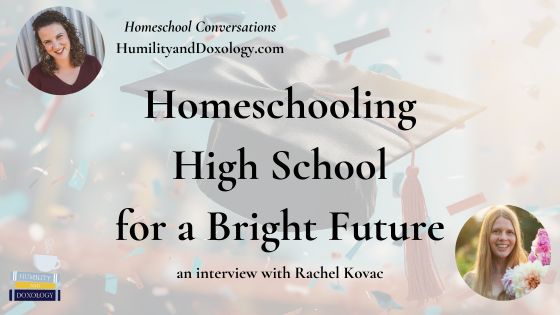
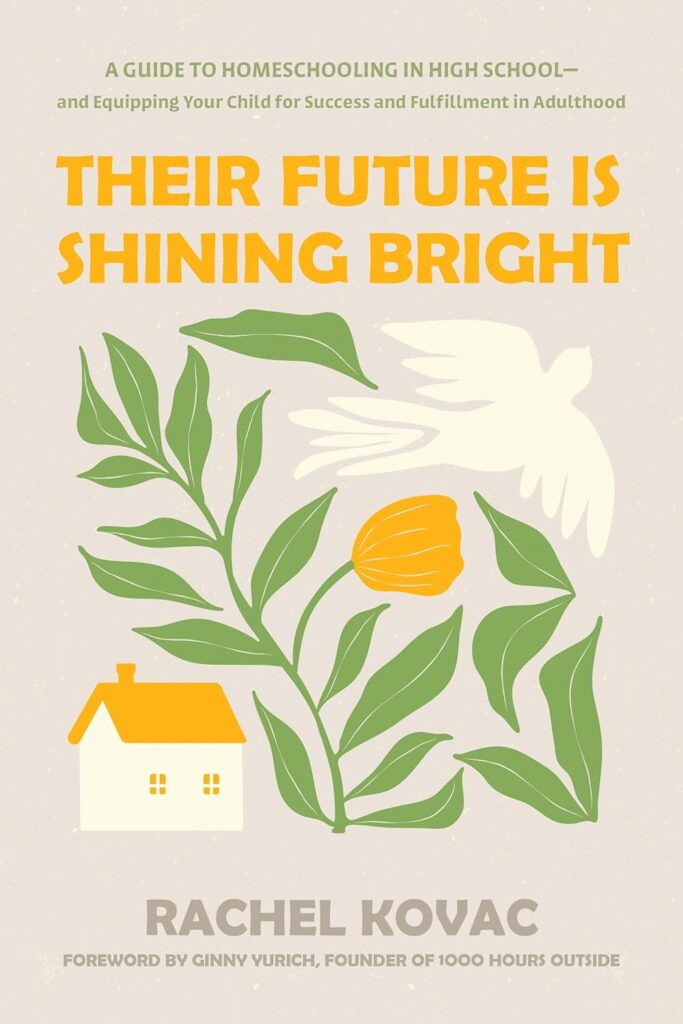
In this Homeschool Conversations episode, I chat with Rachel Kovac, homeschool mom of six and author of Their Future is Shining Bright, to talk about homeschooling teens with confidence, flexibility, and purpose.
Rachel shares her journey from being a “reluctant homeschooler” to discovering the beauty and freedom of home education—especially during the high school years. If you’ve ever questioned whether you’re qualified to homeschool your teen, this conversation will encourage and equip you.
Together, we discuss:
- How homeschooling changes and grows over time
- Why you don’t need to follow a single curriculum
- The biggest challenges homeschool moms face (and how to overcome them)
- Why the teen years can actually be the most rewarding
- How to homeschool high school without fear or overwhelm
- The power of dual enrollment and alternative pathways
- How to help teens build emotional resilience, spiritual depth, and life skills
- Why theology, philosophy, and the arts matter more than ever
- Practical tips for managing busy homeschool family life
- Encouragement to embrace your unique homeschool path
Rachel also shares how homeschooling gives families the “gift of time”—time for deep conversations, meaningful relationships, and real-world experiences that prepare teens for life beyond academics.
Whether your teen is college-bound, exploring trades, or still discovering their calling, this episode will help you see the many possibilities available—and remind you that there is no one-size-fits-all approach to homeschooling high school.
- From Reluctant Beginner to Confident Homeschool Mom
- Letting Go of Rigid Curriculum Expectations
- Balancing Homeschooling with Real Life
- Why the Teen Years Are So Rewarding
- Homeschooling High School Without Fear
- The Power of Time in the Teen Years
- Why Theology, Philosophy, and the Arts Matter
- Dual Enrollment and Expanding Opportunities
- There Is No One ‘Right’ Way to Homeschool High School
- Simple Ways to Reset a Hard Day
- Key Takeaways
- You may also enjoy:
- Find Rachel Kovac online
- Check out all the other interviews in my Homeschool Conversations series!
{This post contains paid links. Please see disclaimer.}
From Reluctant Beginner to Confident Homeschool Mom
Rachel Kovac didn’t begin her homeschooling journey with certainty or a long-held dream. In fact, she describes herself as “the most reluctant homeschooler.” What started as dissatisfaction with a traditional school experience (marked by excessive homework and lost family time) eventually became a leap of faith.
As Rachel shares, fear was a major hurdle:
“I had a lot of doubts, a lot of fears about whether I was qualified… even things like can I teach reading.”
Yet, she discovered that courage often precedes peace:
“Oftentimes… I felt a lot of fear in the moment. And then it was afterward that the peace came.”
Her story is a powerful reminder that homeschooling doesn’t require perfect confidence…just a willingness to begin.
Letting Go of Rigid Curriculum Expectations
Over the years, Rachel’s approach to homeschooling has evolved significantly. Early on, she felt pressure to follow a single method or curriculum. Now, she embraces flexibility and freedom.
“I didn’t feel like I needed to be beholden to any one curriculum… so long as the resources that we were choosing were good and beautiful and true.”
This shift allowed her family to dive deeply into subjects like languages, European history, and literature, tailoring education to their unique interests and opportunities.
Balancing Homeschooling with Real Life
While Rachel thrives in the academic and relational aspects of homeschooling, she candidly shares her biggest challenge: home management.
“I love the homeschooling side. It’s the housework side. That’s a challenge.”
Her solution? Rhythms instead of rigid schedules:
“Just following a similar rhythm… not a schedule, but a rhythm that we adhere to most days.”
She also emphasizes teamwork within the family, teaching children practical life skills like cooking and laundry—essential preparation for adulthood.
Why the Teen Years Are So Rewarding
Contrary to common cultural narratives, Rachel finds the teen years deeply energizing and joyful.
“I love the teen years. I am so energized by them… They are such an amazing time.”
She encourages parents to reject overly negative expectations:
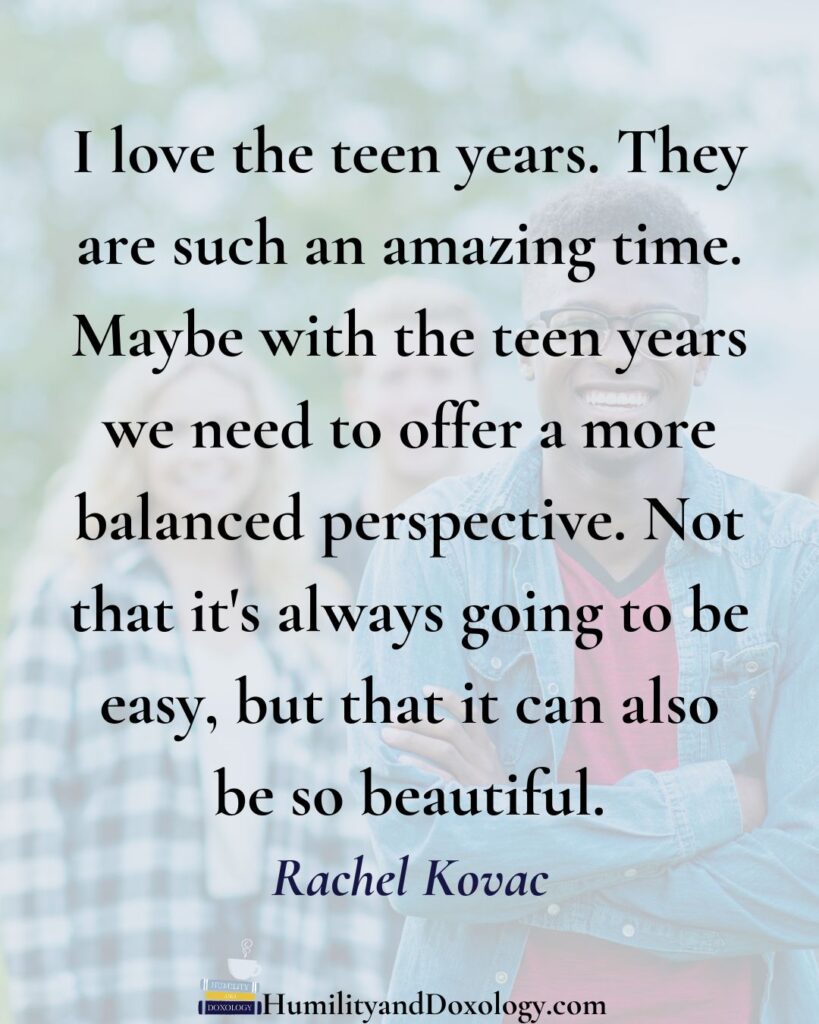
“Maybe with the teen years, we need to offer a more balanced perspective… that it can be so beautiful.”
These years offer opportunities for deeper relationships, meaningful conversations, and personal growth.
Homeschooling High School Without Fear
Many parents feel intimidated by homeschooling through high school, but Rachel reframes the experience as both freeing and exciting.
“By the high school years, you’re more of a facilitator or director of the education.”
She highlights the abundance of available resources:
- Co-ops
- Online classes
- Dual enrollment programs
“There are so many opportunities to outsource what you don’t… or what your child needs.”
The Power of Time in the Teen Years
One of homeschooling’s greatest gifts is time—especially during high school.
“Homeschooling… gives us the gift of time.”
This time allows teens to:
- Explore big questions
- Build relationships
- Develop practical skills
Rachel emphasizes the importance of engaging deeply with the humanities:
“This is a time where they’re really ready to explore… deeper questions about life and society.”
Why Theology, Philosophy, and the Arts Matter
In a fast-paced world focused on quick answers, Rachel advocates for slow, meaningful learning.
“Acquiring wisdom takes time.”
She also highlights the role of beauty in shaping faith and understanding:
“Beauty is something that draws us to God… alongside truth and goodness.”
These subjects help teens wrestle with life’s biggest questions and develop a thoughtful worldview.
Dual Enrollment and Expanding Opportunities
Rachel’s collaboration with experts in dual enrollment opened her eyes to the vast opportunities available to homeschoolers.
“Dual enrollment isn’t just for college bound students.”
She explains that students can:
- Earn college credit
- Explore trades or certifications
- Reduce future college costs
“All of those things are possible now with dual enrollment.”
There Is No One ‘Right’ Way to Homeschool High School
Rachel’s most important message to families is both freeing and empowering:
“There are so many possibilities. You don’t have to do it any certain way.”
She encourages parents to resist comparison:
“You don’t have to follow anyone else’s path except your own.”
Homeschooling is most effective when it reflects the unique needs of each family and child.
Simple Ways to Reset a Hard Day
Even experienced homeschoolers have tough days. Rachel’s advice is refreshingly practical:
“I’m going to go be alone and then I’ll come back and we will be a happy family again.”
Sometimes, a reset is as simple as stepping away, regrouping, and returning with a fresh perspective.
Key Takeaways
- Homeschooling often begins with uncertainty, not confidence
- Courage often comes before peace in big decisions
- Flexibility matters more than following one curriculum
- Rhythms are more sustainable than rigid schedules
- The teen years can be deeply rewarding and relational
- Parents become facilitators in high school, not sole teachers
- Homeschooling provides valuable time for growth and exploration
- Humanities help teens engage with life’s biggest questions
- Dual enrollment opens significant academic and financial opportunities
- There is no single “right way” to homeschool high school
You may also enjoy:
- The Powerful Joy of Slow Home Education with Leslie Martino
- Modern Miss Mason with Leah Boden
- A Living, Humble, Joyful Homeschool Education with Cindy Rollins
- Homeschooling Teens with Grace and Wisdom with Elsie Iudicello
- From Homeschool Mom to Mentor: Encouragement from a Veteran Homeschooler
- Essential Tips for Homeschooling High Schoolers
- To College or Not to College… That is the Question
- Raising Our Expectations: Homeschooling the High School Years
- Homeschooling High School: Transforming Worries into Triumphs
- How to Create a Unique Homeschool Graduation
- 3 Things I’ve Learned as a Mom of a Homeschool Graduate
- Parenting Teens: the Most Asked Questions and a Real Mom’s Answers
- Homeschooling for College Credit (with Jennifer Cook-DeRosa)
- Conversations, Relationships, and a Charlotte-Mason Education During High School (with Jami Marstall)
- Tweens, Teens, and other Homeschooling Joys and Challenges (with Jessica Jensen)
- Homeschooling High School with Confidence, Competence, and Contentment with Ann Karako
Find Rachel Kovac online
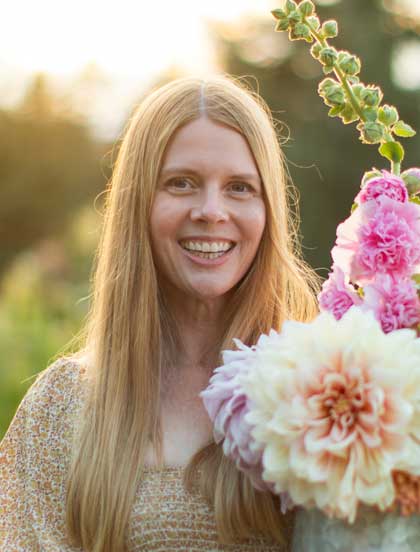
Rachel Kovac is a mother of six and author of the book Their Future is Shining Bright: A Guide to Homeschooling in High School. Rachel is passionate about the teen years as both a time of deep family connection and exploration of vocation. These can be some of the most rewarding and fun years of family life.
Check out all the other interviews in my Homeschool Conversations series!
[00:00:00] Amy Sloan: Hello, friends. Today, I am delighted to be joined by Rachel Kovach. She is the mother of six and author of the book, Their Future is Shining Bright, a guide to homeschooling and high school. Rachel is passionate about the teen years as both a time of deep family connection and exploration of vocation. These can be some of the most rewarding and fun years of family life. I totally agree with you there. I have two adult children, two teens still at home, and then a tween as well. And I have loved seeing the Lord just grow my children, like them becoming their own unique people. It’s it’s a really special time in a family life.
[00:00:43] Rachel Kovac: We are in such a similar position because I also have two adult children, two teens, and then I have two who are eleven and eight.
[00:00:51] Amy Sloan: So, OK, yes, my youngest is about to turn eleven. He might be eleven by the time this episode comes out. But tell us a little bit about yourself, your family and how you got started homeschooling.
[00:01:05] Rachel Kovac: Yeah, so I have six kids and to steal a phrase from C.S. Lewis, I might say I was the most reluctant homeschooler. We did not set out to homeschool. I wasn’t one of those people that said, oh, from the time I was pregnant, I knew I wanted to homeschool. I did always have an interest in education. I was working at a university after college and then through my pregnancy with my firstborn. And I had ideas of possibly starting a charter school with friends. So I was always on board with ideas around alternative education, giving children a lot of time to play, to read good books and things like that. But I never thought that we would homeschool. Actually, it wasn’t until my son was in second grade and we had a beautiful experience in his preschool years. And even we had to switch schools for first grade. The school that he went to only went through kindergarten. He did a little half day kindergarten and it was so sweet. But then by second grade, it was an experience of so much homework, worksheets, losing recess. And I had four kids, seven and under. And it just felt like it wasn’t the way I wanted to spend our time together as a family. But I was very afraid to homeschool. Actually, I had a lot of a lot of doubts, a lot of fears about whether I was qualified. Even things like can I teach reading that for some reason then felt very intimidating. And so I write in the book about how a fear is something that’s holding you back. This is a time that we can really lean into courage and moving past fear. I think sometimes in the Christian community, I would hear, you know, if a decision is right for you, if you have perfect peace about it. But in my own experience, that hasn’t been true for me. Oftentimes, whether it was growing our family, adopting, homeschooling, moving across the country, all of those were things that I felt a lot of fear in in the moment. And then it was afterward that the peace came.
[00:03:06] Amy Sloan: I can relate to that so much. I think courage is often doing something scared, right? If we didn’t have any concerns or any potential fears or worries, we wouldn’t even have to have faith. We wouldn’t have to trust God. Sometimes it’s those things that are too big for us that remind us, yes, actually, this is too big for us, but it’s not too big for God. And that can be a beautiful time to see him then at work and be able to realize he gets all the glory and not us.

[00:03:35] Rachel Kovac: That’s so true. Yeah.
[00:03:37] Amy Sloan: Well, how has your approach to home education grown or changed over the years, especially kind of coming in unexpectedly there at the beginning?
[00:03:46] Rachel Kovac: Yeah, I think starting out. So I started out with my son was in third grade and now he’s a junior in college. And so we’ve been doing this for a while. I think the biggest thing that has changed for me is the idea that I have to follow a certain curriculum. I think I used to be such a purist, like I need to do this one method. And now I’ve come to believe that as long as I’m leaning into that, which is good and beautiful and true, there’s a lot of flexibility in terms of what I’m choosing to do with my kids, what I’m choosing for a morning time, really adapting it to fit our family. So my husband works for a European company and we had the opportunity to spend some time in Europe. So we spent two years individually learning. One of my we’re not the most practical family. One of my children is learning Amharic because she was born in Ethiopia. Another learned French. My husband grew up in West Africa speaking French, so he knows French. And then I learned Italian after reading The Divine Comedy. And so we got really deep into languages. We got deep into European history and reading the Aeneid, mythology, just whatever we could get our hands on regarding that. But I didn’t feel like I needed to be beholden to any one curriculum. So long as the resources that we were choosing were good and beautiful and true.
[00:05:04] Amy Sloan: Oh, I love that. And I love hearing the multilingual aspect of your family life. I love Dante and The Divine Comedy. I don’t know your particular translation of choice, but I love Dorothy Sayers. And you saying that you learned Italian after reading The Divine Comedy. She learned Italian so she could do her translation. And it’s fantastic. So kind of a little rabbit trail there. But if you’re looking for a wonderful translation, check out the Dorothy Sayers one. Yeah. Well, what has been some of your biggest struggles with homeschooling and how have you sought to overcome those challenges?
[00:05:40] Rachel Kovac: Yeah, I think for myself, I love creativity. I love learning. I love reading. And so homeschooling is just natural. I love the conversations with my kids. But what I struggle more with is the home management side. I don’t really like the messes, which is an inevitable part of having so many children at home all the time. Also, my son is the only one who’s neat in the family. My husband, bless him. He is also he’s had to deal with me for years. I mean, it’s been an ongoing struggle. I’m not naturally an organized person. And so for me to learn how to really not lean into the home management side, I guess you could say has been more of my struggle. And so for that, I have leaned into rhythms. So just following a similar rhythm, not a schedule, but a rhythm that we adhere to most days. And then I don’t know if you’ve experienced this as well, but as my kids have grown, that can get harder, too, because by the time they’re in high school, they start to have their own interests and things that they’re exploring. And it’s not like, oh, the little chicks are in the nest all day. I want them to be out exploring things, which means that we’re more I don’t know, scattered is the right word, but everyone’s doing a little bit of their own thing. So we protect our morning time. We try to keep our mornings as devoted time to be together. And then our afternoons is when we have more flexibility for pursuing our own things or our own interests. But when they were younger, I would do a 15 minute cleanup at four o’clock where everyone would work together. We’d set a timer that really helped me as they’ve gotten older. I have. So I grew up where my main job as a student was to do academics and not as much of the housework side of things, but having a large family, I have seen that we have to be a team and I want them to learn how to have skills of picking up after themselves, knowing how to cook, knowing how to do household things. And so I used to sew all of their clothes and I only did their laundry. But then my friend Leslie Martino was like, your life could be so much easier if you had them do their own laundry. And I said, but what if they shrink the things I’ve made? And she said, OK, take washi tape, put it on the laundry so that, you know, like these are the settings to use like cold water, you know, permanent press. That was huge. And now as we have some things in the evening, like cello lessons or violin lessons or orchestra. I have helped my had my older kids help out with dinner, so they’ll take a dinner one night a week. And so those are the things that I’ve had to learn. I love the homeschooling side. It’s the housework side. That’s a challenge.
[00:08:31] Amy Sloan: Yes, because life continues on right in the midst of of the homeschooling and we’re all together all the time, which is great, but can also add to that mess. I cannot believe, honestly, Rachel, that you and I have not connected before now because I feel as I’m listening to you, I’m like, we have been living these parallel lives. I resonated with so much of what you said when I had, you know, all younger children, everyone, you know, five kids, 10 and under. We were very much like together and learning so many of the subjects together and doing projects together and field trips together and family dinners every night. And and then once those kids start doing more things outside the home and teens and they have jobs and projects, it is much harder for us all to be together in the evenings. Our family, we still really prioritize that morning time because that is often like the one time I’m together with all my kids still here at home. Those things that we’re building, developing that shared family culture, those memories, and then we prioritize family devotions in the evenings. But sometimes even dinners just don’t happen on a regular basis, which is sad. I miss those little years, but it’s good, too.
[00:09:44] Rachel Kovac: Yeah, I don’t know. We’re on permanently on California time, even though we live in central, because oftentimes we’re having dinner together at like eight thirty. But the nice thing is, is that the kids don’t have to get up in the morning. So then we are all just on a we gravitate toward a later schedule. And that’s just what works for us.
[00:10:01] Amy Sloan: So I do miss those days, though. And like the kids were in bed by six p.m. I had a few hours with my husband. I could still go to bed early. You know, someone’s always awake.
[00:10:11] Rachel Kovac: Isn’t it true? And I’m writing a book about late night conversations. I mean, that’s really kids naturally have a change in their biology where they tend to go to sleep later in the teenage years and being chronically under rested if they’re getting up very early for things like this typical school schedule in Europe. They’re actually changing the school schedule. There’s been some some legislation to make it later because it’s really against the natural biology of children to wake early. And so my kids often want to talk to me late at night. The problem is, as I get older, I am less wanting to stay up late when I was younger. I could just stay up till 2 a.m. So now I kind of do want to go to bed and like watch something in Italian and like have my time alone.
[00:10:56] Amy Sloan: Yes. But honestly, I think I’ll have time alone. And I’m just like, actually, you know what would be best? I just want to go to sleep. I don’t even want to have fun time. I just want to go to sleep.
[00:11:06] Rachel Kovac: Oh, my gosh. So try to prioritize that time, too, where they want to talk late at night. And then when my college kids come home, it’s like we’re up until midnight or one every night talking because but it’s great. It’s like all of those things. I just did an audio with them that I’m going to publish after Easter. And it was about the reflections being homeschooled and now transitioning into college life and all of that. But they said the morning times and we move our devotion into our morning time. So we’re going through a liturgical calendar of scripture readings. And then we do commentary from the early church fathers. And they said learning all of that was just such an important part of our family connection. And it’s so fun. Do you guys have a family group text?
[00:11:48] Amy Sloan: Oh, wow. So the only ones so far who have their own phone are my two adult children. But we do have a family Google chat. OK, I know it works as a family.
[00:11:59] Rachel Kovac: Yeah. So with my adult kids, we have a family group chat where we talk about, you know, we’ll just find an old picture or something that happened. And it’s like everything you’re doing is so worth it because when they’re adults, it’s just it’s still such a part of their life. It still lives on within them.
[00:12:16] Amy Sloan: Yes. I love those special inside jokes, especially, you know, the nerdy Shakespeare inside jokes that I still have with my adult children. It’s pretty great. Yeah. Oh, Rachel, what most surprised you as you began homeschooling teens?
[00:12:31] Rachel Kovac: So I was a doula and lactation counselor, and I loved the baby years. I thought I could never love years more than the baby years because I found them to be so precious. I never wanted to be done having babies. My husband’s a little older than me. And when we had our last he turned 50 and he’s like, I think we need to be done. And I’m like, he’s like, I’m 50. And I’m like, that’s young compared to Abraham, like so much time. So I just loved that season. But actually, it feels right. It feels now our family is exactly the size. I think it was supposed to be six is just right for us. But I love the teen years. I am so energized by them. They are such an amazing time. I think there’s so much to look forward to. People talked about them so negatively. And I don’t want to diminish the fact that some people do really struggle during those years. And that pain is real. But any year can any time in our life can be difficult. The baby years can be difficult. Postpartum can be difficult. Birth can be difficult. And so I don’t I don’t know. It’s almost like when people tell a lot of negative stories and you’re pregnant and they’re like telling you about their terrible labor or and you’re like, hey, I think I need to protect this space a little more. Maybe with the teen years, we need to offer a more balanced perspective, not that it’s always going to be easy, but also that it can be so beautiful.
[00:14:03] Amy Sloan: Definitely. And, you know, I think many times parents, even those who have been homeschooling for a while and things have been going well, they feel like they have a good rhythm. They start looking ahead to those teen years. They think about homeschooling high school and suddenly, you know, they’re like calculus and transcripts in college and they go straight to, you know, the craziest things and can feel really overwhelmed just by the responsibility, the thought of homeschooling their teens through high school. What would you say to a mom or dad who maybe doesn’t feel qualified to homeschool their teens in high school?
[00:14:40] Rachel Kovac: I think homeschooling in high school is such an amazing time because you can do the things that you really love that make you come alive. And there’s so many opportunities for outsourcing things that you might not want to teach or feel qualified to teach. So, for example, I love all things humanities, art, reading aloud, but I didn’t want to create a science lab in my home and I wanted my kids to still do those. Actually, my two eldest are in STEM, which is really interesting. And so I didn’t want to do math. I didn’t want to do the sciences necessarily. But I think in the teen years, teens are often looking for a little, not all, but many are looking for more opportunities to explore the world outside of the home. And we have a great co-op. So they’ve been able to take classes at our local co-op. They’ve done dual enrollment. We did not know a lot about dual enrollment before when my son was going through. Actually, so one of the things that surprised me to go back to your last question, I think I did hear a lot of misinformation about getting into college. So I heard things like colleges like Harvard are scouting out homeschoolers. And if you’re just reading books and doing these out of the box things, they’re going to get all these scholarships. And we didn’t know about things like dual enrollment, that 35% of kids are going into college with some form of dual enrollment. If your child is college bound, it’s maybe depending on where they go, not as simple as just living a creative out of the box life. And so for my daughter, she was able to earn about 35 credits in dual enrollment through various ways. And I think that you don’t have to be intimidated because by the high school years, you’re more of a facilitator or director of the education. You can take on as much as you want to take on. And then now more than ever, there are opportunities to outsource what you don’t or what your child needs. And I think that’s so exciting. I actually think we’re on the brink of a revolution in terms of education in the high school years in general.
[00:16:53] Amy Sloan: Yeah, we have found so many wonderful outsourced classes here locally, some online. And then my two oldest both used dual enrollment. In fact, my daughter had her associate’s degree when she graduated high school and so is finishing up her college in just two years. It’s such a wonderful way to save time and money. I know as higher education becomes in many ways so much more difficult to afford for so many folks. I’m a big proponent of encouraging people in those dual enrollment or club exams, just looking for creative ways to to learn, combine what you’re already wanting to do in ways that can really save time and money. So I think we’re going to talk more about that a little bit later on. And I know you speak about that some in your book as well. But I want to first take a moment to talk about something outside of the academics, because we can all of a sudden, you know, hit this point and take this responsibility very seriously, which is good. We ought to take it seriously as as homeschool parents. But we can kind of just focus in on the grades and the transcript. But there’s a whole person, right, that is still growing and being discipled in our home. So how can we use those years, those high school years, to help our teens build emotional resilience and spiritual depth and life skills that are going to be so important as they as they pursue the the next phase of their adult life?
[00:18:26] Rachel Kovac: I think one of the most amazing parts about homeschooling is it gives us the gift of time. And even though I don’t think college is the right path for every child, homeschooling is more like a college model where you’re taking some classes and then you have a lot of time to explore the things that you want to explore. You have time for family. You have time for intergenerational relationships. And I think that all of those things are so beneficial for our kids. I write a whole chapter in the book on the humanities. And on the big questions that teens often ask, I share a little bit about my own story where I felt like I had questions. And in some ways, I didn’t feel like they were met. I mean, it’s hard to put it into words, but but I felt like I was given pat answers rather than recognizing that throughout the entire Christian story, from the Old Testament to the prophets and saints, we have people who ask questions like, how long, Lord, who get lost in the dark woods, find themselves off the straightforward way. And so this is a time where they’re really ready to explore some of those deeper questions about life and society. And so I think that the teen years are an amazing time to go really deep with the humanities, with questions of theology, philosophy. Kids can sometimes have more of a natural interest in that. Mine, especially as I got around 16, 17, 18, they really got more of an interest in that. I remember when they were 12. I would hear of homeschoolers talk about their kids having these deep questions or conversations. And I thought my kids aren’t really like that. But then as they got older, that changed. And they did start wanting to explore these things on their own. And now my eldest two that are in college are still interested in exploring those kind of topics are active in their colleges. Read it. We’re still reading. My daughter just read Orthodoxy by Chesterton. Isn’t that one so good?
[00:20:33] Amy Sloan: I read it almost every year. Definitely a top favorite.
[00:20:36] Rachel Kovac: My son is reading Augustine. Then we come home for breaks and we’re having the conversations. But in addition to that, more practically speaking, they also have time to explore things like internships, mentorship programs, job shadowing. They can learn practical skills. My daughter built a hen house. My son restored a vintage Land Rover with his dad. So there is the time to learn how to do various skills when they’re not in school all day and then having extracurriculars afterward and then homework.
[00:21:10] Amy Sloan: Yeah, I love what you said, that homeschooling really does give us that gift of time. And, you know, we know that in some ways when our kids are younger, it gives time for them to be bored and to play and to have experiences together. But that same gift of time shifts in those teen years. And it’s still it’s still such an incredible gift. But it gives them that opportunity to to dive deep into those things, to have those late night conversations. I make all of my high schoolers take what I call an intro to philosophy course. Essentially, it’s just me giving them all of the books that I want them to read, and I went to sit and talk to them. So we do that. And it’s that’s always been been a really fun part of our our homeschool high school years.
[00:21:54] Rachel Kovac: Do you have that book list somewhere? I would love to see it.
[00:21:56] Amy Sloan: Oh, I don’t have it typed up. But after we’re done, I’ll tell you a few of the top titles. One of them is Orthodoxy by Chesterton.
[00:22:04] Rachel Kovac: But that’s great.
[00:22:07] Amy Sloan: Yeah. So we’ve kind of touched on this a little bit about the opportunity we have to talk about theology, philosophy, all these things. But why does that actually matter? Like, why is that worth spending time on during the teen years that theology, philosophy, the arts?
[00:22:25] Rachel Kovac: Yeah, I think that’s a really good question. In my preorder bonuses, I did a whole conversation with Leah Bowden on this. She wrote Modern Miss Mason. And because I think we’re at a time in society where everything is quick, like there’s an emphasis on quick information, quick answers, whether that’s through, you know, A.I. and an acquisition of facts rather than learning and wisdom and acquiring wisdom takes time. So I I make the case in my my book that I think it’s so important for just the function, not just for the functioning of our society, to have people that are asking questions like this may be efficient, but is this actually good? How do these things impact our society as a whole? Not to mention that I think that this is another thing I write about in the book, that beauty is something that draws us to God. Sometimes we can have an emphasis on just memorizing facts. Even within the Christian world, it can be, you know, there can be at times an emphasis on memorizing the right set of facts. Or but I think God gave us a beauty and beauty is one of the things that draws us to him alongside of truth and goodness. So, yeah.
[00:23:43] Amy Sloan: There was a poem that we memorized a couple of years ago that as I’m the the title has escaped me and the poet, but I will find it and put it in the show notes. One of the lines in there is talking about is talking about what is needed and life, like what makes a good life. And it’s just very basic. It’s like a perfectly boiled egg. And it goes through these things that talks about all that goes into a perfectly boiled egg. And one of the lines is and salt the ace in every argument for God. Only God could have imagined from nothingness the pang of salt. And I think about that, you know, something just so that beauty that the salt, the pang of salt that points us to who God is and what he has done. But I loved I love that poem. And every time now we use salt in our family, we’re like, hey, can you pass the salt? I’ll be like the ace in every argument for God.
[00:24:33] Rachel Kovac: I love that. And, you know, it’s interesting because one of the things I’ve come across as I’ve been thinking about doing podcasts and this, I didn’t write about this in the book, but just that C.S. Lewis writes about salt, too, in mere Christianity, the way that each of us are individuals and how salt brings out the flavor. It doesn’t overpower a dish. It doesn’t make every dish taste the same, right? It’s not like a spice that flavors everything uniformly. It brings out the flavor in each individual. And as Christians, God made us each with our own gifts, according to his spirit, for the common good of the world. That’s what St. Paul says. And so I like that metaphor with salt, too, that within we can allow our children to be salted with what brings out who they were made to be.
[00:25:19] Amy Sloan: Oh, that is beautiful. I love that. Well, going back to our previous conversation, we touched on this a little bit. You began learning about dual enrollment. I believe you worked, you collaborated with the head of dual enrollment in your city, a leader who oversees multiple community colleges and university partnerships. So I would love to hear all that you learned from that collaboration and then how that help can help us help our teens discover the pathways that align with their individual callings.
[00:25:53] Rachel Kovac: Yeah, so there were two people that I collaborate collaborated with who were very generous with me in terms of their time and sharing their skills and knowledge. One was Dr. Abel Gonzalez, who does dual enrollment. He was a first generation college graduate. And so he felt like homeschoolers in our community were often coming to him with misinformation and he felt sorry for them. And so we led a conference here together on dual enrollment for our community, but also he just spent a lot of time helping us understand all of the options for earning college credit in high school and for career exploration. The other was a college advisor who charges, I don’t even know, between like five and 7,000 per student. And he came beside me in the book. He spent six hours on my chapter on applying to colleges, gave me some of his insider tips, things like how to earn scholarships, things that can help improve a transcript. And so they were so generous with me with their time. But back to the dual enrollment question. So I think one thing that’s interesting about dual enrollment is the way that is really changing education in the high school years. So in the early two thousands, 300,000 students graduated with some form of dual enrollment. In 2021, that number rose to 1.5 million. And the latest number that I could pull was 2.8 million students now graduate with dual enrollment. Originally, it was mainly precocious students who were getting dual enrollment or college credit in high school, but that has also changed. Now dual enrollment isn’t just for college bound students. And while I’ve spoken a lot about college in this podcast, I am for exploration of all paths, whether that’s certification programs, apprenticeships, trades. I think that we have to let our individual children lead and like, what are they meant to do? What makes them come alive? And so he talks through all of the opportunities for exploring those different pathways, earning college credit, if that’s, if that is, if your student is college bound, but also how you can graduate with an associate degree, like your daughter did, how you could explore a trade or a certificate, all of those things are possible now with dual enrollment and I, and okay. The college debt crisis is real in the U S it is 1.7, $1.7 trillion in college debt that folks are carrying half of which is undergraduate debt, and it’s also on average, taking the majority of students five or more years to graduate college. Um, 44% graduate in four years or younger or excuse me, or less or fewer. Sorry about that. Four years or fewer, but, um, the majority graduate in five or more years. And in my son’s example, he did not come in with college credit and he’s on a STEM path. He wants to be a doctor. And so when he’s going through his classes, it’s just that it’s more intense, so you have to have this prerequisite before you can have that. So in order to stay on top of his degree plan to graduate in four years, he has to take sometimes two summer classes and study for the MCAT and also do an internship at the Mayo clinic that he was selected for, um, and he got published too, so that was great. But, um, anyway, I think. I think having that dual enrollment credit can be so helpful.
[00:29:31] Amy Sloan: Yeah. Yeah. I wish more people knew about it. I actually have, um, an entire episode on earning college credit while you’re homeschooling. So I will make sure to put that, um, in the show notes as well as some of the other high school, uh, resources I have and, and previous, um, uh, podcast episodes as well, because I just really encourage people to look into that. If it’s, it is a little bit different depending on where you are in the country and, um, the specific ways it works in different counties and different states, but there’s almost certainly something available to you where you are. So at least something to look into and get more information about.
[00:30:09] Rachel Kovac: And a lot of times it’s subsidized by the state, depending on where you are. So you can, uh, you can earn college credit at a fraction of the cost. I believe in our state, even taking classes at a university was about a hundred a class, which is actually cheaper than our local homeschool co-op or less expensive, so.
[00:30:27] Amy Sloan: Yeah. And so we are very fortunate here in our state. The classes, the tuition is actually completely free for my kids to take at the community college. We just have to pay for textbooks. So it is, it is kind of a no-brainer if you’re trying to save money for your college degree. Yeah, it’s, it’s quite nice.
[00:30:48] Rachel Kovac: For my daughter, especially, but for my son too, I think homeschooling set him up well, it made the transition into college so seamless. Yeah. Was that true for your daughter or?
[00:30:58] Amy Sloan: It was, yes. For my, my son and my daughter. Um, I was actually a homeschool graduate as well. And so I remember like taking college classes and being, feeling like, I feel like some of the stuff my mom had me do was a lot harder than this. Actually, most of it was a lot harder, but just, I was already used to having, you know, an assignment, having to work independently, having to set those goals. And so that was a very seamless transition for me as a student. And then I’ve seen, um, both of my kids just really flourishing, um, in their, in their college careers as well, which I’m very proud of.
[00:31:31] Rachel Kovac: Did both of them graduate with associates degrees or? No.
[00:31:35] Amy Sloan: So my oldest had, uh, around 30, a little bit more than 30 credit hours. So not a full associate’s degree. Actually, what’s interesting, um, is the university that he attends has a connection with the community college where he took classes. So actually he was able to finish his associate’s degree while pursuing his bachelor’s degree. You know, the, the classes just counted towards both degrees. So he now actually does officially have his associate’s degree. Um, although he is still just in his third year of, of university. So.
[00:32:06] Rachel Kovac: Okay. Same as my son. Yeah, I know. See, we are living parallel lives. After we record, I’m going to be like, Rachel, we’ve got to get to know each other. Yes.
[00:32:17] Amy Sloan: Well, we have covered so many things here and you have written an entire book on the topic, of course, but if you were going to just, if you had the opportunity to make sure that every homeschool parent just knew one thing, what is one thing that you wish more families knew when it came to homeschooling high school?
[00:32:35] Rachel Kovac: Hmm. Okay. I would say that there are so many possibilities. You don’t have to do it any certain way. There are many possibilities for your child and your family. And sometimes when we look on Instagram, we might see a composite homeschooler when we take in like the little bits of this person and that person, but you don’t have to follow anyone else’s path except your own, so know that so much is more as possible than you might even expect, and also that you can do it in a way that works best for your family and your kids.
[00:33:12] Amy Sloan: I love that. I don’t know if you know Dawn Garrett. You’ve mentioned so many people that I’ve interviewed, Leslie Martino and Leah Boden, all these things, but Dawn Garrett has this great Instagram post, @LadyDusk on Instagram. She has this great post where she’s created the composite homeschool mom and it looks monstrous, right? Because it’s an eyeball from one and an ear from another and it’s terrible, but how often is that kind of what we’ve created in our minds, right? The best, most amazing things we see and then we think we have to do all of them. Instead of embracing the uniqueness that is us as parents, that is our families, that is each of our children, and then seeing the Lord at work in there.
[00:33:53] Rachel Kovac: Yes. How exciting that we’re all different. We don’t want to all be the same. I haven’t seen that post, but I can see, I was off of social media for a year and a half and got on to share about my book, but I could even see like how much there’s a push to make everyone the same and it’s like to do this for the algorithm or do that or whatever. It’s like people should just shine in their individuality.
[00:34:13] Amy Sloan: I mean, that’s why we homeschool, right? Like I don’t want to fit inside a box. Like let’s homeschool in our own unique ways. That’s part of the fun.
[00:34:20] Rachel Kovac: Exactly. Yeah.
[00:34:22] Amy Sloan: Well, Rachel, this has been a lovely conversation. I’m glad we’ve gotten connected here, but before we close, I do want to ask you the questions that I ask all my guests. And so the first is just, what are you personally reading lately?
[00:34:34] Rachel Kovac: I am so jazzed about what I’m reading right now, which is The Count of Monte Cristo. I am reading it with a friend in California. Now I have a separate little one-on-one book club that I do where a friend and I read books to each other over Boxer and we’ve read 49 books aloud together.
[00:34:53] Amy Sloan: Oh my goodness. I have never thought to do that with my friends on Boxer, but that is genius. I love it.
[00:34:59] Rachel Kovac: It’s so fun. So it’s almost like your own personal audible experience. And I like reading aloud, but this is different. I’m doing this on actual audible, but The Count of Monte Cristo is very long and it was written in installments for a newspaper in France. And so they try to keep it, they try to keep you hooked. I don’t know if you’ve read it with like, you know, lots of cliffhangers and drama. It’s like, it was drugs too. I have never written more quotes down though than I am. Like I’m just, my commonplace journal is so full of quotes from this book because I’m loving it. I’m on chapter 72 out of 117. So, but I’m jazzed. I’m jazzed about it. And then, oh, that’s the end of the question, right?
[00:35:49] Amy Sloan: Oh yes. Yes. So that was, that is a great thing to be reading right now. And then my second question is what would be your best tip for turning around a homeschool day that’s going all wrong?
[00:36:01] Rachel Kovac: Yeah. Okay. This kind of goes back to the cleaning thing. For me, it’s not usually the homeschooling. It’s like the food when you have teenagers, like I’ll leave to drive and I’ll come home and there is like everything out, everything in my kitchen. It feels like, like, you know, and so what I did recently when my husband was working a lot, as I put in the circles back to the count of Monte Cristo, put in my AirPod, went for a walk and I told my kids, let’s clean, you’re going to clean up the mess you just made. I’m going to go be alone and then I’ll come back and we will be a happy family again. Yes. Oh, I love that.
[00:36:39] Amy Sloan: And that is such a great piece of advice too. When you have those, when you’re talking about a family with those older years, right, a mom who’s listening with young children is probably like, I cannot wait until I can just leave my children home alone and go listen to my audio book. It will come. You will have that day. You will have that day where you go get your milk at the grocery store and everyone stays home alone. But yes. And then giving them that opportunity to be responsible, like, hey, that mess you made, that needs to be cleaned up when I come back. Shocking.
[00:37:06] Rachel Kovac: In the younger years, it was put on Classic FM and light a candle and maybe start reading aloud depending on if I had the capacity for it, but yes. Oh, I love that.
[00:37:16] Amy Sloan: Well, Rachel, where can people find you all around the internet and make sure to tell as well about your new book and where folks can find that? Yeah.
[00:37:25] Rachel Kovac: So I have a website, RachelKovach.com, K-O-V-A-C, and I have a link to where you can access my pre-order bonuses where I have four conversations, one with Leah Bowden on the Arts and the Humanities, one with Dr. Abel Gonzalez on all of the opportunities around dual enrollment, myths and things that I believed. There’s one with Aaron Lochner, author of The Opt Out Family on Teens and Social Media. That was something I didn’t cover at all in the book. Teens, tech, social media, all of that. Like you had said, we haven’t, our adult kids have phones, but we’ve chosen to do that whole realm differently as well, and I’m so glad. And then I have one with my friend Elle in California on finding community in a lonely world. So those are all available as pre-order bonuses for folks who order the book and they can find it on my website. I’m also on Substack and Instagram at rachelstitchtogether. Wonderful. And say the title of your new book one more time. Beautiful.
[00:38:21] Amy Sloan: Rachel, thank you so much for coming. Thank you to everyone who is listening.
[00:38:25] Rachel Kovac: If you have a homeschool friend in your life who is either in the teen
[00:38:29] Amy Sloan: years or approaching them, please take a moment to share this episode, either the podcast or the YouTube video. And until next time, happy homeschooling.