
Every August is a fresh start. To misquote our beloved Anne Shirley, it’s a brand new homeschool year with no mistakes in it. (yet. growth mindset. lol) Maybe you find yourself tempted to believe that this is the year everything will finally click: A new planner. Fresh homeschool curriculum. Sharpened pencils. Color-coded schedules. What could go wrong?
But after years of homeschooling, graduating two homeschool teens so far, and being homeschooled myself, I’ve learned that successful homeschool years are built less by dramatic changes and grandiose plans than by small, faithful habits.
Maybe you’re brand new to homeschooling. Maybe you’re just looking for things to go more smoothly this year. Or maybe you need a gentle reset midyear! These seven back to school habits will help you start the homeschool year with confidence.
- 1. Start with Your Why Before You Start Your Lessons
- 2. Build Rhythms Instead of Rigid Schedules
- 3. Teach Your Children to Work Independently
- 4. Review More Than You Rush Ahead
- 5. Choose Tools That Support Your Goals
- 6. Celebrate Progress Instead of Perfection
- 7. Leave Margin for Wonder
- Small Habits Shape a Beautiful Homeschool Year
- Back to homeschool got you flustered? You may also enjoy:

This post contains affiliate links. I received a product for free, and was compensated for my time. All opinions are honest and my own; I was not required to write a positive review. Please see disclaimer.
1. Start with Your Why Before You Start Your Lessons
It’s important to remember the true purpose of education. It is not about economic stability. It’s not about cultural relevance. It is certainly not about socialization. Rather, education provides an opportunity to grow in wisdom and wonder. (One might even say to grow in humility and doxology. Ahem.) That’s why I suggest starting with the big picture when you think about your homeschool year. Why are you homeschooling? What does “success” look like in your family?
The relationships we build in our homes between parents, children, and siblings matter more than any worksheet. The character qualities we encourage provide the virtuous foundation for applying all that is learned. Love of God and love of neighbor truly does matter most, so what might that look like in your daily homeschool life?
In the homeschool S.T.A.R.T. course I helped created with the team at Made2Homeschool, we encourage parents to begin with the end in mind, and we provide practical tips for coming up with the unique mission that will guide your unique homeschool family’s choices.
Practical homeschool tip:
Have a family conversation about your Big Picture Goals before Day One instead of jumping straight into academics. Especially with older children, help them see the connection between what they’re learning on a day-to-day basis and the ultimate goal of growing in wisdom and godliness.
2. Build Rhythms Instead of Rigid Schedules
Consistency always beats a perfect timetable. I’ve seen the spreadsheets and color-coded charts. They look super cool on Instagram. But when the toddler inevitably has a blowout diaper in the middle of a math lesson or the tween discovers their friend betrayed a confidence when the essay is due or the washing machine breaks in the middle of a load of towels? Suddenly the cute schedule is falling apart like a Jenga tower, and your whole homeschool day/year is is disarray.
Instead, come up with a rhythm or flow that is flexible, yet consistent. This will enable you and your children to embrace predictability while also providing flexibility for when things change.
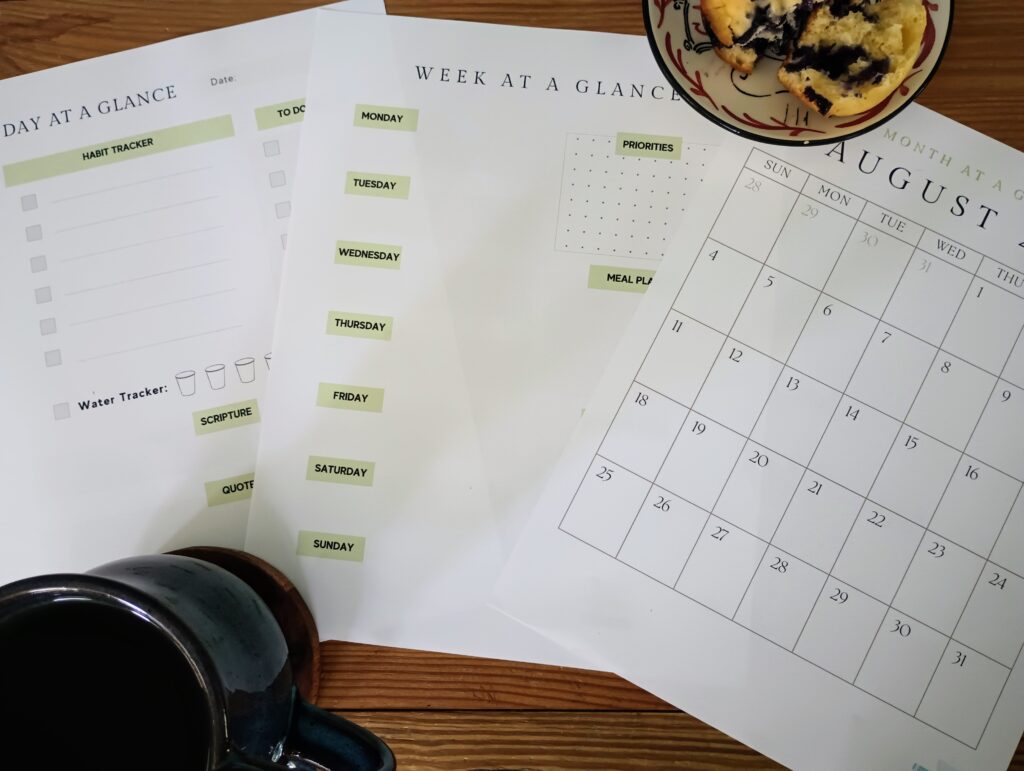
In our family, we like to have a consistent start time. We meet and begin the day together with our Morning Time routine which anchors the rest of our day. Then older kids begin on independent work while I focus on teaching the youngest child. We have appointments through the week for discussion and together subjects. As much as possible, I try to keep outside appointments in the afternoon so we can have focused time in the morning. And when interruptions inevitably arise, we’re able to “do the next thing” rather than freaking out because math is starting at 10 am instead of 9.
3. Teach Your Children to Work Independently
Independence is a skill worth teaching, but you can’t just throw independence at your child and expect them to know what to do with it. As your child grows in maturity, teach them how to follow a checklist, gradually increasing their responsibility. Help them follow simple routines you establish, and gradually provide opportunities for them to experiment with developing their own routines. The most important thing is to remember to inspect what you expect, especially at the beginning!
By the time my kids are in high school, I expect them to keep track of any outsourced classes on their own. I am not micro-managing their homework or other assignments. For the work we do at home, I provide clear expectations for the week and the semester with due dates. If they need help, I am always available. But because we have laid a foundation of independence over the course of several years, each of my teens so far has demonstrated an ability and willingness to be faithful in their work.
Even my late elementary and middle schoolers have begun to practice for independence with various educational apps for kids or “extras” I provide to supplement our regular homeschool curriculum. One of my children needs a little extra practice with language mechanics right now, so I will be providing the opportunity to practice those skills in various ways including on IXL this year during times when I need him to be working independently.

4. Review More Than You Rush Ahead
A famous Latin proverb says “festina lente,” or “make haste slowly.” This may seem like an oxymoron, but how often have you pushed too quickly in order to finish the workbook, only to realize that your child is completely stumped because they missed the important skill scaffolding several chapters back?
Mastery builds confidence in our kids. Take the time to narrate, to have deep conversations, to include memory work, and to pause for cumulative review. Instead of racing through your homeschool curriculum, take the time to revisit ideas or find ways to reinforce more difficult, challenging topics.
5. Choose Tools That Support Your Goals
Every family needs a homeschool resource toolbox. Recently in the Made2Homeschool BRAVE conference, I reminded homeschoolers that we are not marrying the homeschool curriculum…we get to change things up when and if necessary. I also reminded parents that curriculum is a tool, not your master. A tool that works for one kid may not work for another. And a tool that worked for one kid last year may not work any longer. And that’s ok.
As a classical homeschooler, sometimes I can feel guilty about using a resource that isn’t seemingly consistent with my overarching homeschool philosophy. But then I remember that sometimes there is a unique task or goal that can only be accomplished by that one random tool in the toolbox that otherwise just sits out in your garage. Just because it serves a niche role doesn’t make it bad…it just means you need to choose wisely when and how you utilize it.

My children still spend plenty of time reading living books, exploring nature, discussing ideas around the table, memorizing beautiful poetry, and working on meaningful projects. Truth, goodness, and beauty are the heartbeat of our homeschool. But I’ve also seen ways that technology can serve our homeschool well when it’s used intentionally. And this year I think my kids may benefit from some of the resources from blog sponsor and learning platform for students IXL.
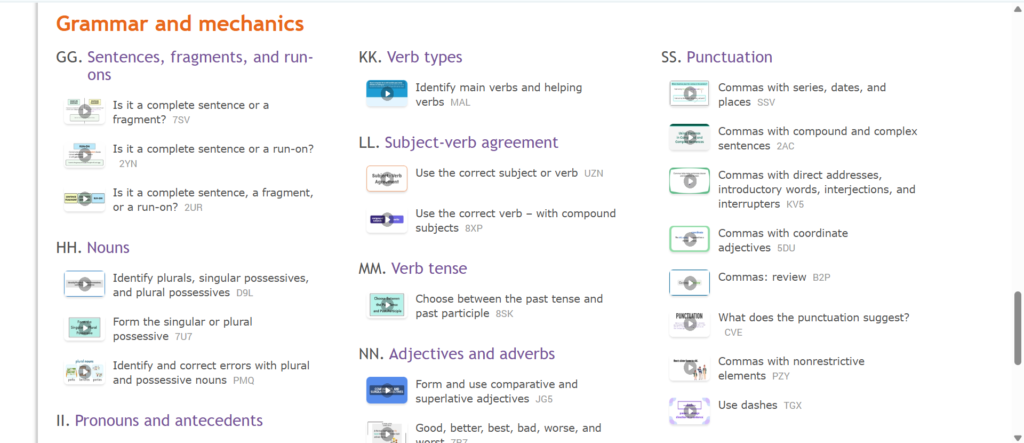
If you’ve had a kid in a traditional school setting or have friends who do, you’ve probably heard of IXL. It is used by 1 in 4 U.S. students, which is kind of wild to me. IXL supports skill-building in core content like math, language arts, science, and social studies. IXL provides full access to over 20,000 K-12 skills across those core subjects, and because it adapts in real time to each student’s skill level, it will naturally adjust the difficulty of the topics covered and questions asked as the child learns.
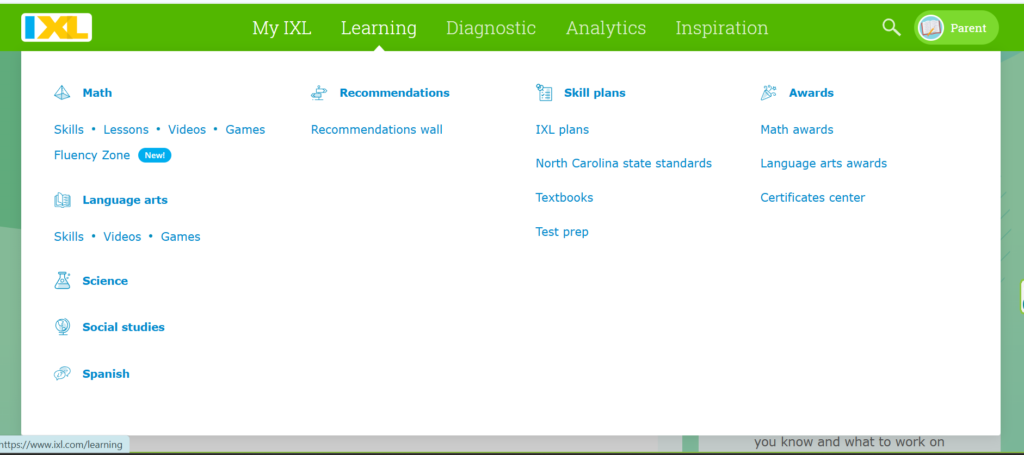
As homeschoolers we know that kids are often asynchronous learners. They may be ahead in one subject, but behind in another. As I explored the parent dashboard inside IXL I was excited to see that there’s an option to hide the grade level associated with questions from the child. That way if a child is “behind” they won’t feel embarrassed, and getting “ahead” won’t produce pride. Because one of my children has processing speed challenges and struggles to read large amounts of text at a time, I also was glad to see that I can hide the timer and enable audio support even in the upper grades. And while many families may love the game options available (over 600 of them!) to reinforce learning, I think I’ll be turning those off. Those are just a few examples of ways you can customize the platform to best fit your homeschool family’s needs.
I plan to use this as extra practice for one child in a weaker academic area, but I also plan to provide it as a resource for my high schoolers who are taking Algebra 2 and Precalculus this year. Sometimes it helps to approach a tricky topic from multiple angles. IXL will be there if they want to hear an explanation from a different point of view or get some extra practice in.
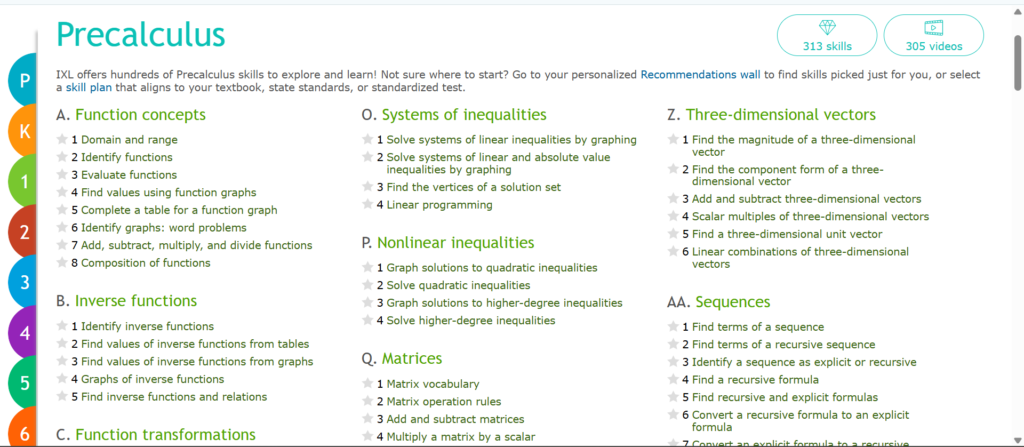
Because IXL provides information relating to state standards, some homeschool families may find this helpful in states that require particular benchmarks or have testing requirements. I never recommend “teaching to the test,” but when testing is required like it is in my state, I also want to ensure my kids have at least seen the kinds of questions that will be asked on the test, mainly so they don’t feel discouraged or overwhelmed and can have a positive test-taking experience.
If a family is homeschooling, but isn’t sure it is something they want to do long-term, I could also see IXL being a helpful tool to ensure easier re-entry to a traditional school environment.

Those of us with many children, with lots of medical or other appointments, or who work while homeschooling may also find that IXL helps provide consistent learning on days when we can’t be as hands-on as we would be otherwise.
I would never want screens to replace rich conversations. I do, however, appreciate when technology frees me up to have more of those conversations.
6. Celebrate Progress Instead of Perfection
Growth is worth noticing. Sometimes we start the year with goals that are actually outside of out control. Maybe we want our kid to learn to read independently or memorize their multiplication facts. But the only thing we can really control is whether or not we consistently practice the skills each day. The fruit is up to the Lord. Making progress and moving forward is worth celebrating. Don’t get discouraged when you don’t hit arbitrary benchmarks on a certain timeline.
To help notice and celebrate progress you may consider keeping:
- reading lists or reading journals
- notebooks/lapbooks
- nature journals
- portfolios
- monthly reflections
Celebrate the hard work and diligent effort your children demonstrate, not just their accomplishments.

7. Leave Margin for Wonder
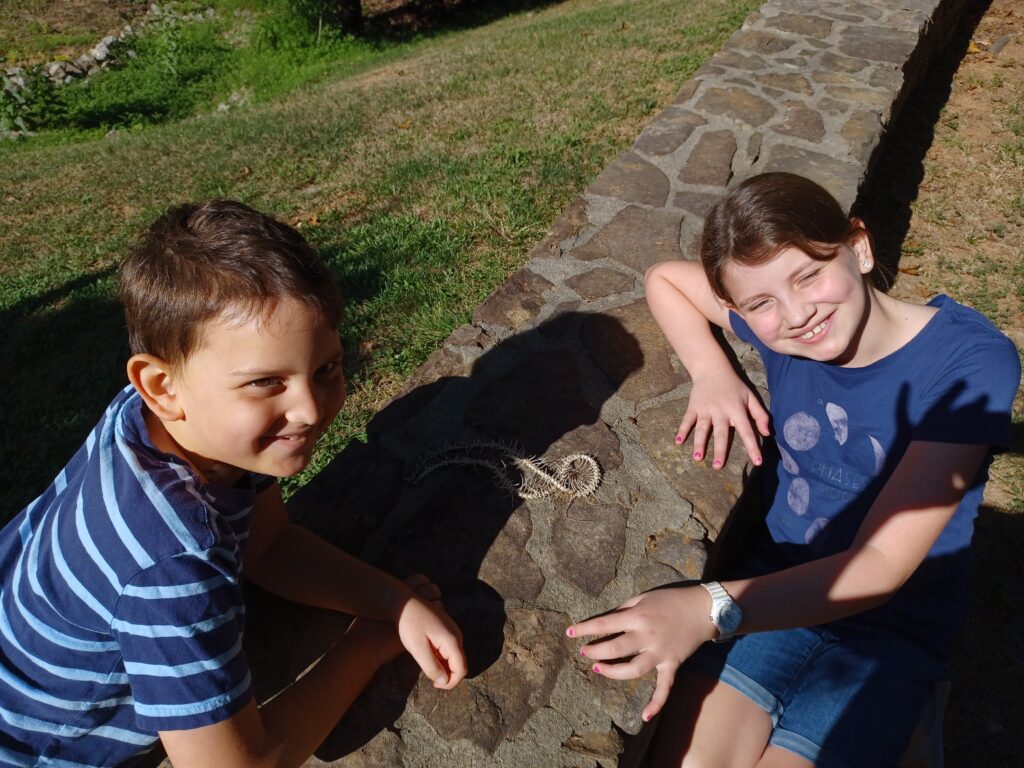
The best learning often isn’t planned. And if you start the homeschool year with no white space in your planner, you may miss out on what is truly beautiful and meaningful this year. Have you considered analyzing your time budget? As you look at your homeschool plan, how much time will your goals actually take? Do you have margin built in for boredom, exploration, and rabbit trails? Some families even reserve a day or afternoon each week for things like nature walks, picture study, art projects, or poetry tea time.
You may have heard the phrase, “the rabbit trails are the point.” These moments of conversation and baking in the kitchen and going on a deep dive into a random topic aren’t interruptions to the homeschool day. They’re a wonder-filled part of education.
Small Habits Shape a Beautiful Homeschool Year
You don’t need a perfect planner, a perfect homeschool curriculum, or a perfect schedule. Even the best homeschool curriculum only succeeds with faithful habits practiced over time. You need a prayerful, loving, cheerful heart as the homeschool parent. You need to smile at your kids and make sure they know you’re so incredibly glad to be their homeschool mom (even…or maybe even especially…on the hard days).
No curriculum, app, or planner can create a peaceful homeschool on its own. But the right tools can help support the habits you’re trying to build.
As you go back to homeschool, resist the pressure to reinvent your homeschool. Instead, choose one or two small habits to cultivate. Months from now, you’ll likely discover that those quiet, ordinary routines were what made the biggest difference.
Back to homeschool got you flustered? You may also enjoy:
- 5 Simple Ways to Make Your Homeschool Year Run Smoothly
- Start the Homeschool Year Strong: 9 Strategies for Successful Homeschooling
- A Gentle Homeschool Reset: Five Days of Grace, Perspective, and Joy for the Weary Homeschool Mom
- FREE Big Picture Homeschool Planning Guide Ebook
- I’m just not ready to start planning our homeschool for next year
- Textbook Free History Planning Pages
- Ordinary Homeschool Planning: sometimes crazy, often simple, still beautiful
- Homeschool Without Overwhelm
- Balancing Home Management and Homeschooling Without Overwhelm
- Finding Peace in the Chaos of Homeschooling
- Simplifying Homeschooling for Peaceful Days