Homeschooling can be both a rewarding and challenging journey, and many parents find themselves navigating obstacles along the way. From adjusting expectations to fostering a love for learning, it’s easy to feel overwhelmed. However, by embracing flexible learning approaches like interest-led learning, unit studies, and film studies, homeschooling families can cultivate a more personalized and engaging educational experience. Homeschool moms Lydia Rosado and Amy Sloan explore how these methods can help your child thrive, while also offering practical tips for overcoming common homeschooling challenges. Whether you’re a seasoned homeschooler or just starting out, these strategies can transform the way you approach education at home.
- Homeschooling is Hard—And That’s Okay
- Hard Doesn’t Mean Bad
- Navigating Challenges with Flexibility
- Adapting to the Ever-Changing Nature of Homeschooling
- The Power of Unit Studies in Homeschooling
- Exploring Film Studies in Homeschooling
- Final Thoughts: The Reward of Pressing On
- Key Takeaways
- Listen to the full podcast episode “Homeschooling: Embracing the Challenges and Joys Through Interest-Led Learning with Lydia Rosado” on Homeschool Conversations with Humility and Doxology
- Find Lydia Rosado Online
- You May Also Enjoy:
{This post contains paid links. Please see disclaimer.}
Homeschooling is Hard—And That’s Okay
One of the biggest surprises in homeschooling is just how hard it can be. Transitioning from public school, Lydia Rosado found it difficult to shift her mindset, trust herself as a teacher, and not compare her children’s progress to traditional grade levels. Beyond academics, homeschooling brought relational challenges—attitudes, behaviors, and the realization that she set the tone for their home’s learning environment. But alongside the challenges came immense joy: the togetherness, the relationships, and the opportunity to rediscover learning in a meaningful way. Watching her children develop a love for learning—something she never experienced in public school—was a beautiful and unexpected gift.
Hard Doesn’t Mean Bad
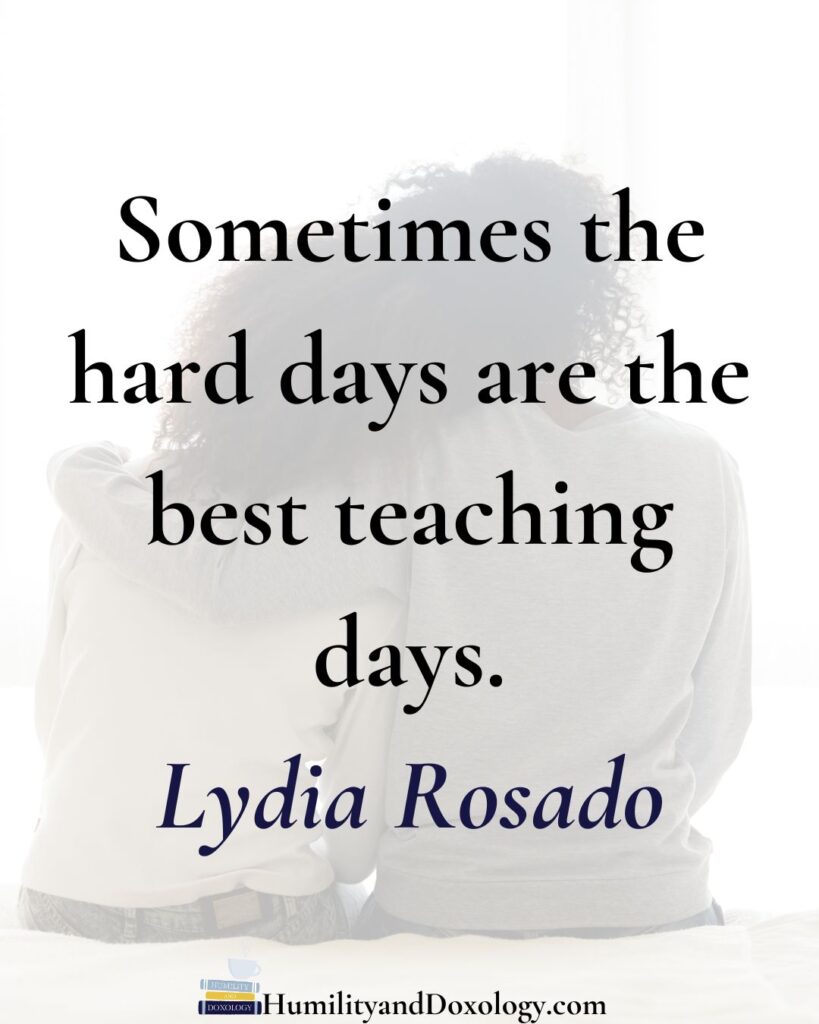
Many homeschooling parents hesitate to admit that homeschooling is tough. But acknowledging its difficulties doesn’t mean it’s the wrong choice. Hard seasons come and go, and struggles don’t indicate failure. Lydia likens it to any demanding job—just as someone wouldn’t quit a career because of a difficult day, homeschooling requires perseverance. She and her husband have learned to approach hard days with a mindset of growth, asking, “How can tomorrow be better?” Instead of seeing struggles as reasons to quit, they view them as opportunities to model resilience, problem-solving, and grace for their children. Sometimes, that means admitting mistakes, asking for forgiveness, and demonstrating the importance of humility and growth.
Navigating Challenges with Flexibility
Homeschooling, much like life, follows seasons of change. As a military family, Lydia’s family faces frequent moves that disrupt their routines. Instead of forcing a rigid academic schedule, they embrace the reality that transitions bring slowdowns and adjustments. Accepting what is realistic—whether it’s prioritizing relationships over lessons or taking stress-relieving nature walks—has helped them thrive through the upheaval of relocation.
Even for families who don’t move, life events like a new baby, job changes, or illness create natural ebbs and flows in homeschooling. Recognizing these patterns and proactively adapting can prevent unnecessary stress. Energy levels, emotional capacity, and schedules shift, so clinging to the same expectations year-round is unrealistic. Flexibility is key to long-term homeschooling success.
Adapting to the Ever-Changing Nature of Homeschooling
Beyond external circumstances, the biggest challenge of homeschooling may be the constant evolution of children themselves. Kids are always growing and changing—moving from early childhood to adolescence to young adulthood. This means that just when a system seems to work, a new developmental stage shifts everything. Homeschooling requires parents to remain attentive, adaptable, and willing to pivot when necessary.
Lydia has embraced this reality, understanding that no single method will work forever. With multiple children at different stages, she’s learned to “wing it” at times—letting go of rigid expectations and adapting as needed. Homeschooling isn’t about perfection; it’s about adjusting to meet the needs of each child in each season. The ability to pivot, remain flexible, and embrace change is one of the most valuable skills a homeschooling parent can cultivate.
The Power of Unit Studies in Homeschooling
Lydia has found unit studies to be a powerful and engaging approach to homeschooling. By focusing on a central theme and integrating multiple subjects around it, unit studies allow children to make deeper connections across disciplines. This method fosters curiosity and enthusiasm for learning while offering flexibility to accommodate different ages and learning styles. For Lydia’s family, unit studies have been an effective way to cultivate a love of learning without the constraints of traditional grade-level expectations. They also provide opportunities for hands-on, project-based learning, which helps solidify concepts in a meaningful and lasting way.
Exploring Film Studies in Homeschooling
One of Lydia’s favorite approaches to learning has been incorporating film studies into their homeschool. By analyzing movies, students develop critical thinking skills, learn about storytelling techniques, and explore historical and cultural contexts. Film studies provide a unique avenue for discussing themes, character development, and the power of visual storytelling. Lydia believes that incorporating film into education not only enhances media literacy but also sparks meaningful conversations that go beyond the screen. Whether studying historical films, classic literature adaptations, or thought-provoking documentaries, film studies offer a dynamic and engaging way to approach learning.
Final Thoughts: The Reward of Pressing On
Despite the challenges, Lydia has found homeschooling to be deeply fulfilling. She encourages parents to take a long-term perspective, recognizing that the hard moments are just that—moments. Over time, the investment in relationships, learning, and character development yields rich rewards. The key is to remain steadfast, trust the process, and find joy in the everyday victories. When homeschooling gets tough, it’s not a sign to give up—it’s an opportunity to lean into grace, growth, and the unique beauty of the journey.
Key Takeaways
- Homeschooling is Hard, but Worth It – The challenges of homeschooling, from adjusting expectations to relational struggles, are real. However, these difficulties do not mean failure but rather opportunities for growth and connection.
- Interest-Led Learning Fosters a Love of Education – Lydia discovered that when children are given the freedom to explore topics they’re passionate about, their natural curiosity drives deeper and more meaningful learning.
- Unit Studies Create Meaningful Connections – By integrating multiple subjects under a central theme, unit studies help children see the relationships between ideas, making learning more engaging and memorable.
- Film Studies Offer a Unique Educational Tool – Analyzing movies teaches critical thinking, storytelling techniques, and historical context. It also enhances media literacy and encourages meaningful discussions.
- Flexibility is Essential for Long-Term Success – Life’s unexpected changes, from moves to developmental shifts in children, require homeschool parents to remain adaptable and willing to pivot their approach.
- Homeschooling Isn’t About Keeping Up with Public School – Comparing homeschool progress to traditional grade levels is unnecessary. Learning should be tailored to the child, not dictated by external timelines.
- Modeling Perseverance and Grace is Key – When homeschooling gets tough, demonstrating resilience, problem-solving, and a willingness to admit mistakes helps children develop valuable life skills.
- Film Studies Encourage Discussion and Deeper Understanding – Movies can be a powerful way to explore complex themes, historical events, and storytelling structures in an engaging and accessible way.
- Unit Studies Support Multi-Age Learning – This method allows children of different ages to explore the same topic at varying depths, making it easier for families to learn together.
- The Long-Term Perspective Brings Encouragement – While hard days are inevitable, the long-term rewards of homeschooling—stronger relationships, personalized learning, and character development—make the journey worthwhile.
Listen to the full podcast episode “Homeschooling: Embracing the Challenges and Joys Through Interest-Led Learning with Lydia Rosado” on Homeschool Conversations with Humility and Doxology
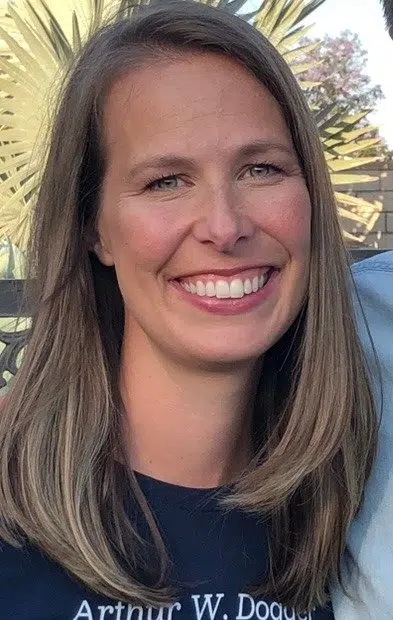
Lydia Rosado is an Air Force wife of over 20 years and an accidental homeschool mom to 4. Her preferred method of homeschooling is winging it and adjusting as she goes, integrating subjects and incorporating hands on, interest-led, creative learning as often as possible. She’s the curator of her home library, adventurer where God puts her, and a homebody who loves a good nap.
Find Lydia Rosado Online
You May Also Enjoy:
- Astronomy for All Ages: Outer Space DIY Homeschool Unit Study Guide
- Survival School: Multi-Age Homeschool Unit Study
- Homeschool Butterfly Unit Study: an HONEST reaction
- He clasps the crag with crooked hands: Simple Science Unit Study of Eagles and Other Birds of Prey, inspired by Tennyson’s “The Eagle”
- The Art of Observation: Enhancing Homeschooling with Nature Study
- WW2 For Teens: Resources For Your Homeschool Study
- 3 Essential Ingredients For Real Learning In Your Homeschool
- Top Resources For Learning On The Go
- Homeschool History Made Fun: Sonlight Hands-On History Project Kit
- Finding Freedom as a Military Homeschool Family
Amy Sloan: Hello friends, today I am joined by my friend Lydia Rosado, who is an Air Force wife of over 20 years and an accidental homeschool mom to four. Lydia’s preferred method of homeschooling is winging it and adjusting it as she goes, integrating subjects and incorporating hands-on, interest-led, creative learning as often as possible. She’s the curator of her home library, adventurer of where God puts her, and a homebody who loves a good nap. Don’t we all? Well Lydia, there’s the sort of official bio, but can you tell us a little bit about yourself, your family, and how you accidentally got started homeschooling?
Lydia Rosado: Yeah, so we’ve been in the Air Force for quite some time and had no plans to homeschool, and then I happened to have three awesome boys and a really weird move from one place to the next, where my son would have started kindergarten and then stopped and started and stopped and started and stopped, all in the fall semester, and so I decided not to do that, and I decided to homeschool on a whim, and it was wonderful. And so he is now 16, and then I have a 14-year-old and a 12-year-old son, and then a 9-year-old daughter. So that’s pretty much our family, and my husband is still in the Air Force, and so we became an accidental homeschooler because of an Air Force move that would have been really awkward with public schools, but we homeschooled because I figured I couldn’t screw up kindergarten, and I hoped I wouldn’t, and we loved it, but then we ended up moving someplace that had good schools, and so we put the boys, who are my oldest in school, and he spent the next two years begging me to homeschool him again, and I could just, I was watching him, I was watching him just get so bored in school, and he behaved all those hours and then would come home, and his behavior would change, and he just stopped being curious, and instead he just became really grouchy about it all. So around that time, actually, I heard a podcast with Sarah McKenzie and Pam Barnhill, and you were, I think, on the Pam Barnhill one. This is many years ago, so it’s kind of a blast from the past, but I hadn’t heard really about homeschooling for the long haul until then, and then I just started being curious about it myself, like, could I do this? And God really just started speaking to my heart and calling me to it, and so then I told my husband, and he said, what, no, that’s not what we’re going to do. And I just started praying, and from there, I just let God work in his heart, and then we found out we were moving again, and he said, okay, homeschool, like, just do it. And so that’s how we got into it, and now I just have a house full of homeschoolers from elementary school to high school and everything in between, and it’s been a wild ride for sure.
Amy Sloan: I love hearing that story. I’m curious, before I move on, had you known anyone who homeschooled before? Like, how did that sort of initial, oh, let’s try it for kindergarten, how had you originally heard about homeschooling?
Lydia Rosado: I hadn’t heard, I didn’t know anybody that homeschooled. In fact, it was my sister-in-law who’s a public school teacher, and she has spent her entire career in public school in the early elementary age, and she said, well, if it’s going to be weird, like, with the timing and all, she’s like, just keep him home for the year. And we happen to live in the same state, and she said, there’s no law that says you have to send him to kindergarten here, he doesn’t have to go, just keep him home. You can do it. And I remember she took me thrifting, and we just found books together and other random things. And she said, oh, here, you could use this plastic stand-up frame, and he could write and practice writing that way for correct, you know, penmanship and uses of, usage of the pencil with his hand, hand grip, and all of that, and she said, and here, you could do this. And so she just kind of gave me a lot of ideas that I still use today. Like, she is hugely influential on how I homeschool, because of how she used to teach.
Amy Sloan: That is so amazing. I love, it’s just like the Lord was orchestrating all these things, and you had no idea what was coming. Well, what have been some of the things that have really surprised you about homeschooling over the past few years?
Lydia Rosado: Let’s start with the hardest thing, is that it’s hard. It’s hard. Like, it just is. We were coming from public school after those couple of years in school, and it was hard to get out of that mindset. It was hard to trust myself with teaching them and not compare what we were doing to what should be done with ages or grades. And then it was hard because of all of the attitudes and behavior. And the kids, you know, had problems too. But there was a lot of my own attitudes and behaviors that got kind of thrown into my face, either reflected in my kids when I realized it, or just realizing I set the tone, and I set the enthusiasm for learning, and the excitement, and the joy. And that’s a hard realization. So I think how hard it is really kind of surprised me, but on the flip side, oh man, there’s so much joy. There’s so much fun, the togetherness, the relationships, getting to relearn a lot of things in a new way where it meant a lot more, and I saw connections throughout history and science and all of the things, that was a surprise. I wasn’t expecting to say, let me learn for the next, you know, however many years I teach my kids. So I think that was probably the biggest surprise. And then just watching my kids learn to love learning, which was not my experience in public school. Like, realizing that learning can be a joy to kids that are young as they grow up. That was a shock to me.
Amy Sloan: I really appreciate you bringing up the fact that, like, we don’t, I mean, we don’t talk about this, right? Especially not on a homeschool podcast, that homeschooling is hard. It can be really hard. Like, sometimes it’s hard to be with our kids all day. Sometimes it’s hard for them to have to deal with our stinky attitudes, right? There’s a lot of things we have to unlearn or relearn or adjust to. And that doesn’t, by saying that it’s hard, doesn’t mean that it’s bad, right? Or that we’re doing anything wrong, necessarily. It’s just kind of good, though, to hear somebody come out and just say it, like, hey, this is hard. It’s okay. If you’re having a hard time, it’s okay. You’re not doing anything wrong. There’s also a lot of joy, and it’s worth it. It’s like a lot of good things, right, are hard, but it’s ultimately worth it.
Lydia Rosado: I think that’s it exactly. And I remember sometimes my husband would come home, and he would say, how was your day? And I would just say, especially at the beginning or in certain seasons, because I think it’s a seasonal thing in many ways, that you have very hard seasons, and then seasons that just are smoother and more joyful. And I remember him asking, how was your day, and I would just be like, it was so hard. Like, this is hard, and this happened, and he was doing this, and then I had this catastrophe over here, you know, and he would, at the beginning, he would say, well, there’s always public school. And I would remind him, I would say, hey, like, you have hard days at work, and you don’t just quit and find a new job, even if, you know, that was allowed. But, you know, you don’t do that. Instead, you buckle down and say, okay, how can tomorrow be better? What can I do that sets us up for success? How can I change? How can I lead? And all of these things. And I think that’s, I think there’s a lesson there, is that hard isn’t bad, like you said. It’s just, it’s just hard, and it’s how you respond to that hard, and I think those things also make a difference with your kids, when they see how you respond to the hard things, whether it’s relational, or whether it’s life circumstances, or just inconveniences. How do you respond to that, and what example do you want to set? And when you think about that, it becomes a lot heavier, and a lot more weighty when you’re saying, oh, this is hard.
Amy Sloan: Yeah, sometimes it looks like saying, hey, Mom really didn’t handle that challenge so great. For sure. Let me repent, and ask your forgiveness, and, you know, that’s something they learn as well. That’s good to model. You’ve mentioned some of these challenges. Are there particular strategies that you’ve found that have been helpful to kind of overcome some of the challenges of homeschooling?
Lydia Rosado: I think every time we move, it’s, moving is hard. I don’t know if anybody’s moved ever, just from house to house. It’s hard. And I think there’s this sort of decline in homeschooling right before a move, where you slow down, and you prioritize, and then you move, you do the thing, and then there’s like this slow rebuilding of groups, because for us, it’s always a new state, a new community, a new house, a new way to unpack things. Sometimes it’s new bedroom arrangements, and dynamics with kids. And so just accepting that there is going to be that, and not fighting to say, we have to make it to the end of the school year, and finish all the things. And instead just saying, nope, that’s not going to happen, so let’s see what we can do, and then let’s make sure we go visit with our friends, or go outside and take a walk when it feels stressful. And so I think there’s just kind of facing what the reality actually is, and just saying, yep, that’s not going to be what I would wish it to be, but it is what it is. And we can still do well, but we have to take into account those difficulties that I can’t that just come with the territory of being a military family, and moving a lot, and saying goodbyes, and then trying to find ways to fit into the new community that we’re in. And those are some of the hardest things for us, I think.
Amy Sloan: Yeah. You know, that seasonality, though, and how you’ve learned to recognize that, and then address it proactively. I think even if it’s a family who’s not moving, or is not a military family, like the challenges may be different, but maybe it’s a new baby, or there’s a period of sickness, or, you know, we all have these sort of a new job, like all of those kinds of things that there just is a sort of cyclical nature, a seasonal nature to homeschooling. And so if you can kind of recognize it, and proactively make choices related to some of those cycles, then that’s better than trying to, like, just keep everything the same all the time, because our energy levels aren’t the same, our emotional capacity is not the same, our schedule is not the same, right?
Lydia Rosado: Absolutely. And I think even if you were to take out the moves, the idea that kids are growing up and changing constantly, and you kind of always are adapting, and learning to be flexible, and figuring it out, because things change. And I think that’s actually one of the hardest things, is that when you homeschool, you’re kind of forced to watch your kids, minute by minute, change. They’re changing from little kids, to elementary school, to middle school, to high school, to young adults who are trying to figure out what the next step is. And day by day, you might not notice it until it hits you in the face, like, oh, wow, we’re in a season where that doesn’t work anymore. And now what does work? And you have to, figuring that out is really hard, while you still have other kids that aren’t in that season. And I think that’s one of the hardest things about one of the challenges with homeschooling, is you don’t really, it’s almost like you don’t get the break, you have that smooth ride for a little bit, and then somebody hits a new milestone, or somebody hits a new season. And just that one thing can kind of shift everything, and you have to roll with it while figuring it out.
Amy Sloan: Yeah, I mean, flexible, and being willing to pivot, right, all the time.
Lydia Rosado: Absolutely. That’s why I say I wing it, because I can’t stick with anything for very long, because something always changes for us.
Amy Sloan: Well, I know that homeschooling creatively is really important to you, and you’re always coming up with these really unique and interesting unit studies based on something you’re reading or a child’s interest. Can you kind of talk to us a little bit about how you do that, and why you do that, and what that looks like in reality, in a real life?
Lydia Rosado: Yeah. Well, it all started when I realized that my boys weren’t going to sit down and do worksheets, the way I thought. They would, because that’s what you do in school. You sit down and you do these things. And in reality, when they’re home, they’re like, we’re not going to do that. We’re absolutely not going to do that. So I just started reading to them, and then the more I read, the more they wanted to know something else. And so the more we read that something else, they had a new question. And so that’s kind of, it’s the, if you give a mouse a cookie book, except thrown into homeschool. And so if you start with a read aloud, then we tend to start wondering about one aspect of that read aloud. And so we go find interesting things that we can learn about that, whether it’s the country or the time period. And that’s kind of how it began, is I realized, oh, we should be doing something that maybe has more movement for little boys. Go figure. They don’t want to sit still. And so allowing kind of their interest to help me piece together, where do we go from this point? And so for instance, we learned about the Revolutionary War when they were little, because you’re supposed to teach them about our country, these founding fathers, and how we became a country. Well, all my oldest wanted to do was build a cardboard rifle so that he could act out the scenes. But at first, I was like, really? Is this school? Is it? But then I thought about it, and I was like, well, aside from fine motor skills and things like that, in the acting out, he’s really putting to memory those things that we just read about. And when he quotes Ethan Allen, out you rat, outside in the backyard, I start realizing, oh, he does know that. And so that’s how we began to homeschool, creatively, is by throwing out whatever curriculum I thought would be good for us, and just letting my boys lead me with what they’re interested in. Now, that being said, it has evolved over the years, big time. And now, when we do a unit study, I really try to think, how does history and science connect? How does the art reflect the events in history? What changed with the music during this time? So that I can see all of the different pieces, and I’m sure I’m missing subjects. And I might not have the answer when I start, in fact, I almost never do. It’s just I’m constantly thinking about those things. So when we read, I can maybe catch something and say, oh, we can take this hard left here and go get some books about this. And now we can learn. And I can give you an example of that is, we were learning about the Civil War. And we were learning about Vicksburg. And I thought, why was Vicksburg so important? Oh, it was on the river. Why did that matter? This is history. What does a river have to do with history? And so we learned about rivers, and their role, and how important they used to be for traveling and trade and all of that. And then we did a nature lesson about how the current flows and how they feed into each other. And I thought, oh, that’s how that works. Suddenly, science and history collided for me in a way it never had before. And I thought, you can’t get away from how they connect. Because if you do, you’re missing the point. Vicksburg wasn’t just a battle. It wasn’t just a battle. It was an important way to gain the territory, to gain the control of the trading and the transport and food and all of these things. And so that was, for me, for my own education, a light bulb. And I thought, I never learned about this. But it also made me think, OK, whenever we read about something, I can ask the question, how does this subject relate to everything else? And that kind of changed our unit studies and how we do it. And now I’m constantly looking for ways to add in every subject to whatever Read Aloud we’re reading. And I don’t think I have to plan. I don’t plan ahead. I really don’t. I tend to say, for instance, OK, let’s read the jungle book. It takes place in India. All right, we might learn about that. You know, jungles, what’s the jungle? Which animals would be there? And things like that. But then from there, as we start learning and we learn about India, we might watch something. And then suddenly, I think, huh, well, what was that history like when he wrote the jungle book? So now we’re looking at history. And it just keeps kind of compounding and adding. And it’s like the snowball that you just keep, it gets bigger and bigger as you roll it down the hill. And that’s just kind of my approach. I know that was kind of a windy road, but I don’t think there’s a right way to do it. I don’t think you have to necessarily even do it in an order when you do a unit study. I think for us, the best way is to hit it as we kind of see the connections. And one of my kids, you know, sometimes my kids will say, oh, do you remember when? And then they make that connection that we then follow through on. So unit studies for me is just connections. Making the connections and finding resources.
Amy Sloan: That’s kind of a helpful and a simple way to think of it because, you know, everyone’s always trying to sell unit studies online or try, like sometimes they just seem so overwhelming and complicated. But what I like, you know, what you’re saying is just like look for connections. It doesn’t even have to be a super formal unit study necessarily. It could just be like, oh, we’re learning about this. I wonder about this other thing, right? And we can make those connections. For those of us who would, I wouldn’t necessarily like call myself a unit, well, I definitely wouldn’t say that we do unit studies as sort of the core of our curriculum, but we’re constantly like going on rabbit trails, finding connections, oh, that’s kind of interesting. Let’s go watch a documentary on that or find a book about this other topic. And I think just having that curiosity and that ability to find things that relate to one another, interdisciplinary, you know, relationships is such a valuable part of a good education. Although I do want to ask, have you ever had a flop? Like something you were like, wow, just the kids hated that. I hated that. That did not go the way I thought it would.

Lydia Rosado: Oh, for sure. I remember early on when I was like, we just had a successful whatever. I’m finally learning how to homeschool. I think it was actually right after the Revolutionary War unit that we did. I was like, great. My kids are boys. They like boy things. They’ll love knights. Let’s do the Middle Ages. I don’t think we lasted the week. For whatever reason, they all hated it so much and were so miserable, which, and I was miserable. And so I just said, do you guys not want to do this? And they were like, no, I really don’t. I was like, all right, the end. And we just stopped. I was like-
Amy Sloan: We can come back to that later.
Lydia Rosado: This is so, you know, we just had such a successful thing for the first time ever. I don’t want to follow it up with something horrible. But I mean, later on, we came back around to the Middle Ages and did it, but it was because somebody was interested in horses. And one of the things they learned about horses was that they were used, you know, they’ve been used through history and it brought him to the Middle Ages. And then from there, we just kept going. So I think what that taught me was asking the kids, what are you interested in? Like, what would you like to learn? And that doesn’t mean that we always, that doesn’t mean we skip important things. It just means that our timeline is a little bit different. And what I have found with that is we do, we have a book of centuries. So we’re able to then kind of go back and as we plug stuff in and say, oh yeah, I get where that fits now. So we can make those connections and everything, but without their buy-in, it just, it tends to be a flop. And we’ve had others, but that’s the one that, wow, I was so excited to do this. And they just totally squashed that.
Amy Sloan: I have found that sometimes I’ll be like, wow, I have just worked so hard to create this really amazing, creative, super fun activity to go along with what we’re learning or whatever. And the kids are like, no. I’m like, what? But that’s okay, right? There’s so many amazing things to learn about. And like you said, you can cycle back to the other things later and that’s okay.
Lydia Rosado: And I think that’s actually one reason why I started winging it. I was annoyed also because I thought, I just gathered all of this amazing stuff that I thought you would love and hate it. And I was like, why did I put all that work in? And so from there, I just kind of, we start slowly. And when I see they’re really interested in it, then I might start saying, cool. Or I just jot down general ideas like, hey, this is my brainstorm page. So that if we get to this, cool, I’ll have an idea of something to do here. I’ve stopped holding it so tightly where it affects my response to them because I don’t want them to feel like, oh, mom’s mad because I don’t like learning.
Amy Sloan: Yeah. And it saves the budget too, right? You don’t invest in things until you’re sure they’re actually going to want to do them.
Lydia Rosado: For sure. Absolutely.
Amy Sloan: Well, I know one of the things you and your family are interested in and you prioritize in your homeschool are film studies. So why do you think film studies are valuable to include in homeschooling? And what does that look like?
Lydia Rosado: Well, I think we tend to, when we just sit and watch a movie, we tend to think, oh, this is just fun. This is just my downtime. This is, you know, it’s just kind of like, it’s unimportant. This is, I’m not going to consider this. But I think now that we’re in, you know, the 21st century, I think we need to remember that film started over a hundred years ago. So it’s now actually an example of a primary source. And when you watch films throughout the decades, you can see what was valuable to the culture, what the, which events were important and how they responded, how you can see how different decades responded to the same event and which, why the difference in those responses and what was happening in that decade to change that response. I think it’s a really interesting mirror of our society, our modern society, what has changed throughout the years and what has stayed the same. And then you can ask the question, why? Is that a good thing that we have changed? Is it not? As well as looking at the classics, right? Like, I can’t think of any classic right now.
Amy Sloan: Hey, Casablanca, Maltese Falcon.
Lydia Rosado: Yeah. Mr. Smith Goes to Washington. Why are those, why do we love those? Is it because we can see ourselves in them still? Is it, does it feel like a simpler time or are we just able to kind of relate to the same struggles that they had and realize, oh, throughout history, humans have had the same struggles, which can actually be an encouraging thought. But I think it’s also important to study films because like it or not, films kind of help shape culture. And if we’re not paying attention to that, as we send our kids out into the world, I want them armed to be able to recognize visual messaging. And we live in a visual day and age with digital, social media, online presences, influencers, and all of that. And I think we need to be able to teach our kids and be confident that our kids can think critically about what is this person’s message? What are they actually trying to get me to understand or get me to believe in or get me to buy? And do I need those things? And so film is a really low stress way of doing that. Who doesn’t love sitting back and watching a movie with your kids? It’s fun. They think it’s fun. And with a few simple questions, suddenly you’re having these deep conversations. And they’re starting to think about some of these things that maybe they wouldn’t have. And then as they get older, you can say to them, hey, they’re trying to sell you something. This message means this. Why do you think they’re doing this? Or what’s their worldview? And think about how that has changed. So I think there are different aspects of film that you can use. You can use it as a primary source. You can use it to kind of supplement a literary, all the elements that you would use with a book study. You can kind of apply to a film study as well. And then you can look at the visual messaging and look at, hey, this seems to be the message. Is this where you want your culture, your country, your generation to go? And how can we change that? Or how can we continue that if you want that? So it’s kind of multifaceted, but I think it kind of gets brushed off because it’s just movies.
Amy Sloan: Right. Well, I’m thinking is, you know, a mom is listening to this and she’s like, oh, I’ve never really thought about that. Like, I just think of, you know, screen time is mindless entertainment. And there’s a lot of resources where it comes to like how to talk to your kids about literature, even if you haven’t read the book, maybe, or like nature study or picture study. But I think a lot of us have not really thought about films in the same way. So are there some questions you think we can ask kind of about, like general questions we could apply to any movie to help us get some of these more thoughtful conversations started?
Lydia Rosado: Yeah, I think if you can do a book discussion with some of those literary things, you can apply it to film. The difference is when you’re talking about what is the tone or the mood or, you know, of the scene or of the book or even of the character, you know, you can ask things like, what’s the lighting like? What are the shadows doing? Who’s in the shadows? Who’s in the light? And so you’re thinking about visually, how do they use light? You can also think about that with music. How do they use music to set the tone or to foreshadow something that’s about to happen? You can also then dive into things like, what do you think this movie is trying to tell you? For example, we were watching The Avengers this summer. They’re kind of our comfort movie in many ways, that series. But as we were watching it, something happened. I don’t even remember the moment or the scene. But I just thought, whoa, this movie was made quite a few years ago. And this feels very, very applicable to today. And I paused it and I asked my team that question. I’m like, does this remind you of anything? And he immediately knew what I was talking about with current events. And he said, like this? And I said, yeah. And so then we were able to have this conversation of, hey, what was happening then? What’s happening now? What do you think their thought process is on that? Could that have influenced where we got to now with this? And then it just kind of snowballed from there. But I think sometimes when you’re watching a movie, if you have a question, just ask. Like, hey, what do you think they meant by that? Or why do you think suddenly there was no music there? Why do you think this 1970s movie about World War II is so different from the 1990s, you know, Saving Private Ryan, where they’re portrayed as these heroes? And then you can have this historical discussion about what was going on in the 70s? What was going on in the 90s? And while those are kind of specific, you can carry them over. Because I’ve done that type of thing with The Magnificent Seven. We’ve watched different versions of it and compared them. And it did not start out to be an educational thing, just so people know. I just wanted my kids to see The Magnificent Seven. And then my husband wanted them to see the remake. And then since we were doing that, we just kept going with different parodies. But some of it was, hey, how did the role of women change from the first one to the new one? Why do you think that? Did you notice the role of, you know, the composition? How is the scene set up? Because everything you see in a film looks natural, but was very carefully placed there. From the position and the placement of the characters, to the background, to the props, to where the cameras, how the cameras are, the angles of the camera, to the lighting. And I think when you think about that, it’s very similar to how a storyteller may craft a scene. He’s setting the stage with words. He’s using rhythm, he or she. Sentence structure. And so all of those things still apply. It’s just a different vocabulary.
Amy Sloan: And it’s like what you were saying earlier with the unit studies. You’re training your own mind and you’re helping train your children’s minds to see connections. Because I saw that coming up again in what you were talking about with the films. Like, what does this remind you of? Like, there’s something that we can ask. It may remind us of a different movie. It may remind us of a current event. It may remind us of, I don’t know, a piece of art of some other form of art. But just what does this remind you of? Looking for those connections is something that is a simple, like, I guess, first step that we can all take as we watch or read or learn anything. Absolutely.
Lydia Rosado: And I would also say, like, you can show your kids a lot of different genres in film. And they don’t have to like all of them. Because you would make them read different genres of books just to expose them, expose the kids to all the different varieties out there. But they don’t have to like all of it. But it’s still important for them to see it. And I remember I made my teenage boys watch Jane Austen and Pride and Prejudice. And, you know, one of them was just really unhappy about it. And just finally just said, this is so stupid. They’re just, like, about getting married and about gossiping and all of these things. And I paused it and I said, exactly. Exactly. This was kind of Jane Austen’s thing. You know, it’s the silliness of what society was kind of imposing on everybody. But that was also the game. Like, that was what women had available to them. And so, you know, you have to start thinking from her perspective. And he said, wait, what? She kind of agrees with me? I was like, well, let’s watch and find out. And so then from then on, he was into it. Because he was like, okay, the themes of that whole idea of marrying your daughter off to the highest bidder in many ways, you know, the girls kind of rolled their eyes at it, even within that, you know, Pride and Prejudice, Elizabeth. But they also realized what else is there? Like, this is kind of, these are my options. And I do have a say. But I also, I can’t go out and become a carpenter. You know, I can’t just suddenly change the whole view, viewpoint. And so when he realized that, he changed his perspective and said, oh, which goes again to that whole make the connection between what you’re watching and who’s watching it. You know, it’s that idea of saying, well, that’s, they’re not so different. They really aren’t, you know. So I think there’s a lot of, if you can try to make the connections between what you’re seeing and where your family is and their interests or difficulties that they’re dealing with, then suddenly it’s those universal ideas that come out again. Just like you would do it in a book. You can do it for film.
Amy Sloan: I love that. Well, I’m going to be watching a movie tonight with my girls and a friend of theirs. I will try to not pause it in the middle too many times to have philosophical discussions. They’re like, mom, just let us watch the movie.
Lydia Rosado: I will say that he, my oldest did a film studies class for his ninth grade year. It was World War I and II films. And I gave him, you know, a list of things to look for, general questions that you can ask in any movie specific to kind of war movies though. And he came to me and said, well, you’ve done it. You’ve ruined movie watching for me. I can’t, I can’t just watch a movie anymore. I’m constantly looking for the foreshadowing with lights and music. And why this? And why that choice? And what if, you know, what if it was this? And I said, you’re welcome.
Amy Sloan: That’s right. So many, so many times with my child, I’m like, you’ll thank me for this one day. Yes. You got stuck with me as your parent because God knew I was just the right mom for you. Exactly. Oh, Lydia, this has been delightful and I know will be an encouragement and inspiration to the moms listening here at the end. So I want to ask you the questions I ask all my guests. And so the first is just, what are you personally reading lately?
Lydia Rosado: I am reading a couple of things. I’m listening to A Man Called Peter by Catherine Marshall, which is about her husband. So he was a pastor and he became, I don’t know what you call it, the congressional chaplain, I think is what you call it. But it’s basically about his story. And then I’m reading, very stark contrast, a book called Brunelleschi’s Dome, which is about the creation of the dome in Florence, Italy, and how they managed to do it because nobody had ever done anything like that before. So yeah. So those are my books right now.
Amy Sloan: Those both sound fascinating. I remember doing Sugarcube Dome when I was like, I don’t know, seven or eight. We were studying the Renaissance and learning about the domes. So I just had this visceral as you brought that up. I was like, oh, sugar cubes. Lydia, final question would be, what is your best tip for turning around homeschool day that seems to be going all wrong?
Lydia Rosado: I think for me, it’s always giving myself a time out. Just kind of letting the kids know, hey, as if they can’t tell that maybe things are gone awry anyway. Just say, hey, I need a couple minutes. And then just going away to your room, to the bathroom, stepping outside, just for a breath of fresh air to kind of cool down. And generally, I just sort of pray a little bit then to reorient my own heart because oftentimes it’s misguided expectations for me. And so I don’t want to leave it like that. But then coming back and saying, OK, let’s try again. Even if that means let’s try again with something completely different, as in let’s try living together again in harmony. And sometimes we move on and sometimes we go outside. But I find that for me, I need a little bit of a break, five minutes to catch my breath from whatever happens.
Amy Sloan: Taking a time out for mom is very good advice.
Lydia Rosado: And I don’t think we need to feel guilty about that.
Amy Sloan: It’s better to take that breath and bring our emotions down so that we can then proceed with calm than to try to push through and be an ornery mom. Maybe that’s just me.
Lydia Rosado: Oh, it is not just you. It is not just you. So I would just say take a time out.
Amy Sloan: Well, Lydia, where can people find you all around the internet?
Lydia Rosado: I am on Instagram, happilyevercaffeinated, and I am also on Substack, happilyevercaffeinated. And on Substack, I talk about homeschool life as well as some unit studies. And that’s where you can get my film studies, my film guides. Fabulous.
Amy Sloan: And I will have links to those things in the show notes for this episode over at humilityanddoxology.com. I would love it if you would take a minute as you’re listening to leave a rating and review for this podcast, share the episode with a friend you think might be interested in some creative homeschool inspiration. And if you’re on YouTube, then make sure you’re subscribed there as well. Lydia, thank you again so much for chatting with us today, and I look forward to talking with you again soon. Thank you so much for having me.
Lydia Rosado: This was great.